The Unceremonious Departure of Sir Tom Jones from The Voice UK Signals a Shift in Television Production Priorities

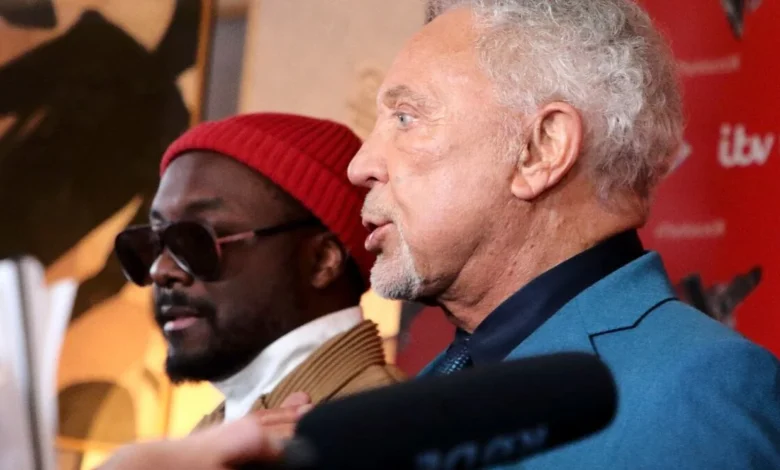
The television landscape in the United Kingdom is currently grappling with a significant wave of public and industry criticism following the announcement that Sir Tom Jones will not be returning to the judging panel of The Voice UK. The departure of the 86-year-old Welsh musical icon, who has served as a fixture on the singing competition since its inception on the BBC in 2012 and subsequent transition to ITV, has sparked a debate regarding the treatment of veteran performers and the shifting demographics of mainstream entertainment programming. The news, confirmed by Sir Tom himself via social media, has drawn immediate reactions from his colleagues, most notably long-time co-coach will.i.am, who expressed his visible distress through public digital tributes.
A Chronology of a Nine-Year Tenure
The journey of Sir Tom Jones on The Voice UK began during the show’s inaugural season in 2012. Alongside will.i.am, Jessie J, and Danny O’Donoghue, Jones brought a level of gravitas and industry expertise that helped establish the show as a credible competitor to more established talent formats like The X Factor. Throughout his tenure, Jones became a cornerstone of the production, providing mentorship to contestants across various genres and remaining the sole original coach to stay with the series through its move from the BBC to ITV in 2017.
The transition from the BBC to ITV marked a pivotal moment for the series. While the production values were enhanced, the network’s mandate to capture a younger viewership began to influence casting decisions. Throughout the 2020s, rumors occasionally surfaced regarding the refresh of the coaching panel; however, Jones remained a consistent presence. The latest announcement of his departure arrives after nearly a decade of continuous service, marking the end of an era for a show that relied heavily on his status as a national treasure to maintain its prestige.
The Corporate Rationale vs. Public Perception
ITV has officially framed the decision as a combination of administrative necessity and a broader creative objective to “refresh” the program. Initially, representatives for the network cited logistical hurdles, specifically referencing complications regarding insurance and production costs associated with maintaining a long-running panel. However, this justification was met with immediate skepticism from industry analysts and the viewing public.
In a follow-up statement, the network alluded to a desire to shift the show’s dynamic, a move often interpreted in television production as a pivot toward a younger demographic. This “refresh” strategy typically involves replacing legacy stars with contemporary influencers or pop artists who carry a different social media footprint. Sir Tom Jones, however, challenged this narrative. He disclosed that he was approached by producers with an offer to accept a diminished role—one characterized by sporadic, non-permanent appearances—which he categorically rejected. His refusal to accept a reduced capacity underscores a career-long commitment to professional integrity, as he indicated that he would only participate if he could provide his full, dedicated mentorship to the contestants.
The Legacy of a Musical Titan
To understand the intensity of the backlash against ITV, one must consider the stature of the individual in question. Sir Tom Jones is not merely a television personality; he is an institution in the history of popular music. Born Thomas Jones Woodward in Treforest, Pontypridd, Wales, he rose to international prominence in the mid-1960s. His career spans over six decades, during which he has sold more than 100 million records worldwide.
His discography includes defining tracks of the 20th century, such as "It’s Not Unusual," "Delilah," "Green, Green Grass of Home," and "What’s New Pussycat?" In 2006, Queen Elizabeth II knighted him at Buckingham Palace for his services to music, a testament to his enduring cultural impact. Beyond the charts, Jones has maintained a rigorous touring schedule, frequently performing in Las Vegas and across global arenas. His ability to connect with multiple generations of fans—from the post-war era to the modern digital age—has made his exit from The Voice UK appear, to many observers, as an oversight by the network’s leadership.
Industry and Public Response
The reaction from the entertainment community was swift. Will.i.am, the Black Eyed Peas frontman who has shared the coaching chair with Jones for years, utilized social media to post a series of crying emojis in response to the news. This digital gesture captured the sentiment of many viewers who viewed the chemistry between the two as the emotional anchor of the show.
Public discourse, meanwhile, has been dominated by a sense of indignation. On platforms like X (formerly Twitter) and Instagram, fans have organized campaigns under hashtags demanding that the network reconsider its decision. Prominent figures, including model and artist Jeny Howorth, publicly voiced their frustration, noting that the presence of Sir Tom was the primary draw for their viewership. The consensus among these voices is that the network has prioritized a short-term, data-driven approach to casting over the long-term benefit of having a seasoned, respected, and highly skilled artist at the helm of the competition.
Implications for Television Casting Trends
The removal of Sir Tom Jones serves as a case study in the evolving nature of reality television. Networks today operate under immense pressure to increase engagement among younger demographics (the 18–34 age bracket), who are increasingly migrating toward streaming platforms and short-form video content. This pressure often manifests in the "refreshing" of legacy formats.
However, the case of The Voice UK highlights a potential blind spot in this strategy. Television analysts point to the "authenticity gap"—the loss of credibility that occurs when a show removes its most respected mentors in favor of trends. By dismissing a performer who maintains both commercial viability and historical significance, the network risks alienating its loyal, older base without guaranteeing a successful capture of the younger market.
Furthermore, the dismissal raises broader ethical questions regarding ageism in the entertainment industry. While television networks must adapt to changing market conditions, the standard by which "refreshment" is measured often correlates with age, which can lead to the marginalization of talent who possess the very experience that made the show successful in the first place.
The Path Forward for The Voice UK
As the dust settles, the focus shifts to how the production will navigate its next season. Replacing a figure of Sir Tom Jones’s magnitude is a significant logistical and creative challenge. The network must now determine whether a new coaching lineup can replicate the warmth and authority that Jones brought to the screen.
For ITV, the challenge remains balancing the need for commercial modernization with the preservation of the show’s core identity. Should the new season fail to match the ratings or the critical reception of previous years, the decision to part ways with a legend like Sir Tom Jones will likely be scrutinized by media historians as a cautionary tale of corporate miscalculation.
For the time being, the narrative remains one of transition, with the industry waiting to see if the “refresh” will provide the boost the network desires or if it will fundamentally alter the character of a show that once prided itself on the prestige of its mentors. Sir Tom Jones, for his part, continues his legacy outside the confines of the studio, remaining a active, touring, and highly influential figure in the music industry—a career trajectory that, in the view of many supporters, stands as the final word on his relevance.