Lil Durk will seek release at a November bond hearing after his acquittal while a separate federal case remains pending.

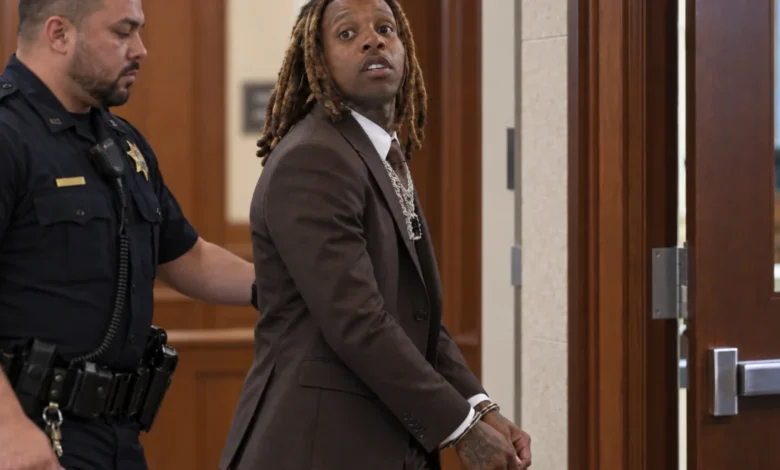
The legal saga surrounding Grammy-winning rapper Lil Durk, born Durk Banks, has entered a critical new phase. Despite securing a comprehensive acquittal on all five charges related to a high-profile 2022 murder-for-hire plot in Los Angeles, the artist remains in federal custody. U.S. District Judge Michael W. Fitzgerald has scheduled a pivotal bond review hearing for November 4 at 2:30 P.M., marking the latest attempt by the defense to secure the rapper’s release as he prepares to face a secondary racketeering case that has cast a long shadow over his career.
The Legal Landscape Following Acquittal
The atmosphere in the courtroom is expected to be tense. The defense team, led by a high-powered roster of legal counsel, argues that the recent acquittal on all counts regarding the August 2022 attack on Tyquian "Quando Rondo" Bowman significantly alters the government’s justification for keeping Banks detained. In that trial, prosecutors failed to convince a jury that Banks financed the attack as retaliation for the death of rapper Dayvon "King Von" Bennett. While co-defendants Deondre "DeDe" Wilson and David "Browneyez" Lindsey were convicted of stalking-related charges, Banks walked away free of all five murder-for-hire counts.
However, the Department of Justice maintains that Banks poses a substantial flight risk and a danger to the community, citing a separate, sprawling racketeering indictment that alleges he operated his label, Only The Family (OTF), as a criminal enterprise that incentivized and rewarded violence against rival gang members.
Chronology of the Racketeering Allegations
The government’s case against Banks is deeply rooted in a cycle of retaliatory violence that federal investigators claim spans several years and multiple states. The centerpiece of the upcoming trial involves the January 27, 2022, murder of 24-year-old Stephon Mack in Chicago.
- June 2021: The alleged catalyst for the violence, the killing of Banks’ brother, Dontay "DThang" Banks Jr., occurs in Chicago. Investigators allege this loss spurred a series of retaliatory strikes.
- January 27, 2022: Stephon Mack is ambushed while leaving the Youth Peace Center of Roseland in Chicago. Two gunmen exit a vehicle, firing shots that kill Mack and wound a security guard.
- Post-2022 Investigation: Federal authorities move to consolidate multiple incidents of violence under the umbrella of a single racketeering enterprise, the "Banks Gang Enterprise," alleging that OTF functioned as a conduit for gang-related retribution.
- December 2024: Banks’ first formal attempt at securing bond is denied by the court, with prosecutors successfully arguing that the evidence of his potential influence and resources makes him a flight risk.
- May 2025: A revised bond proposal, valued at over $2 million and featuring rigorous, round-the-clock surveillance by the private security firm Arsec Group, is submitted to the court. This, too, is rejected by Magistrate Judge Patricia Donahue.
- September 12, 2026: Banks is acquitted of all five charges in the Los Angeles murder-for-hire trial.
- September 18, 2026: Judge Fitzgerald orders an updated bail report from the U.S. Probation and Pretrial Services Office in anticipation of the November 4 bond hearing.
Supporting Data and Defense Strategies
The defense’s repeated attempts to secure bail have relied on increasingly sophisticated packages. The May 2025 proposal was designed to assuage the court’s fears regarding flight and witness tampering. The package included:
- $1 million in cash provided directly by Alamo Records.
- $900,000 in real estate assets.
- $150,000 in personal guarantees from a business associate.
- 24/7 Monitoring: An agreement to be overseen by the Arsec Group, which would control access to his home and monitor his communications in real-time.
Despite these assurances, prosecutors have consistently pointed to alleged international travel plans and the violent nature of the charges as evidence that no amount of money could guarantee the safety of the public or the integrity of the judicial process. The government further claims they possess a jailhouse confession from an unnamed participant who discussed collecting "bounties" from the enterprise, a piece of evidence that has been central to their arguments for continued detention.
The "Only The Family" (OTF) Enterprise Theory
The core of the prosecution’s argument rests on the claim that Banks utilized the OTF brand not merely as a music label, but as a centralized hub for criminal activity. According to the indictment, the enterprise rewarded violence with financial compensation. The government highlights the plea agreements of Anthony Montgomery-Wilson and Preston Powell, both of whom admitted to the murder of Stephon Mack in exchange for payment.
While neither individual explicitly named Banks during their plea hearings, prosecutors contend that intercepted communications between the two—specifically inquiries about whether "Durk" had provided the money—serve as circumstantial evidence of his role at the top of the hierarchy. Defense attorneys have vehemently pushed back against this narrative, characterizing the government’s case as a collection of "recycled accusations" designed to keep the rapper incarcerated after they failed to secure a conviction in the Los Angeles case.
Official Responses and Legal Implications
The legal community is watching the November 4 hearing with significant interest. The acquittal in the Los Angeles case creates a unique legal precedent for this proceeding. Defense lawyers are expected to argue that the prosecution’s reliance on the Mack allegations in the second case constitutes an unfair attempt to retry the defendant on evidence that was previously deemed separate from the initial trial.
Conversely, the prosecution will likely argue that the severity of the racketeering charges—which carry life-altering sentences—creates an even greater incentive for the defendant to flee. The fact that the court has ordered the U.S. Probation and Pretrial Services Office to attend the hearing suggests that the judge is taking the possibility of release seriously, but the high threshold for bail in federal racketeering cases remains a formidable barrier.
Broader Impact on the Music Industry
Beyond the courtroom, the case of Lil Durk has become a focal point for the intersection of modern rap culture and federal law enforcement. The trend of prosecutors using lyrics, social media posts, and label associations to build "criminal enterprise" cases has sparked intense debate regarding First Amendment rights and the criminalization of artistic expression.
If Banks is released, it would represent a massive victory for his legal team and a significant blow to the federal strategy of utilizing racketeering statutes to dismantle hip-hop collectives. If he remains detained, the delay in his second trial will continue to disrupt his career, as the music industry grapples with the long-term implications of seeing one of its most successful artists embroiled in a multi-year federal battle.
As the November 4 date approaches, all eyes remain on Judge Fitzgerald. The court must now balance the presumption of innocence and the right to bail against the government’s mounting evidence regarding the alleged "Banks Gang Enterprise." For Lil Durk, this hearing represents more than just a request for temporary freedom; it is a battle for the narrative of his life and the future of his career. Whether the court deems him a risk that can be managed through technology and financial oversight, or a defendant who must remain behind bars until the final gavel falls on the racketeering case, remains to be seen.