Resurrecting the Forgotten Melodies of the 1970s Three Country Classics That Defined an Era and Deserve a Second Listen

The landscape of American country music in the 1970s was a period of profound transformation, characterized by a tug-of-war between the traditionalist "Bakersfield Sound" and the polished, radio-friendly "Nashville Sound." During this decade, the genre expanded its horizons, inviting crossover success on pop charts while simultaneously giving birth to the rebellious "Outlaw Country" movement. Within this fertile ground of musical experimentation, certain tracks rose to the top, capturing the zeitgeist of the era before eventually receding into the shadows of history. While many listeners today might immediately recall the hits of Dolly Parton, Willie Nelson, or Waylon Jennings, there remains a subset of chart-topping hits that have become obscured by time. To understand the trajectory of modern country, it is essential to examine these "forgotten" hits—songs that provided the blueprint for the genre’s evolution.
History serves as a critical teacher in the realm of cultural arts. By analyzing the origin stories of specific hits, musicologists and fans alike can discern the shifts in societal values, production techniques, and lyrical themes that have led to the current state of the industry. The three songs explored below—Charlie Rich’s "The Most Beautiful Girl," The Kendalls’ "Heaven’s Just a Sin Away," and Don Williams’ "Amanda"—represent pivotal moments in 1970s country music. Each track offers a unique window into the decade’s artistic priorities, from the "Countrypolitan" sophistication of the early seventies to the playful wordplay and minimalist arrangements of the late seventies.
The Sophisticated Craft of Charlie Rich: The Most Beautiful Girl (1973)
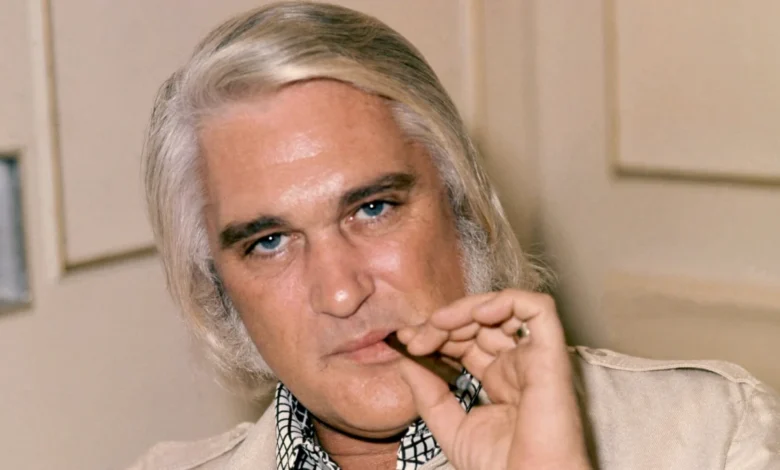
In 1973, Charlie Rich, affectionately known as "The Silver Fox," released what would become one of the most successful crossover hits in the history of the genre. "The Most Beautiful Girl," featured on the landmark album Behind Closed Doors, stands as a masterclass in the "Countrypolitan" style. This subgenre, spearheaded by legendary producer Billy Sherrill, sought to broaden country music’s appeal by incorporating lush orchestral arrangements, smooth background vocals, and a production quality that rivaled the biggest pop hits of the day.
The song begins with a deceptive simplicity: a gentle acoustic guitar strumming followed by the delicate entry of a piano. This arrangement provides a stark, emotive canvas for Rich’s baritone, which was often described as "butter-smooth." Lyrically, the song navigates the universal terrain of heartbreak and regret. It tells the story of a man searching for the woman he drove away, asking passersby if they have seen "the most beautiful girl in the world." The emotional resonance of the track lies in its vulnerability; it captures the moment of realization that one has lost something irreplaceable.
From a data perspective, "The Most Beautiful Girl" was a juggernaut. It reached number one on three different Billboard charts: the Hot Country Singles, the Hot 100, and the Adult Contemporary chart. This rare "triple crown" solidified Rich’s status as a superstar. However, the song’s legacy is often overshadowed by the controversy of the 1975 CMA Awards, where a reportedly intoxicated Rich famously set fire to the envelope announcing John Denver as the Entertainer of the Year. Despite this historical footnote, the musicality of "The Most Beautiful Girl" remains a pinnacle of 1970s production excellence, illustrating how country music could achieve massive commercial success without losing its soulful core.
Subverting Tradition: The Kendalls and Heaven’s Just a Sin Away (1977)
As the decade progressed toward its conclusion, the lyrical content of country music began to take more risks. In 1977, the father-daughter duo The Kendalls (Royce and Jeannie Kendall) released "Heaven’s Just a Sin Away," a track that would challenge the conservative sensibilities of the Nashville establishment while becoming an undeniable hit.
Country music has long been intertwined with religious themes, often emphasizing piety, redemption, and the rewards of a moral life. "Heaven’s Just a Sin Away" turned these tropes on their head through clever wordplay. The song suggests that the "heaven" of a forbidden romantic encounter is merely one "sin" away, effectively using religious terminology to describe secular temptation. This provocative stance was bolstered by Jeannie Kendall’s high, clear soprano and the duo’s tight, familial harmonies.
The success of the song was a significant milestone for independent labels. Released on Ovation Records, a small independent outfit, the track defied the odds to reach number one on the Billboard Country Singles chart. It eventually earned the duo a Grammy Award for Best Country Vocal Performance by a Duo or Group in 1978. The song’s impact was twofold: it proved that independent artists could compete with major label giants, and it signaled a shift toward more "adult" themes in country songwriting—a trend that would continue into the 1980s. Analysts often point to this track as a precursor to the "New Traditionalist" movement, as it maintained a classic honky-tonk sound while pushing the boundaries of lyrical content.
The Power of Understatement: Don Williams and Amanda (1973)
While Charlie Rich represented the polish of Nashville and The Kendalls represented its evolving wit, Don Williams represented its soul. Known as "The Gentle Giant," Williams possessed a voice of incredible depth and resonance that required little ornamentation. In 1973, he released "Amanda," a song written by the prolific Bob McDill, which appeared on the album Don Williams Volume One.
"Amanda" is a study in musical minimalism. It eschews the heavy strings and dramatic flair of the era’s bigger hits in favor of a steady, rhythmic pulse and Williams’ calming delivery. The lyrics are a poignant apology from a man to his wife, acknowledging the hardships she has endured due to his chosen lifestyle and his own shortcomings. It is a song of maturity and quiet reflection, qualities that became Williams’ trademark.
Interestingly, "Amanda" is a song with a dual history. While Williams’ 1973 version was a hit, reaching the top 20, the song is perhaps more widely recognized by casual fans for Waylon Jennings’ 1979 cover, which hit number one. However, returning to the Williams original reveals a different kind of power. Williams’ version is less about the "outlaw" persona and more about the internal life of a man coming to terms with his age—symbolized by the lyric "I’m over thirty, say you still love me." In an industry that often prizes youth and high-energy performance, Williams’ ability to command attention through subtlety was a rare gift. His influence can be heard today in the work of artists like George Strait and Josh Turner, who prioritize vocal clarity and emotional honesty over theatricality.
Chronology of a Changing Genre: 1970–1979
To place these songs in their proper context, one must look at the timeline of the decade’s musical shifts:
- 1970–1972: The "Nashville Sound" matures into "Countrypolitan." Artists like Lynn Anderson and Ray Price find massive crossover success.
- 1973: Charlie Rich releases "The Most Beautiful Girl" and "Behind Closed Doors," marking the commercial peak of the polished Nashville style. Simultaneously, Don Williams releases his debut solo album, offering a quieter alternative.
- 1974–1975: The "Outlaw" movement gains steam with the success of Waylon Jennings and Willie Nelson, reacting against the perceived over-production of Nashville.
- 1977: The Kendalls hit number one with "Heaven’s Just a Sin Away," blending traditional sounds with modern, edgier lyrics.
- 1979: The decade closes with the "Urban Cowboy" movement on the horizon, characterized by the 1980 film of the same name, which would steer country music back toward a pop-oriented, disco-influenced sound.
Industry Impact and Broader Implications
The significance of these three tracks extends beyond their chart positions. They represent the diverse avenues through which country music sought to define itself during a period of cultural upheaval in America. Following the Vietnam War and the Watergate scandal, American audiences were often drawn to the perceived authenticity and storytelling of country music.
The "Countrypolitan" success of Charlie Rich demonstrated that country music could be a dominant force in the global music market, paving the way for the international superstardom of later artists like Kenny Rogers and Shania Twain. The success of The Kendalls highlighted the importance of the "hook"—the clever turn of phrase that makes a song memorable—and proved that the genre could handle complex, even controversial, social themes. Finally, Don Williams’ legacy of "less is more" served as a vital anchor, reminding the industry that at its heart, country music is about the song and the singer.
In contemporary music streaming, where algorithms often favor the most recent releases or the most iconic "legendary" tracks, these three hits occupy a middle ground. They are frequently "forgotten" not because of a lack of quality, but because they represent transitional moments that are harder to categorize than the "Outlaw" or "Pop-Country" extremes. However, for the discerning listener, these songs offer a rich tapestry of 1970s Americana. They are a reminder that the history of country music is not just a list of names, but a collection of voices that, when heard today, still possess the power to uplift, challenge, and resonate. Studying these works is more than an exercise in nostalgia; it is an essential step in understanding the origin story of one of America’s most enduring art forms.
Related posts: