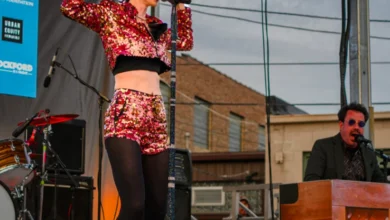
The contemporary landscape of American roots rock and Americana music has long been shaped by independent artists who navigate the turbulent waters of the modern music industry without the backing of major record conglomerates. Among these steadfast acts, the Chicago-based quartet known as The Empty Pockets has steadily carved out a distinctive niche. Comprising Erika Brett on keyboards and vocals, Josh Solomon on guitar and vocals, Nate Bellon on bass and backing vocals, and Adam Balasco on drums, the band has built a fiercely loyal following through self-reliance, direct-to-fan marketing, and relentless touring. Over the course of their career, they have independently released seven albums, sharing stages and touring routes with legendary acts such as singer-songwriter Al Stewart—an artistic association whose understated, narrative-driven influence is palpable in their latest studio project.
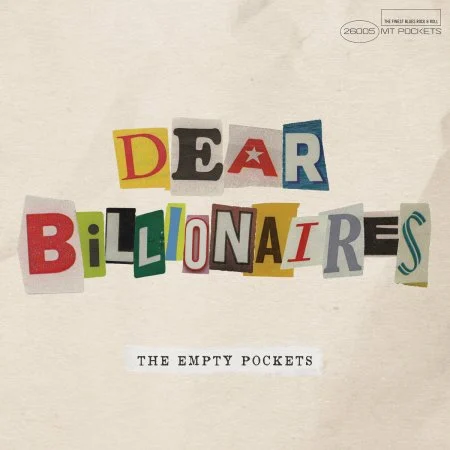
The band’s trajectory reached a significant milestone with the release of their 2026 album, Dear Billionaires, issued via their own label imprint, MT Pockets. Spanning 10 tracks and running a concise 38 minutes, the record captures the ensemble at a distinct crossroads of roots rock, blues-infused Americana, and lush pop arrangements. Notably, the album was recorded over an intensive two-day period at the historic Abbey Road Studios in London. Eschewing the modern temptation to layer tracks with digital corrections and endless instrumental overdubs, the band opted for a raw, organic approach: live-in-the-studio takes with zero instrumental overdubs. This bold production choice places the technical proficiency and tight-knit chemistry of Brett, Solomon, Bellon, and Balasco under a microscope, offering listeners an unvarnished window into their collaborative synergy.
Main Facts of the Release and Production Methodology
Recorded within the hallowed walls of Abbey Road—a location synonymous with some of the greatest sonic achievements in popular music history—Dear Billionaires represents a deliberate step toward authenticity for The Empty Pockets. By eliminating instrumental overdubs, the quartet challenged themselves to capture the urgency and vitality of a live performance directly onto tape. The resulting 38-minute runtime is economical, waste-free, and laser-focused on songwriting and dynamic interplay.
Barring a single cover song, the entirety of the album’s writing credits are attributed collectively to the band. The project features a diverse sonic palette that stretches far beyond traditional genre boundaries. While roots rock and Americana form the bedrock of their sound, the inclusion of stinging blues guitar work, funk-inflected rhythm sections, and classic pop harmonies ensures that the album defies easy categorization. The band members trade lead vocals, blend warm harmonies, and switch instrumental focal points effortlessly, a testament to years of touring and collaborative performance.
Chronology and Track-by-Track Breakdown
The sequence of Dear Billionaires unfolds as a narrative journey, moving deftly from upbeat romantic devotion to sharp socio-economic commentary, instrumental grit, and reflective balladry.
The album opens with “Serrated,” a track that was previously issued as a single ahead of the full-length release, aligning with modern streaming distribution strategies. Propelled by a funky guitar riff and a swirling organ, the song features a vocal duet between Erika Brett and Josh Solomon. The lyrics explore the complexities of long-term commitment and shared affection, posing the central question: “Would you be the one I could have forever?” This thematic exploration of enduring partnership continues seamlessly into the following track, “I Never Get Sick Of You,” another pre-release single. Here, Solomon takes the lead on vocals, supported by rich, warm harmonies on the chorus that highlight the vocal interplay central to the band’s live appeal.
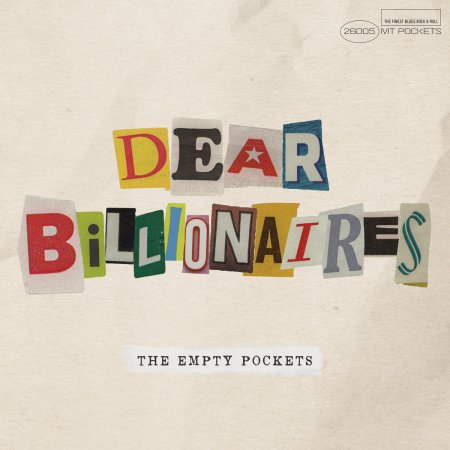
The tonal shift of the album arrives sharply with its title track, “Dearest Millionaires.” Serving as a caustic, socio-economically charged rejoinder to extreme wealth disparity, the song takes direct aim at those who “have so much.” With lines suggesting that “the only solution may be revolution,” the track acts as a stark warning to the super-rich, delivered ironically through a lush, highly polished pop arrangement rather than a gritty punk or aggressive blues structure.
This socio-economic commentary bleeds directly into the album’s instrumental centerpiece, “Eat The Rich.” Functioning as an appropriate sonic follow-up to the title track, this instrumental cuts closest to the traditional blues genre found on the record. It showcases stinging, blues-soaked guitar lines from Solomon while affording Balasco on drums and Bellon on bass ample space to demonstrate their rhythmic dexterity and tight pocket playing.
The thematic and musical variety persists with “Capitol Hill Autonomous Zone,” a track rich in vocal harmonies featuring Nate Bellon joining the chorus. Brett delivers a commanding vocal performance centered around the evocative lyric “making a date for The 31st Of June,” introducing an air of ironic permanence to a relationship seemingly destined for a short shelf life.
Shifting geography and mood, “Queen Of LA” relies on a jaunty, piano-driven melody to support Solomon’s narrative about the eccentricities and allure of Southern California culture. This urban vignette contrasts sharply with the album’s penultimate instrumental, “Working Class Blues,” which reinforces the record’s underlying blue-collar ethos and adds further weight to its blues credentials.
The album concludes with “Broken Down In Bozeman,” a country-tinged ballad that captures the very real, often unglamorous hazards of life on the touring circuit—vehicular breakdowns, exhaustion, and the miles stretching endlessly between American cities.
Sandwiched near the latter half of the tracklist is the album’s sole cover: a rendition of Billie Holiday’s immortal standard, “God Bless The Child.” Featuring an impassioned, highly dramatic vocal interpretation by Brett alongside exceptional guitar work from Solomon, this cover represents a bold homage to a foundational American vocal stylist, even if its theatrical delivery contrasts with the more grounded, roots-oriented originals surrounding it.
Supporting Data and Musical Context
To understand the artistic positioning of The Empty Pockets, one must examine the data of their independent career model. Operating outside the traditional major-label ecosystem, the band relies heavily on direct-to-consumer sales, independent streaming distribution, and continuous touring schedules. This business model grants them absolute creative autonomy, allowing them to record live at Abbey Road without commercial interference, but it also places limitations on their broad-market reach.
Musically, the album occupies a liminal space. Industry analysts and genre purists often debate the classification of modern Americana and roots rock. While tracks like “Eat The Rich” and “Working Class Blues” satisfy listeners searching for traditional blues elements, purists may find that the album’s pop sensibilities—particularly evident in “Dearest Millionaires” and the glossy production of the vocal tracks—pull the record away from authentic, delta or Chicago blues traditions. Conversely, fans of contemporary singer-songwriter pop and melodic roots music will find a wealth of clever lyricism and sophisticated arrangements.

Critical Perspectives and Official Reactions
While formal critical reviews for indie releases often vary wildly across niche publications, early assessments from roots and blues critics highlight both the admirable ambition of the Abbey Road sessions and the stylistic dichotomy of the tracklist.
Reviewers have universally praised the band’s decision to forgo instrumental overdubs, noting that the raw, breathing quality of the tracks adds an undeniable layer of human connection that heavily produced modern records frequently lack. The interplay between Brett’s keyboard work and Solomon’s guitar has been cited as a primary driver of the band’s signature sound.
However, reactions to specific artistic choices—most notably Brett’s histrionic delivery on the Billie Holiday cover—demonstrate the risks independent bands take when reinterpreting sacred American musical canons. While Solomon’s guitar work on the track received widespread acclaim, the vocal approach divided opinion among critics who preferred the more understated, roots-conscious storytelling found in originals like “Broken Down In Bozeman.” Furthermore, the overt political commentary of “Dearest Millionaires” has drawn notice for its sharp departure from the introspective romanticism of the album’s opening tracks, showcasing a band willing to risk alienating segments of their audience in favor of topical relevance.
Broader Impact and Industry Implications
The release of Dear Billionaires serves as a compelling case study in the current economic and artistic realities facing mid-tier independent touring bands in the 2020s. By using their platform to comment directly on wealth disparity—embodied in tracks like “Dearest Millionaires” and “Eat The Rich”—The Empty Pockets reflect a broader cultural zeitgeist where artists feel compelled to address macroeconomic anxieties, even within genres traditionally dominated by personal narratives of heartbreak and highway travel.
Moreover, the band’s choice to fund, record, and self-release an album born from a two-day residency at Abbey Road underscores the shifting economics of music production. High-end studios once reserved exclusively for major-label priority acts are increasingly accessible to fiercely independent ensembles willing to finance boutique recording experiences to elevate their sonic brand and distinguish themselves in a crowded digital marketplace.
Ultimately, Dear Billionaires may not satisfy the rigid criteria of the devoted, traditionalist blues fan, but it succeeds brilliantly as a multifaceted showcase for a mature, self-contained band. By blending clever songwriting, socio-political commentary, instrumental grit, and a broad sonic palette, The Empty Pockets have delivered a defining statement of their artistic independence—proving that an album recorded with empty pockets can still yield a rich, resonant harvest of American roots music.