ALBUM REVIEW: Creekbed Carter Hogan Is a Court Jester of the Apocalypse on ‘Peasants Revolt’

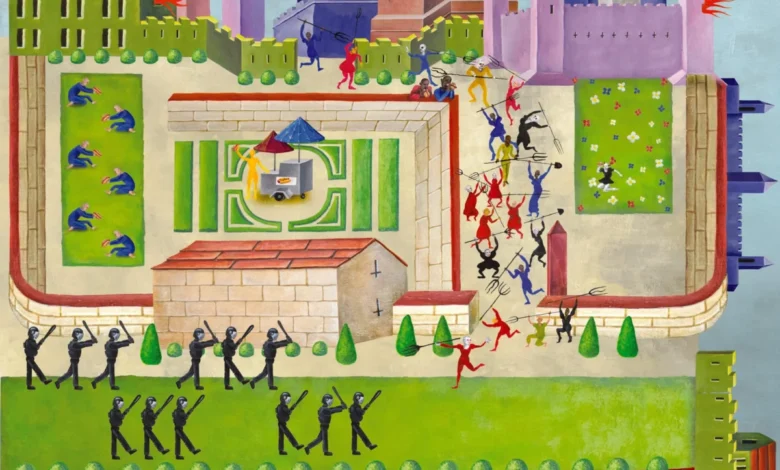
Creekbed Carter Hogan has released their latest full-length project, Peasants Revolt, a record that navigates the intersection of historical allegory, modern environmental collapse, and the evolving landscape of queer Americana. The album’s third track, "Burn," serves as a microcosm for the project’s broader ambitions, beginning with a sparse, Appalachian-influenced simmer before transitioning into a driving, high-velocity Americana anthem. Through lyrics that observe the unseasonable warming of the Mississippi River’s headwaters, Hogan positions the record as a document of the "petroleum era" in its final, volatile stages. The work functions as both a warning and a celebration of the inevitable shifts in the global socio-political and ecological order.
The Artistic Trajectory of Creekbed Carter Hogan
Based in the vibrant musical ecosystem of Austin, Texas, Creekbed Carter Hogan has emerged as a distinctive voice in the "queer-grass" and folk communities. Hogan’s work is characterized by a blend of traditional string-band instrumentation and a lyrical sensibility that is simultaneously irreverent and deeply earnest. Prior to Peasants Revolt, Hogan established a reputation for storytelling that centers the trans experience within the framework of rural and working-class narratives.
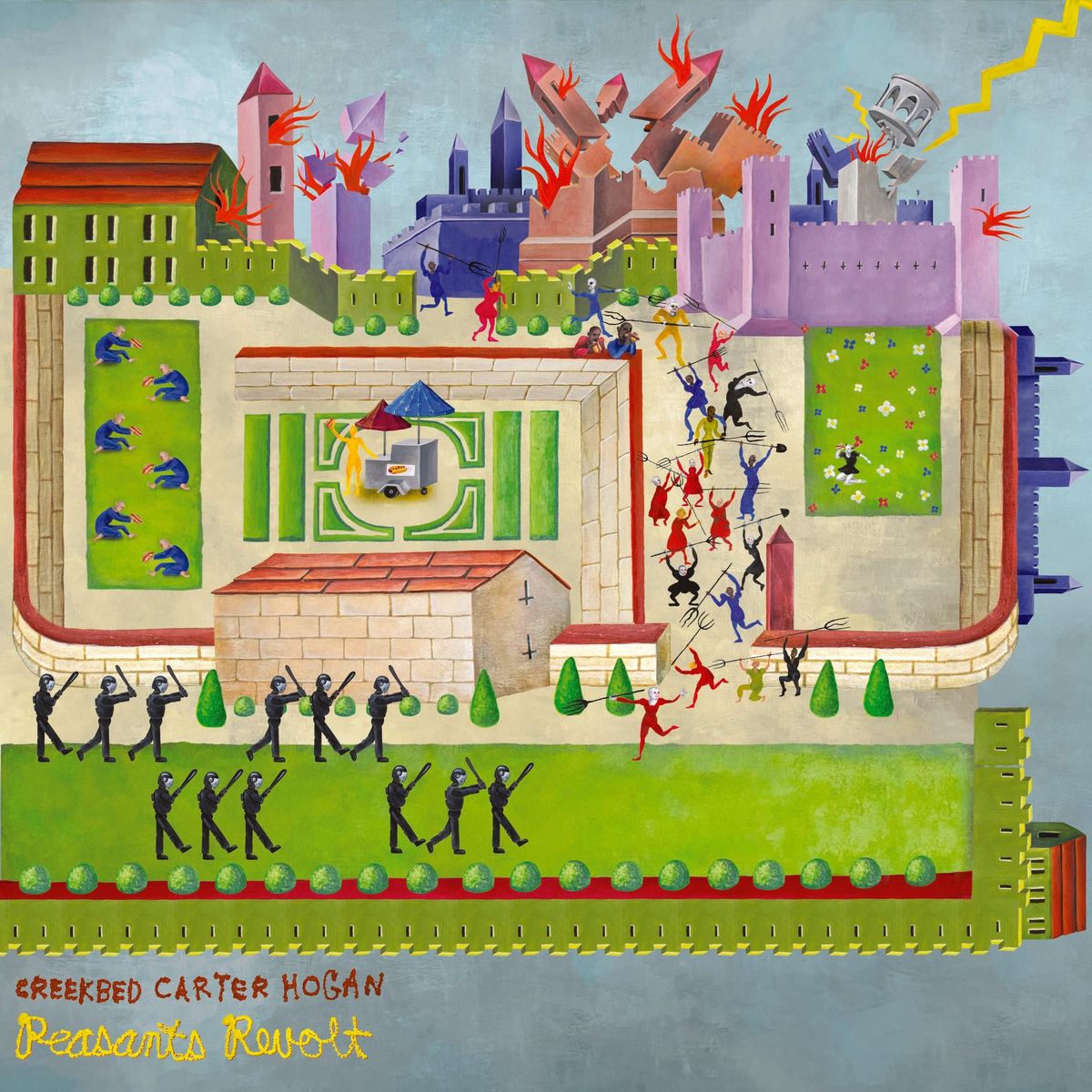
The title of the new album, Peasants Revolt, draws a direct line between the contemporary era of extreme wealth inequality and the Great Rising of 1381 in England. By adopting the persona of a "court jester of the apocalypse," Hogan utilizes satire and folk-music tropes to critique the structures of power that define the 21st century. This thematic approach aligns Hogan with a long tradition of protest music, though it is updated with the specific anxieties of the climate crisis and the digital age.
Sonic Evolution and "Burn"
The track "Burn" highlights the album’s sophisticated production and arrangement. The song opens with a "tense Appalachian simmer," utilizing acoustic textures that evoke the isolation and ruggedness of the American backcountry. However, at its midpoint, the song undergoes a structural transformation, launching into what critics describe as "propulsive highway Americana."
This transition is not merely a stylistic choice but a narrative device. The "open-road song" is a staple of the American musical canon, often symbolizing freedom and discovery. In Hogan’s hands, the trope is subverted. By writing an open-road song "consciously written in the final gasps of the petroleum era," Hogan suggests that the very infrastructure of American movement—the highway and the internal combustion engine—is nearing its end. The refrain "Let it burn" acts as a nihilistic yet cathartic acceptance of systemic collapse.
Environmental Context and the Mississippi Basin
The lyrical focus on the Mississippi River in "Burn" reflects documented environmental trends. Hogan sings, “I hear it’s warmer than it ought to be / up there at the start of the Mississippi.” This observation is supported by climate data from the National Oceanic and Atmospheric Administration (NOAA) and the United States Geological Survey (USGS).
In recent years, the Upper Mississippi River basin has experienced significant shifts in temperature and precipitation patterns. Data indicates that winter and spring temperatures in the region have risen by an average of 2 to 3 degrees Fahrenheit over the last century, leading to reduced ice cover and altered migration patterns for local wildlife. The "candle trees" mentioned in the lyrics—evergreens leaning into the heat—serve as a metaphor for the vulnerability of the boreal and temperate forests to wildfire and drought, phenomena that have become increasingly common in the North American interior.
By grounding the album in these physical realities, Hogan moves the narrative beyond abstract political theory into the realm of ecological witness. The "burn" is not just a metaphorical revolution; it is a literal description of a warming planet.
Historical Parallels: The 1381 Precedent
To understand the weight of Hogan’s Peasants Revolt, one must look at the historical event from which it takes its name. The Peasants’ Revolt of 1381 was a major uprising across large parts of England caused by socio-economic and political tensions following the Black Death. Key factors included high taxes resulting from the Hundred Years’ War and the instability of the manorial system.

Hogan draws a parallel between the 14th-century peasants’ demands for the abolition of serfdom and modern calls for economic justice. In the context of the album, the "peasant" represents the marginalized worker, the queer individual living on the fringes of traditional society, and the citizen facing the brunt of environmental degradation. The album suggests that just as the 1381 revolt signaled the beginning of the end for the feudal system, the current era of "permacrisis" may be the precursor to a fundamental shift in global civilization.
The Americana and Folk Landscape in 2024
The release of Peasants Revolt occurs during a period of significant diversification within the Americana genre. While the genre has historically been associated with a narrow set of cultural perspectives, artists like Hogan, Cinder Well, and the Punch Brothers are expanding its boundaries.
- Punch Brothers: As noted in contemporary reviews, the Punch Brothers continue to push the technical limits of bluegrass through instrumental virtuosity. Their work provides a "high-art" contrast to the gritty, narrative-driven folk of Hogan.
- Cinder Well: Amelia Baker’s project, Cinder Well, shares Hogan’s interest in "austere" and "sober" storytelling. While Baker focuses on the "fascination in the everyday," Hogan tends toward the grander, more theatrical elements of societal collapse.
- Lily Meola: Representing a more mainstream-adjacent branch of the genre, Meola’s success—bolstered by figures like Willie Nelson—shows the enduring appeal of the classic folk voice.
Hogan occupies a unique space among these peers. They are less concerned with the "virtuosity" of the Punch Brothers and more focused on the "fateful news" described in reviews of Cinder Well. Hogan’s work is inherently political, positioning the artist as a commentator on the structural integrity of the American experiment.
Industry Trends and Independent Resilience
The production of Peasants Revolt also reflects broader trends in the independent music industry. With the decline of traditional physical media sales and the dominance of streaming platforms, independent artists are increasingly relying on niche community support and thematic depth to find an audience.
Data from the Americana Music Association suggests that while mainstream country music remains dominated by radio-friendly hits, the Americana "sub-genre" is seeing a rise in listenership for artists who tackle complex social issues. Hogan’s ability to blend high-concept historical metaphors with accessible folk-rock arrangements makes Peasants Revolt a significant entry in this growing market. The album’s focus on the "petroleum era" also taps into a growing "eco-folk" movement, where artists use traditional music to process climate grief.

Broader Implications and Cultural Impact
The cultural impact of Peasants Revolt lies in its refusal to offer easy answers. By adopting the "court jester" mantle, Hogan avoids the trap of didacticism. The jester’s role is to tell the truth to the king under the guise of entertainment, and Hogan performs this role for a modern audience.
The album’s implications are three-fold:
- Socio-Economic: It highlights a growing disillusionment with late-stage capitalism, framing the "revolt" as an inevitable historical cycle.
- Environmental: It forces a confrontation with the reality of climate change, specifically how it affects the American landscape (the Mississippi, the evergreens).
- Identity-Based: It reaffirms the place of queer and trans narratives within the "traditional" American folk tradition, proving that these voices are not external to the American story but are essential to its modern retelling.
As the "highway Americana" of "Burn" accelerates toward its conclusion, it leaves the listener with a sense of urgent momentum. Hogan does not suggest that the end of the petroleum era is something to be mourned in the traditional sense; rather, it is a transformation to be met with eyes wide open.
Conclusion
Peasants Revolt is more than a collection of folk songs; it is a thematic exploration of a world in transition. Creekbed Carter Hogan has crafted a record that is as historically informed as it is futuristically anxious. By blending the simmer of the Appalachian past with the propulsive energy of an uncertain future, Hogan establishes themselves as a vital chronicler of the modern age. Whether through the lens of a 14th-century uprising or a 21st-century environmental crisis, the album serves as a reminder that the only constant is change—and that even as the world "burns," there is music to be made in the ashes.
Related posts: