Exploitation in Death: How Re-Released Early Demos and AI Artwork Landed on John Anderson’s Verified Streaming Profiles Days After His Passing

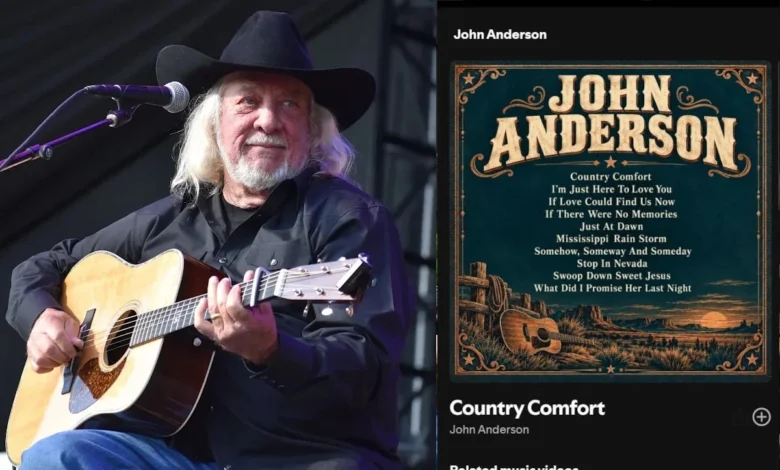
The passing of Country Music Hall of Famer John Anderson on October 21, 2026, closed the chapter on one of the most distinctive and influential careers in traditional country music. Celebrated for hits like "Swingin’" and "Seminole Wind," Anderson left behind a rich, decades-long legacy defined by his smooth, soulful delivery and unmistakable baritone. Yet, within a mere 48 hours of his death, his verified streaming service profiles became the focal point of an unsettling digital phenomenon: the sudden appearance of a self-titled album bearing AI-generated artwork and featuring archival material repackaged as a brand-new release.
While the music itself was not an artificial intelligence fabrication—a growing concern in the modern music industry following similar incidents involving deceased legends like Don Williams—the manner of its distribution highlighted the aggressive and opportunistic nature of the modern digital music landscape. Label representatives, music historians, and grieving fans alike were left to navigate a murky release strategy that capitalized on public mourning without the explicit curation or consent of the artist’s estate.
The Anatomy of a Suspicious Digital Release
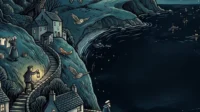
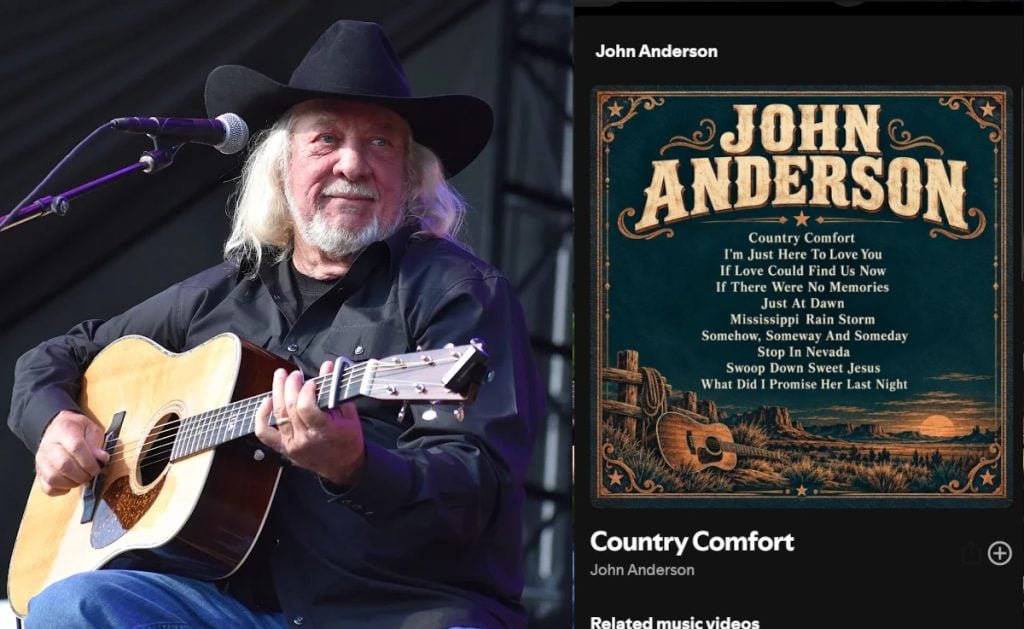
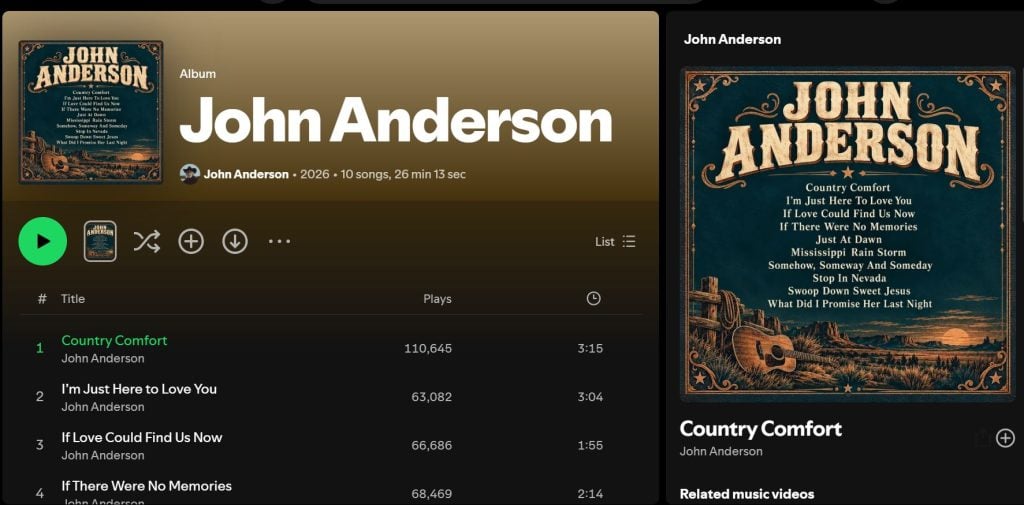
On October 23, 2026, streaming platforms populated a new album simply titled John Anderson onto the late singer’s official, verified artist profiles. The timing immediately raised red flags across the country music community. Accompanying the release was album art bearing the unmistakable visual artifacts of generative artificial intelligence, casting early suspicion that the project might be a completely synthetic creation designed to deceive listeners and siphon streaming revenue.
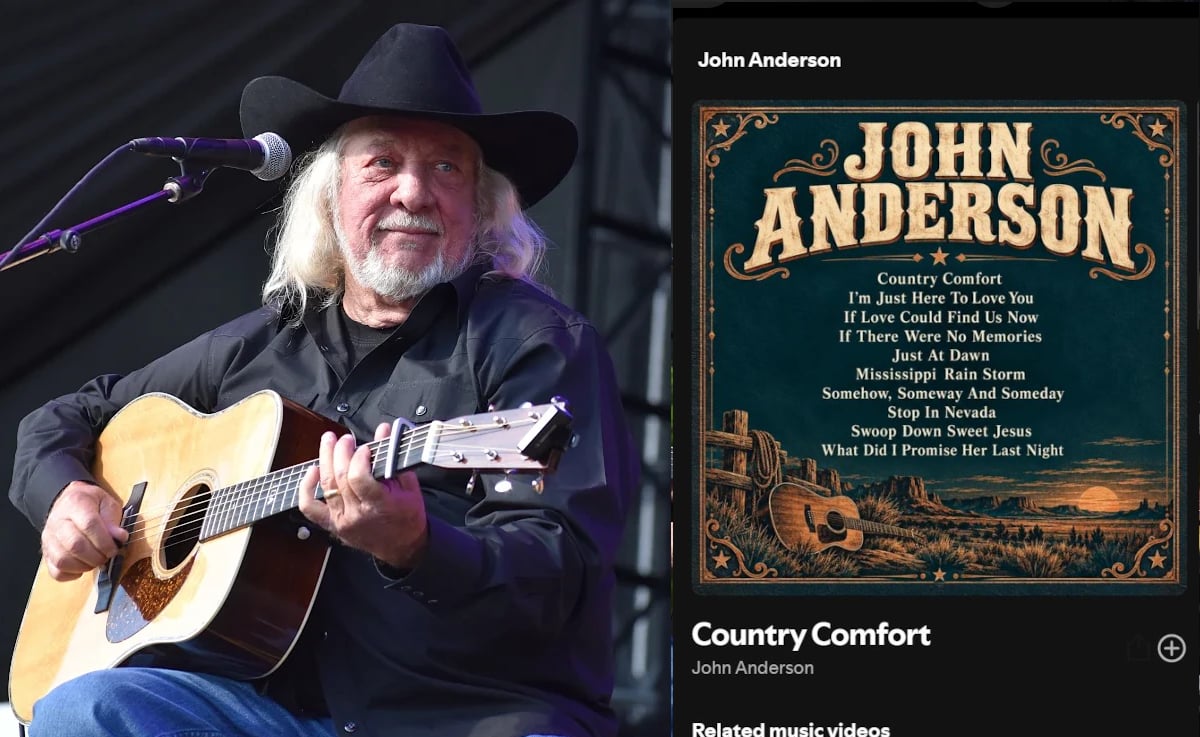
Given the recent surge in fraudulent AI-generated tracks uploaded to streaming platforms under the names of legacy artists, vigilance among fans and industry watchdogs is at an all-time high. However, a deeper investigation into the audio files revealed a more complex and historical reality: the tracks were authentic recordings, but they originated from the earliest days of Anderson’s career in Nashville, long before he achieved commercial stardom or developed his signature vocal identity.
Chronology of the Archival Recordings
Far from being newly discovered material or contemporary studio recordings, the tracks featured on the controversial October 2026 release are early work-for-hire demos recorded when Anderson first arrived in Music City. Chronologically, these recordings have a convoluted distribution history spanning nearly three decades:
- Early 1970s–1980s: Anderson records a series of demo tracks and work-for-hire songs in Nashville as he attempts to break into the music industry. Many of these tracks reflect a young artist still finding his vocal style. Among them are self-penned tunes like "Country Comfort" and "If There Were No Memories," alongside covers such as Billy Joel’s 1973 track "Stop in Nevada."
- April 6, 1999: Renaissance Records—a label specializing in rare, out-of-print, and archival re-pressings—officially releases an 11-track collection of these early recordings on CD under the title Backtracks. This compilation eventually finds its way onto Spotify, though it receives minimal traction and virtually no listener engagement.
- 2002: The same material is recycled and re-released by Orpheus Records under a new title, Somehow, Someway, Someday, named after one of the featured tracks.
- October 23, 2026: Just 48 hours after Anderson’s death, a 10-track iteration of the archival material (excluding the song "Bad Morning for Leaving") is uploaded to major digital service providers (DSPs). Crucially, the release date is explicitly stamped as October 23, 2026, framing the archival demos as a new release and positioning the album prominently at the top of Anderson’s streaming catalog precisely when public interest and search volume are at their peak.
Official Responses and Industry Frustration
Representatives for the John Anderson camp expressed profound dismay over the deployment of the archival recordings, noting that the release underscored the predatory nature of certain corners of the modern music business.
"This saddens me, but [it is] par for the course in terms of the vulture size of the biz," a representative for the John Anderson camp stated. Explaining the origins of the music, the representative added, "Long story and unsure if it can be stopped. Probably not. Many of those songs were ‘work for hire’ stuff John did arriving in Nashville. Demos essentially. A day job in music. Before he had an actual career or record out. Some are so young he hasn’t even found his vocal identity yet."
The representative likened the unauthorized or opportunistic deployment of catalog material during a period of national mourning to predatory behavior in commerce. "I became aware of these 20-25 years ago. It’s nothing new. It’s opportunistic like a termite finding fresh wood."
Because these early recordings were often tied to work-for-hire contracts or independent labels from decades prior, rights ownership can be fractured and opaque. This leaves estates with limited legal recourse to prevent third-party distributors from legally—if unethically—exploiting historical loopholes to push old material onto modern streaming platforms.
The Complete Track List
For music historians and dedicated fans, the release does offer a fascinating, albeit raw, window into Anderson’s formative years, even if the packaging and release strategy drew sharp criticism. The 10 tracks featured on the controversial October 2026 upload include:
- Country Comfort (Written by John Anderson)
- I’m Just Here To Love You (Written by Joseph Allen)
- If Love Could Find Us Now (Written by Ronald McCown)
- If There Were No Memories (Written by John Anderson)
- Just at Dawn (Written by Terry Hamilton and William E. Emerson)
- Mississippi Rain Storm (Written by Bobby Adamson and Woody Murray)
- Somehow Someway and Someday (Written by Bobby Adamson and Woody Murray)
- Stop in Nevada (Written by Billy Joel)
- Swoop Down Sweet Jesus (Written by Wild Bill Emerson, John Anderson, and James Bohon)
- What Did I Promise Her Last Night (Written by Ronald McCown and Wayne Walker)
(Note: The 1999 "Backtracks" and 2002 "Somehow, Someway, Someday" editions previously included an 11th track, "Bad Morning for Leaving," which was omitted from the 2026 iteration.)
Broader Implications for Legacy Artists on Streaming Platforms
The incident surrounding John Anderson’s streaming profile highlights a systemic vulnerability within digital music distribution networks. As algorithms increasingly prioritize "new" content and fresh release dates, bad actors, opportunistic rights holders, and independent aggregators have found ways to game the system. By repackaging decades-old, out-of-print demos with AI-generated cover art and fresh release timestamps, distributors can effectively hijack an artist’s digital real estate during moments of peak public grief.
For consumers, this creates a confusing and misleading experience, blurring the line between a genuinely new posthumous release curated by an artist’s estate and a cynical cash-grab utilizing archival scraps. While some fans may appreciate discovering these early, unpolished cuts—such as Anderson’s acoustic-leaning formative songwriting and his rendition of Billy Joel’s "Stop in Nevada"—the broader implications point to an urgent need for stricter governance by streaming platforms.
Industry analysts suggest that DSPs may eventually need to implement stricter metadata verification protocols for legacy artists, ensuring that archival re-releases are properly contextualized and that unauthorized or deceptive catalog dumping can be swiftly contested by certified estates. Until then, the digital afterlife of country music legends remains vulnerable to the digital age’s equivalent of vultures and termites, turning moments of collective mourning into opportunities for commercial exploitation.