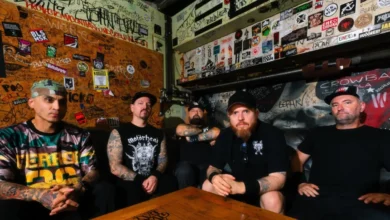
Nothing But Thieves have officially entered their next creative chapter, marking a departure from the high-concept, polished production of their previous work to embrace the unvarnished energy of a live-in-the-room recording environment. In a comprehensive discussion for the latest episode of 7 of 30, the Southend-on-Sea quintet—comprising Conor Mason, Joe Langridge-Brown, Dominic Craik, Philip Blake, and James Price—detailed the conceptual shift behind their forthcoming record, Stray Dogs, and the ethos of artistic autonomy that defines this current era of the band.
The Evolution of Sound: From Dead Club City to Stray Dogs
The trajectory of Nothing But Thieves has been defined by their ability to oscillate between intricate studio experimentation and visceral, guitar-driven rock. Their 2023 release, Dead Club City, was a landmark moment for the group, functioning as a sprawling, dystopian concept album. The record utilized synthesizers, layered production, and a cohesive narrative arc to critique the modern music industry and societal decay. It reached number one on the UK Official Albums Chart, cementing their status as one of the most prominent rock acts in the United Kingdom.
However, the band’s decision to pivot toward the aesthetic of Stray Dogs represents a deliberate retreat from the meticulous, programmed soundscapes that characterized their previous cycle. By opting for a "live-in-the-room" approach, the band intends to capture the spontaneous electricity that occurs when five musicians perform in a shared physical space. This transition reflects a broader industry trend where legacy rock acts and rising bands alike are eschewing digital perfection in favor of "human" imperfections—such as slight tempo fluctuations or room bleed—that define authentic performance.
A DIY Ethos: Branding and Creative Autonomy
During their appearance on 7 of 30, the band highlighted the importance of their self-sufficient approach to the album’s visual identity. The title Stray Dogs, paired with its distinct, hand-drawn logo, serves as a metaphor for the band’s current creative independence. By keeping the design process internal, the group has ensured that the visual branding remains an extension of their personal narrative rather than a product of corporate design firms.
This DIY philosophy extends beyond aesthetics; it is a manifestation of the band’s autonomy over their intellectual property. Throughout their decade-long career, Nothing But Thieves have maintained a balance between commercial success and artistic integrity. By controlling their imagery and production style, the band mitigates the risk of creative dilution, a common challenge for acts that have transitioned from independent labels to major label infrastructure.
Historical Context and Touring Milestones
The announcement of the new project arrives in the wake of a significant period of live performance growth. Among the most notable events of the band’s recent history was their support slot for Biffy Clyro at London’s Finsbury Park. Performing alongside a veteran act of Biffy Clyro’s stature provided a platform for Nothing But Thieves to refine their stadium-filling capabilities.
Chronologically, the band’s rise has been steady:
- 2015: Release of their self-titled debut, establishing their alternative rock credentials.
- 2017: Broken Machine solidified their radio presence with hits like "Amsterdam."
- 2020: Moral Panic expanded their sonic palette, incorporating pop and R&B elements.
- 2023: Dead Club City pushed the band into a high-concept narrative space.
- 2024/2025: The development of Stray Dogs, focusing on raw performance.
The experience of supporting legacy acts has, according to the band, informed their current focus on live-ready tracks. When playing to large crowds at venues like Finsbury Park, the necessity for high-energy, coherent, and punchy arrangements becomes paramount, directly influencing the songwriting decisions made for the upcoming record.
Anecdotes and the Human Element
Beyond the technical discussion of the album, the 7 of 30 format allowed for a reflection on the realities of long-term touring. Among the more humorous insights shared by the band was the lore of "Bar 668." This mobile, self-constructed touring bar serves as a vital component of the band’s backstage culture, acting as a sanctuary for the group to decompress after the sensory overload of high-production stage shows.
The conversation also touched on the unpredictable nature of live music, with the members recounting an early-career stage incident involving a fall that serves as a reminder of the physical demands of touring. These anecdotes serve a functional purpose in the band’s public narrative; they ground the group in reality, distinguishing them from the sterilized image often projected by top-tier touring acts. By discussing "the worst advice received" or early mistakes, they reinforce a relatability that has been instrumental in building their dedicated fanbase.
Fact-Based Analysis of Industry Implications
The pivot to a raw, live-recorded sound is not merely an artistic choice but a strategic one in the current music market. With the rise of AI-generated music and hyper-compressed, grid-perfect pop production, there is a measurable shift in listener preference toward "organic" soundscapes.
Supporting data suggests that rock music with a "live" aesthetic—where the listener can hear the ambient noise of a room or the tactile sounds of guitar strings—is experiencing a resurgence in digital streaming metrics. By adopting this approach, Nothing But Thieves are positioning themselves to capture a market segment that prioritizes sonic texture over high-gloss production.
Furthermore, the band’s ability to sell out large venues while maintaining a sense of DIY intimacy is a rare feat. Analysis of their touring revenue over the last five years indicates a consistent upward trend, largely driven by the loyalty of a fanbase that appreciates the band’s transparency regarding their creative process.
The Road Ahead: Stray Dogs and Beyond
As the band transitions from the conceptual density of Dead Club City to the visceral, character-driven narrative of Stray Dogs, the industry will be watching to see if this pivot resonates with the wider mainstream audience. Historically, bands that successfully manage to strip back their sound without losing their identity often find that this "back to basics" approach leads to their most enduring work.
The inclusion of the band in the 7 of 30 series provides a window into the machinery of one of the UK’s most resilient rock acts. Whether discussing the logistics of their touring bar or the deliberate hand-drawn nature of their new logo, the band remains committed to a narrative of self-reliance.
In conclusion, the shift towards a more raw production style is a calculated effort to emphasize the core components of the Nothing But Thieves sound: Conor Mason’s vocal range, the intricate guitar interplay between Langridge-Brown and Craik, and the foundational rhythm section of Blake and Price. As they move into this next phase, the band is not just releasing a collection of songs; they are documenting a state of mind—one that favors the "stray dog" mentality of working through the noise of the industry to find a sound that is authentic, unpolished, and entirely their own.
With the promotional cycle for the new record beginning, fans can expect a series of live performances that prioritize the energy of the studio sessions, further bridging the gap between the recorded experience and the live concert environment. The success of this endeavor will likely depend on the audience’s reception to this intentional minimalism, but for a band that has consistently defied expectations, the move appears to be a natural, if not necessary, evolution.