An Elk’s High-Speed Collision With a Fence Post Highlights Wildlife Navigation Challenges in Snowy Terrains

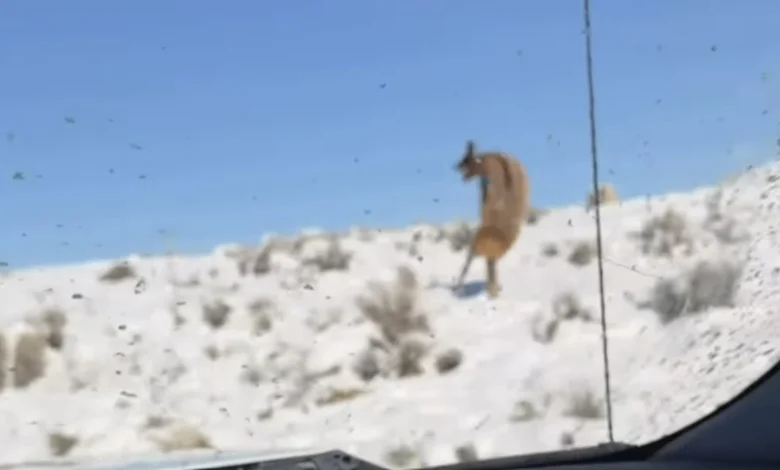
The viral video footage capturing a bull elk colliding with a fence post at high speed during a winter sprint serves as a stark illustration of the physical hazards wildlife face when navigating human-modified landscapes. The incident, recorded by a passing motorist, depicts the animal traveling at a significant velocity across a snow-covered field before impacting a stationary, solitary fence post. While the elk was observed attempting to regain its footing shortly after the impact, the event has prompted discussions among wildlife biologists regarding the intersection of migratory paths, environmental stressors, and anthropogenic infrastructure.
Chronology of the Incident
The recorded event occurred in a rural, snowy environment, likely within the elk’s natural winter range. The footage begins with the elk moving at a rapid pace, estimated by observers to be approximately 40 miles per hour, as it navigated deep snow. The animal’s movement appeared fluid and purposeful, consistent with standard flight responses often triggered by perceived threats or the pursuit of seasonal forage.
In the moments preceding the collision, the elk successfully cleared an initial obstacle, demonstrating the high-performance physical capabilities of the species. However, as the animal continued its trajectory, its path intersected with a singular, vertical fence post. The collision was immediate and blunt, with the force of the impact momentarily halting the animal’s momentum and causing it to lose its balance. Following the contact, the animal remained on the ground briefly before exhibiting signs of recovery, though the extent of potential internal injury remains unknown due to the lack of post-incident monitoring. The motorist, prioritizing transit, continued along the roadway, leaving the animal to its own recovery process in the wilderness.
Species Profile and Physical Dynamics
Elk (Cervus canadensis) are widely recognized as one of the most formidable members of the Cervidae family. Anatomically, they are built for both endurance and explosive speed, which is essential for survival in diverse environments ranging from mountain meadows to dense forests. Adult cows typically weigh between 500 and 600 pounds, while mature bulls can reach weights between 700 and 1,100 pounds. At the shoulder, these animals stand approximately five feet tall, creating a powerful, high-center-of-gravity silhouette that is designed for traversing rugged terrain.
When an elk reaches a top speed of 40 miles per hour, it generates a significant amount of kinetic energy. According to basic physics, the force of an impact is proportional to the square of the object’s velocity. Consequently, a collision with a stationary, rigid object like a fence post at these speeds can result in extreme blunt-force trauma. While elk possess dense muscle mass and thick winter coats that provide a degree of protection, they are not immune to the consequences of high-velocity impacts. Fractures, internal hemorrhaging, and concussive injuries are common risks when such animals strike fixed infrastructure.
The Impact of Anthropogenic Infrastructure
The presence of fencing in open, wild spaces often presents a paradoxical challenge to wildlife. While fences are necessary for agricultural and land management purposes, they can become lethal obstacles when poorly placed or obscured by weather conditions. In deep snow, a fence post may appear as a simple vertical line, potentially blending into the background of a high-speed sprint.
Wildlife experts note that when an animal is in a state of high-arousal flight, its peripheral vision and focus are narrowed toward the perceived threat or the path ahead. This "tunnel vision" can cause animals to overlook stationary objects that they might otherwise avoid under normal, calm conditions. The specific placement of the post in the viral video—standing alone in a wide expanse—highlights how isolated man-made structures can become unintended traps.
Biological Recovery and Survival Mechanisms
In the wild, animals do not have access to veterinary intervention or medical support. Their recovery process is dictated entirely by their biological resilience. For an elk, survival following a traumatic event depends on its ability to minimize movement, manage pain, and resume feeding as quickly as possible. If an animal suffers a severe injury, it may become susceptible to predation or environmental exposure, particularly in harsh winter conditions.
The lack of specialized care means that even minor injuries can have compounding effects. A strained limb or a bruised ribcage can impede an elk’s ability to forage or escape future threats, effectively reducing its fitness in the wild. While the elk in the footage was seen attempting to stand, the internal physiological state of the animal after such a "pancake" impact is a subject of concern for biologists. The traditional survival strategy—"walking it off"—is a necessary adaptation, but it is not without a high mortality risk.
Public Perception and Social Media Commentary
The video has generated a widespread response across digital platforms, ranging from amusement at the animal’s uncharacteristic lack of spatial awareness to genuine concern for its health. Social media users have focused heavily on the irony of the elk striking the only obstacle in a vast, open field, with many comments highlighting the contrast between the elk’s typical reputation for intelligence and the momentary lapse in navigation.
However, the discourse has also shifted toward the ethical implications of human infrastructure. Several users noted the potential danger posed to the animal by the rigidity of the fence post, suggesting that the event serves as a visual reminder of how human-installed materials can inadvertently disrupt the safety of local wildlife.
Broader Ecological Implications
This incident serves as a case study in the broader field of wildlife-infrastructure conflict. As human development continues to expand into historically wild territories, the frequency of encounters between wildlife and man-made barriers increases. This is particularly relevant for migratory species like elk, which often travel hundreds of miles seasonally.
Effective land management strategies, such as the implementation of wildlife-friendly fencing standards—which include using top rails that are highly visible and bottom wires that allow for safe passage—are becoming increasingly important. By modifying infrastructure to be more visible and passable, land managers can reduce the likelihood of high-speed collisions.
Furthermore, the incident underscores the importance of wildlife corridors. When paths are clearly defined and free of unnecessary obstructions, animals can move through landscapes with greater predictability, reducing the likelihood of panicked flight and subsequent accidents.
Conclusion
The footage of the elk’s collision is more than just a viral moment; it is a sobering look at the hazards of the natural world in the age of human expansion. While the elk’s physical size and inherent strength are remarkable, they are no match for the unforgiving nature of fixed, man-made obstacles. As humans continue to share space with wildlife, the incident highlights the necessity of thoughtful infrastructure design and a deeper understanding of the physical realities faced by large mammals. For the elk involved, the incident serves as a testament to the resilience of the species, even as it underscores the fragility of life in an environment that is increasingly cluttered with the markers of human presence.
Related posts: