The Prolific Triumph of Twisted Teens: How New Orleans Garage Rock Duo Defies the Odds With Their Third Album of 2026

When any contemporary musical act announces plans to release a third full-length studio album within a single calendar year, industry analysts and devoted fans alike typically respond with a healthy degree of skepticism. Historically, extreme prolificacy in the recording industry is frequently associated with rushed production schedules, diminishing artistic returns, and hastily compiled tracklists consisting largely of discarded outtakes, demos, and sonic leftovers. Conventional music industry wisdom dictates that human creativity is finite, and the arduous process of writing, arranging, recording, and mixing a cohesive, high-quality record simply cannot be sustained at such an unrelenting, breakneck tempo without sacrificing artistic integrity.
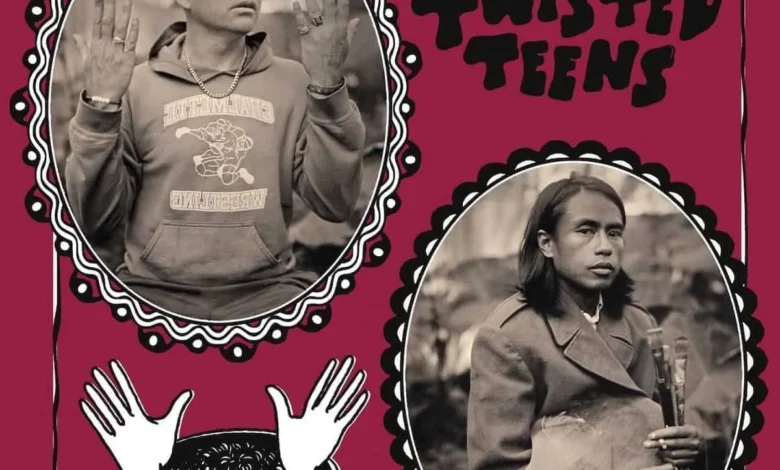
Yet, exceptions to the rule occasionally emerge to completely upend prevailing assumptions. Proving that rigorous discipline can indeed coexist with exceptional creative output, the New Orleans-based garage rock duo Twisted Teens has definitively shattered expectations. Their latest release, The Holy Cross Tigers, is not merely a passable contractual obligation; it stands as their fourth overall long-playing record and their third major LP release of 2026 alone. Arriving on the heels of their critically acclaimed February effort, Blame the Clown, and their blistering July breakthrough, Florida Water Blues, The Holy Cross Tigers manages the seemingly impossible feat of surpassing its predecessors to become the most accomplished, fully realized work of the duo’s career to date.
The Chronology of a Relentless 2026 Campaign
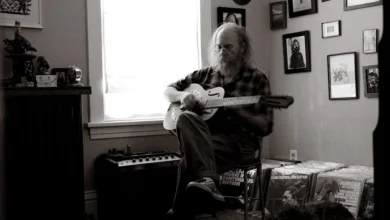
To fully comprehend the magnitude of what Twisted Teens has achieved with the release of The Holy Cross Tigers, one must examine the astonishing timeline that defined their landmark year. Comprising vocalist and multi-instrumentalist Caspian Hollywell and steel guitarist RJ Santos, the underground garage rock outfit operated with a military-style precision throughout 2026, transforming the traditional album-release cycle into a continuous stream of consciousness.
The band’s frantic pace began in the winter months. In February 2026, Twisted Teens dropped Blame the Clown, a record that quickly established their distinct sonic footprint within the American underground. Merging raw, lo-fi recording techniques with sophisticated song structures, the album earned regional acclaim and established a solid baseline for the group’s unique brand of swamp-punk aesthetics. Rather than taking a standard international tour to support the record—the typical path for a burgeoning indie act—Hollywell and Santos immediately returned to their makeshift New Orleans workspace to channel their creative momentum into new material.
By mid-summer, the fruits of this intense labor materialized in the form of Florida Water Blues, released in July 2026. This second offering expanded significantly upon the sonic palette introduced earlier in the year, incorporating more prominent elements of traditional American country instrumentation filtered through a lens of urban decay and surrealist southern gothic folklore. Critics noted that the record felt urgent, visceral, and remarkably cohesive, considering the mere five-month gap between it and its predecessor.
Conventional music industry wisdom suggested that the well would surely run dry following a prolific double-strike. Instead, Twisted Teens accelerated their output. Throughout the late summer and early autumn, whispers emerged from the Louisiana underground regarding a third full-length project slated for the closing weeks of the year. When official confirmation arrived, industry observers braced for a collection of B-sides. Instead, The Holy Cross Tigers arrived as a fully formed, conceptually rich masterpiece that synthesizes the lessons learned across their two previous 2026 releases while introducing entirely new avenues of sonic exploration.
A Unique Sonic Architecture
The distinctive soundscape that drives The Holy Cross Tigers—and indeed, the entire Twisted Teens catalog—stems from an unlikely convergence of disparate musical traditions. The duo has consistently resisted easy categorization, refusing to anchor themselves strictly to the revivalist garage rock movement that has dominated certain pockets of the independent music scene over the past decade.
Instead, Caspian Hollywell once described the band’s aesthetic through a uniquely vivid, multifaceted lens, characterizing their output as, "The Kinks of living in a school bus with no wheels on it. The Rolling Stones of Jungian anarchism. The Buzzcocks of the poisoned bogs of south Louisiana. Punk inflected country music, or country inflected punk music idk."
This self-assessment, while tongue-in-cheek, captures the precise tonal dichotomy that makes The Holy Cross Tigers so compelling. On tracks like the streaming hit "I Spend My Time Crying," the listener is immediately struck by the tension between Hollywell’s driving, punk-infused vocal delivery and RJ Santos’s weeping, atmospheric steel guitar lines. Santos’s instrument—traditionally associated with the weeping pedal bends of classic Nashville country and western recordings—is subverted here, repurposed as an instrument of feedback, dissonance, and hypnotic southern gothic atmosphere.
The rhythm section, largely orchestrated by Hollywell through a combination of live percussion and meticulously textured drum programming, provides a relentless, motorik pulse that anchors the chaotic arrangements. Meanwhile, the lyrical content steers clear of mundane rock-and-roll clichés, favoring instead surrealist vignettes of southern isolation, psychological introspection, and the distinct cultural microclimates of the American Gulf Coast.
Supporting Data and Production Realities
The operational model utilized by Twisted Teens for the creation of The Holy Cross Tigers offers a fascinating case study in modern DIY production economics. In an era where major label releases routinely require bloated budgets, months of studio lockout time, and teams of multiple mixing and mastering engineers, Twisted Teens achieved their unprecedented 2026 output through a localized, self-contained workflow.
Financial and logistical data within the independent music sector indicate that sustaining a three-album release schedule within a single calendar year requires strict adherence to decentralized recording methods. By handling tracking, mixing, and initial mastering in-house, Hollywell and Santos bypass the traditional bottlenecks that slow down major label releases. This decentralized approach not only preserves the raw, unpolished urgency that defines garage rock, but it also grants the duo absolute creative autonomy.
Streaming data gathered across digital distribution platforms throughout 2026 indicates that this high-frequency release strategy has paid off tangibly in listener retention. Rather than experiencing the listener fatigue that industry executives often fear, Twisted Teens saw their monthly active listeners compound with each successive release. Blame the Clown established their core audience; Florida Water Blues expanded their demographic reach into Americana and alt-country circles; and The Holy Cross Tigers has successfully unified these disparate fan bases, translating into a significant surge in physical vinyl pre-orders and digital consumption metrics.
Reactions and Industry Implications
The unprecedented release schedule of Twisted Teens has not gone unnoticed by music critics, trade publications, and fellow artists. Within the broader independent music community, the band’s 2026 trajectory is increasingly viewed as a potential blueprint for how modern acts can navigate the attention economy of the digital age.
Industry analysts point out that the traditional album cycle—whereby an artist spends two to three years touring a single record before retreating to write a follow-up—is becoming increasingly unsustainable for mid-tier and underground acts attempting to maintain relevance in an oversaturated media landscape. By maintaining a constant presence in the cultural conversation through rapid-fire releases, Twisted Teens has effectively hacked the algorithm of modern music consumption without compromising the artistic depth of their work.
Critical reception to The Holy Cross Tigers has been overwhelmingly positive. Reviewers have lauded the record for its fearless refusal to repeat formulas, noting that tracks such as the album’s centerpiece compositions push the boundaries of what can be achieved within the traditional guitar-and-drums duo format. Peers within the southern garage rock circuit have similarly expressed admiration for the work ethic required to conceptualize and execute three distinct, high-caliber artistic statements in a single twelve-month period.
Broader Impact on the Modern Garage Rock Landscape
The cultural impact of Twisted Teens and their landmark 2026 output extends far beyond their immediate commercial success in New Orleans. By demonstrating that quality and quantity are not mutually exclusive, Hollywell and Santos have challenged a long-standing dogma of the recording industry.
For decades, the dominant narrative suggested that artists must carefully curate and ration their output to maintain mystique and critical gravitas. Twisted Teens, by contrast, operates with an abundance mindset, treating their creative output as an ongoing, living document rather than a series of meticulously calculated, career-defining monuments.
As the music industry continues to adapt to the realities of streaming economics, algorithmic discovery, and shifting consumer habits, the methodology behind The Holy Cross Tigers may well inspire a new wave of independent artists to rethink their own production timelines. Whether other acts can successfully replicate the rigorous alchemy that brought Caspian Hollywell and RJ Santos to this creative peak remains to be seen. What is certain, however, is that Twisted Teens has firmly established themselves as one of the most vital, innovative, and startlingly productive forces in contemporary American rock and roll.