Jarrett Gilgore and Anthony Pirog Forge Intimate Sonic Landscapes on New Collaborative Album Between The Earth and Where

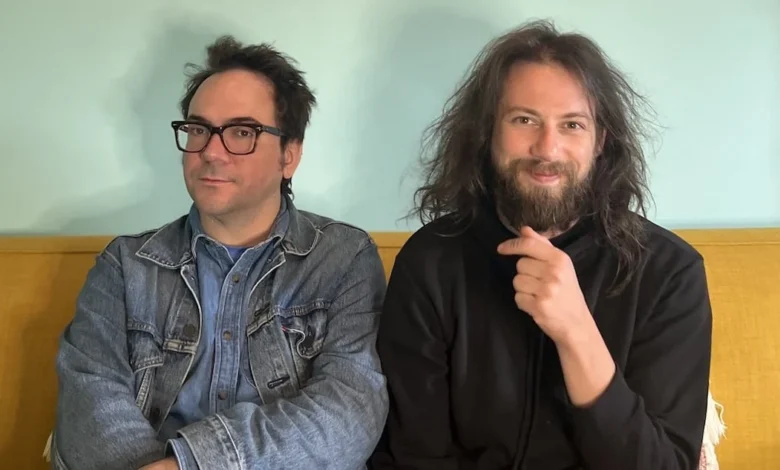
The contemporary instrumental music landscape welcomes a profound addition this autumn as saxophonist Jarrett Gilgore and guitarist Anthony Pirog prepare to release their collaborative full-length album, Between The Earth and Where. Scheduled for an official release on September 18, 2026, through the independent label Unheard of Hope, the record marks a notable departure from the high-intensity, avant-garde improvisational work that defined both musicians’ early careers within the mid-Atlantic underground music scene. Instead, the eight-track collection offers an exercise in restraint, warmth, and intricate sonic architecture, balancing technical virtuosity with emotional vulnerability.
Background Context of the Collaboration and Washington, D.C., Roots
To understand the artistic trajectory that led to Between The Earth and Where, one must examine the vibrant, volatile hothouse of the Washington, D.C., experimental music community where both Gilgore and Pirog developed their respective crafts. For over a decade, the nation’s capital has served as an unlikely crucible for boundary-pushing audio art, synthesizing elements of free jazz, post-rock, noise, and contemporary classical composition.
Both artists earned their reputations through relentless touring, cross-genre collaborations, and demanding performances that routinely pushed the physical limits of their instruments. Pirog, widely celebrated for his mastery of both jazz and ambient electric guitar textures, has long been a linchpin of the D.C. creative music ecosystem, leading diverse ensembles ranging from avant-garde jazz trios to genre-defying instrumental rock outfits. Gilgore, whose mastery of the saxophone blends classic tonal lyricism with extended techniques, spent his formative years exploring the outer edges of skronk, free improvisation, and modal exploration.
Historically, the intersection of guitar and saxophone in modern improvised music summons memories of legendary pairings—such as Ornette Coleman and Don Cherry or Derek Bailey and Anthony Braxton—where the interplay is driven by intellectual rigor and structural deconstruction. However, Gilgore and Pirog’s latest project consciously pivots away from the abrasive sonic confrontations of their past. Rather than leaning on rapid-fire tempo shifts or cacophonous explosions of sound, the duo has elected to explore the expansive power of negative space, tonal warmth, and deliberate, measured pacing. Anthony Pirog has frequently characterized the overarching ethos of the new project as a "musical hug," describing the album as a direct acoustic reflection of their longstanding personal and professional relationship.
Musical Analysis and Compositional Breakdown
Between The Earth and Where unfolds as a cohesive, nocturnal journey that seamlessly blends ambient textures with sophisticated jazz harmonies. The opening composition, Soft Eyes, establishes the emotional baseline of the record. Pirog constructs a delicate, latticed web of acoustic and electric guitar arpeggios that serve as a secure foundation for Gilgore’s sensuous, floating saxophone lines. Rather than competing for sonic space, the instruments complement one another, creating a suspended atmosphere where time seems to slow down.
The romanticism deepens on tracks like For Now, which utilizes subtle tremolo effects on the guitar to evoke a cinematic expanse. Music critics have already drawn favorable comparisons between this track’s drifting, meditative movements and the atmospheric masterpieces of post-rock pioneers like Dirty Three, specifically referencing their landmark 1998 release Ocean Songs. Yet, even within these ambient drifts, the compositions retain an internal momentum, occasionally swelling into poignant, star-crossed lead melodies that demand active listening.
On Life Lines, the duo adopts the methodology of spatial sculptors. The track derives its power from the things left unplayed, utilizing calculated pauses and breath control to give shape to an ongoing musical dialogue. Meanwhile, Aster ventures further into ambient territory, utilizing softly swelling tape feedback and synth-like textures to envelop the listener in a warm bath of sound. The track functions much like a micro-dose of minimalist drone music—echoing the elongated tape-loop techniques of William Basinski, yet condensed into a tightly focused, highly impactful minute of audio.
The album’s lead single, Golden Hour, offers a more dynamic rhythmic pulse, driven by a giddy interplay of arpeggiated organ tones, rhythmic guitar phrasing, and a droning saxophone bed. The resulting sonic architecture resembles a surrealist fantasia, playfully evoking the image of an avant-garde wedding band soundtracking an unexpected summit between ambient music pioneer Brian Eno and minimalist master Steve Reich.
Timeline and Release Chronology
The rollout for Between The Earth and Where has been meticulously planned by Unheard of Hope to maximize critical engagement within both jazz and ambient music communities.
- Early 2024: Gilgore and Pirog enter studio sessions in Washington, D.C., shifting focus away from high-intensity live improvisations toward intimate, textural composition.
- Late 2025: Post-production, mixing, and mastering are completed, focusing on preserving the acoustic warmth and natural resonance of the live room performances.
- August 2026: The lead single, Golden Hour, is released digitally across all major streaming platforms alongside a limited-run promotional campaign.
- September 18, 2026: The official global release of Between The Earth and Where on vinyl, CD, and digital formats via Unheard of Hope.
- Fall/Winter 2026: A targeted regional tour is announced, featuring intimate venue performances designed to replicate the subtle acoustics of the album.
Broader Cultural Impact and Socio-Political Implications
While Between The Earth and Where is fundamentally a work of pure instrumental art, industry observers have noted its timely arrival within the broader cultural climate of the United States. Created by two artists deeply rooted in a city synonymous with political friction, institutional bureaucracy, and ideological polarization, the album represents a quiet act of defiance through beauty.
At a time when public discourse is frequently dominated by aggressive rhetoric, declining nuance, and cultural fracturing, Gilgore and Pirog offer an alternative space defined by empathy, active listening, and profound eloquence. The album does not attempt to answer the complex socio-political challenges of the day with grand declarations; instead, it invites the listener into a temporary utopia—a carefully constructed sanctuary built between the earth and the unknown.
Through a rare synthesis of emotional candour and absolute technical mastery, Jarrett Gilgore and Anthony Pirog have delivered a defining record of their respective careers. By stripping away excess and focusing entirely on the delicate, nocturnal frequencies of human connection, they have reaffirmed the enduring vitality of improvised music in the twenty-first century. As the release date of September 18, 2026, approaches, the jazz and ambient communities alike await the opportunity to step inside the world they have so meticulously brought to life.
Related posts: