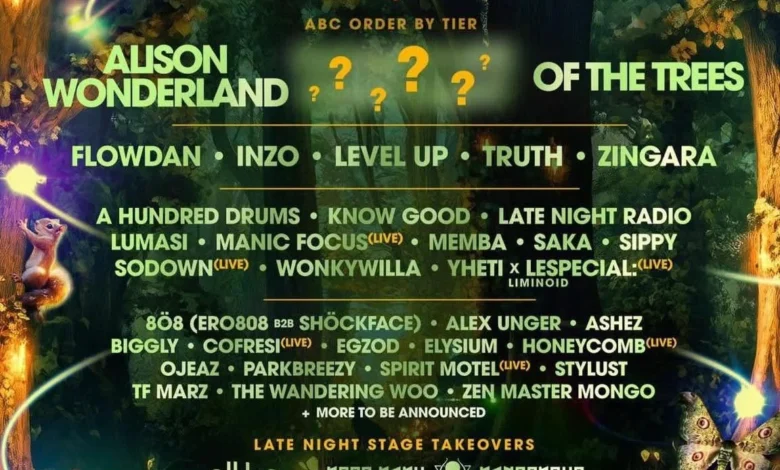
The legal machinery of New York State has officially turned against the organizers of the failed 2025 Evolutions Festival, a marquee electronic music gathering that collapsed into insolvency and litigation just days before its scheduled opening. New York Attorney General Letitia James has filed a comprehensive lawsuit against the festival’s promoters, alleging a systematic failure to reimburse over $243,000 in ticket sales and vendor fees. The civil action, which seeks both restitution for defrauded consumers and significant punitive damages, underscores the state’s increasingly aggressive stance on protecting the rights of concertgoers in an era of volatile live event production.
The Anatomy of a Collapse
Evolutions Festival was slated to be a highlight of the 2025 late-summer music circuit. Scheduled for September 5th through 7th at the Sugar Mountain Performing Arts Center in the rural New York town of Caneadea, the festival had successfully courted a high-profile lineup of electronic music heavyweights. The roster included headlining sets by Alison Wonderland, the bass-heavy stylings of Of The Trees, and the fan-favorite duo Ganja White Night. For many fans, the festival represented a premier destination experience, promising a weekend of immersive production in a scenic setting.
However, the ambitious project began to show signs of structural instability in the final weeks leading up to the gates opening. On August 26, 2025—just ten days before the inaugural event was set to begin—organizers issued a blunt, brief announcement via social media: the festival would not move forward. The sudden cancellation sent shockwaves through the community, leaving thousands of attendees who had traveled from across the country to secure lodging and transportation in a state of immediate uncertainty.
A Financial Paper Trail
The scope of the financial fallout, as detailed in the Attorney General’s complaint, is extensive. Records indicate that Evolutions Festival LLC and its affiliated entities, 845 Vibrations LLC, had collected $243,158.04 from 521 individual customers, representing 1,157 total tickets and VIP passes. Beyond the consumer losses, the impact extended to the local business economy. Twenty-eight independent vendors, having paid over $21,000 to secure spots at the venue to sell food, merchandise, and services, were left with substantial overhead costs and no path to recoup their investments.
State investigators found that in the wake of the cancellation, the festival organizers essentially ceased communication with their patrons regarding financial restitution. While a small subset of attendees—eleven individuals in total—managed to recover a collective $5,005.97 by initiating chargeback disputes through their credit card issuers, the lawsuit alleges that the festival promoters themselves failed to issue a single voluntary refund. This absolute cessation of financial responsibility serves as the foundation for the Attorney General’s charges of deceptive business practices.
The Finger-Pointing Stalemate
The collapse of the festival was not merely a result of poor management, but a byproduct of a toxic breakdown between the event organizers and the venue operators at the Sugar Mountain Performing Arts Center. A separate, ongoing legal battle between these two parties has revealed a chaotic environment of failed compliance and broken contractual agreements.
Evolutions promoters initially laid the blame squarely at the feet of Sugar Mountain, publicly asserting that the venue failed to secure the necessary permits to host an event of that magnitude. According to the promoters, the venue’s inability to meet municipal regulations made the festival impossible to produce safely. Sugar Mountain, however, has vehemently denied this narrative. In their defense, the venue management argued that the organizers failed to provide essential documentation, specifically citing the absence of signed contracts and, more importantly, the lack of proof of liability insurance—a non-negotiable requirement for an event involving thousands of people.
The conflict has since escalated into a retaliatory lawsuit filed by Evolutions against Sugar Mountain. In these filings, the organizers claim the venue misled them regarding the capacity of the grounds and the legal authorization for alcohol service. This finger-pointing has left a vacuum of accountability, with both sides using the other as a shield against the mounting pressure from state regulators and consumer advocates.

Regulatory Requirements and the Law
Central to the Attorney General’s case is the state’s Arts and Cultural Affairs Law. This legislation is designed specifically to prevent the exact scenario that unfolded in Caneadea. The law mandates that event promoters must protect advance ticket proceeds through escrow accounts or other bonded financial arrangements. The intention is clear: if a concert is canceled, the funds must be available for immediate return to the consumer.
The investigation revealed that Evolutions Festival essentially treated ticket revenue as operating capital rather than held funds. When confronted by the Attorney General’s office, representatives for the festival reportedly argued that they only intended to provide refunds if they were successful in their litigation against Sugar Mountain. This, the state argues, is a fundamental violation of consumer protection standards. The Attorney General’s office maintains that a promoter’s obligation to the consumer is primary and independent of any disputes with third-party vendors or venues.
The Stakes: Restitution and Penalties
The lawsuit filed by Attorney General James is an attempt to hold the specific parties behind the festival—Evolutions Festival LLC, 845 Vibrations LLC, and individuals Michael G. Brown and Justin J. Brown—accountable for their roles in the event’s failure. The legal demands are twofold: immediate restitution for the ticket buyers and vendors, and a series of heavy civil penalties.
The state is seeking up to $5,000 for each of the 1,185 alleged violations of state law. Should the court uphold the maximum penalty on every count, the defendants could face a staggering financial liability approaching $6 million. Furthermore, the Attorney General is moving to restrict the defendants’ ability to operate in the future. The lawsuit requests that the court block these individuals from promoting any further live events within New York State until they secure a $500,000 performance bond. This move is designed to ensure that if these individuals attempt to enter the market again, they will be financially vetted and held to a standard that protects the public from a repeat of the 2025 incident.
Broader Industry Implications
The collapse of Evolutions Festival and the subsequent intervention by the New York Attorney General’s office highlight the increasing fragility of the independent music festival market. In the post-pandemic era, rising production costs, insurance premiums, and the complexities of local municipal compliance have created a high-risk environment for organizers. However, industry analysts note that the legal repercussions in this case may serve as a significant deterrent for promoters who attempt to treat consumer funds as personal or business capital.
The precedent set by this lawsuit may also force a shift in how tickets are sold. More platforms and states are beginning to mandate that ticket funds be held in escrow until the day of the event, ensuring that the consumer is protected against the volatility of event planning.
"Concertgoers and vendors who spend their hard-earned money in New York should know that my office has their back," Letitia James stated during the announcement of the lawsuit. "My office will never allow unsavory promoters to ruin that experience and take advantage of consumers or small business owners."
For the victims of the festival, the path to recovery remains uncertain. While the lawsuit provides a clear avenue for justice, the actual collection of funds from the defendants depends on the existence of assets and the outcome of the ongoing civil proceedings. As the litigation continues, it stands as a stark reminder of the risks associated with the live event industry and the state’s commitment to curbing deceptive practices in the entertainment sector. The outcome of this case will likely influence how future festivals are bonded, insured, and regulated, marking a significant chapter in the intersection of live music and consumer law.