The Rite of Spring remains the most consequential musical composition of the 20th century, a work that fundamentally altered the trajectory of Western classical music through its radical approach to rhythm, harmony, and orchestral color. Composed by Igor Stravinsky between 1911 and 1913 for Sergei Diaghilev’s Ballets Russes, the work—subtitled "Pictures of Pagan Russia"—was conceived in collaboration with the painter and archaeologist Nicholas Roerich. The scenario depicts a series of primitive rituals celebrating the advent of spring, culminating in a sacrificial dance where a young girl is chosen to dance herself to death to propitiate the gods of the earth. Since its tumultuous premiere at the Théâtre des Champs-Élysées in Paris on May 29, 1913, the score has transitioned from a scandalous avant-garde experiment to a standard benchmark for orchestral virtuosity and conducting technique.
Historical Context and the 1913 Premiere
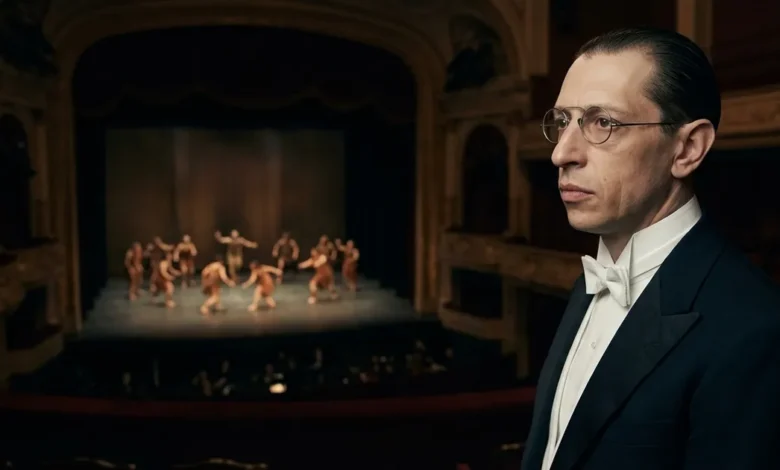
The premiere of The Rite of Spring, conducted by Pierre Monteux, is legendary for the riot it provoked among the Parisian audience. The combination of Stravinsky’s dissonant, percussive score and Vaslav Nijinsky’s unconventional, earth-bound choreography—characterized by turned-in feet and jerky movements—clashed violently with the aesthetic expectations of the era. Reports from the evening describe shouting matches, physical altercations in the aisles, and the composer fleeing the auditorium in distress.
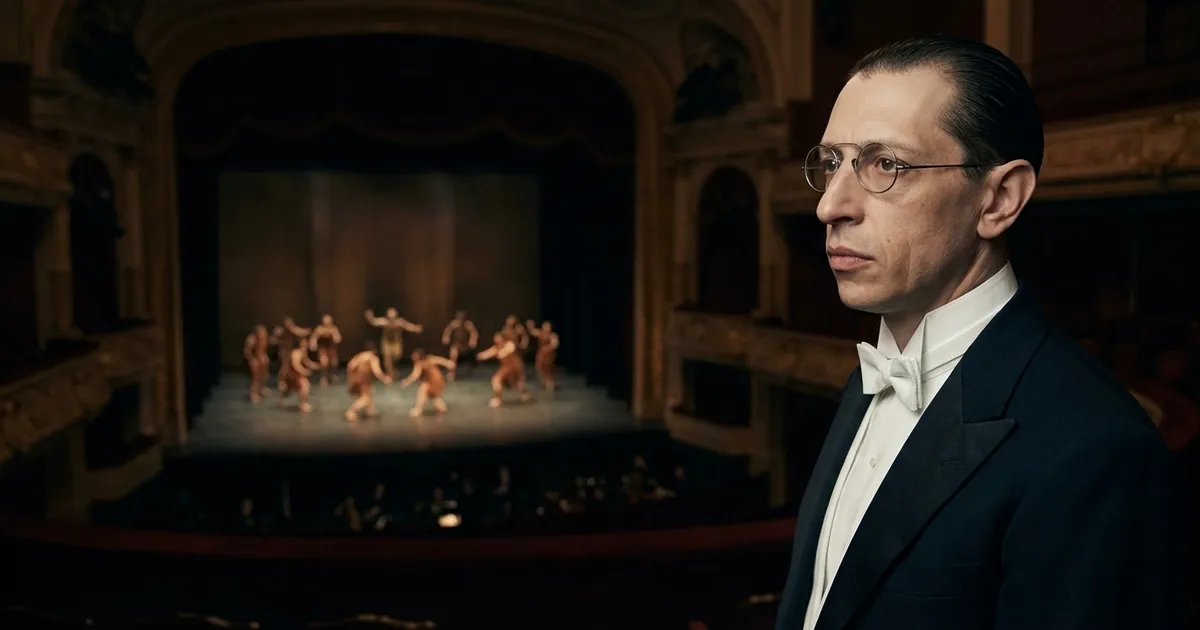
Despite the initial hostility, the musical merit of the score was quickly recognized. Within a year, concert performances without the ballet were met with acclaim, proving that the music could stand alone as a symphonic masterpiece. The work is divided into two parts: "The Adoration of the Earth" and "The Sacrifice." Across thirteen interconnected sections, Stravinsky deploys a massive orchestra—including quintuple woodwinds, eight horns, and an expanded percussion section—to create a sonic landscape that was entirely without precedent.
Musical Innovation and Technical Demands
The core of Stravinsky’s innovation lies in his treatment of rhythm. Unlike the fluid, melodic pulse of the Romantic era, The Rite of Spring utilizes "metric modulation" and unpredictable accents that disrupt the listener’s sense of time. The famous "Augurs of Spring" chord—a polychord consisting of an E-flat dominant seventh superimposed on an F-flat major triad—is hammered out with down-bowed strings, functioning more like a percussion instrument than a harmonic foundation.
For conductors and orchestras, the score presents immense technical hurdles. The opening bassoon solo, written in an unprecedentedly high register, is designed to sound strained and primitive, evoking the "awakening of the earth." Throughout the work, the complex shifting meters—often changing in every measure during the final "Sacrificial Dance"—require absolute rhythmic precision and a high degree of ensemble coordination.
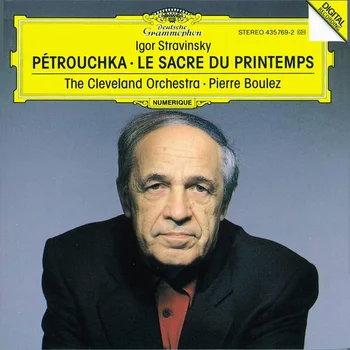
A Modern Analytical Standard: Pierre Boulez and the Cleveland Orchestra (1991)
In the history of The Rite of Spring on record, few figures loom as large as Pierre Boulez. A composer-conductor who championed the Second Viennese School and the post-war avant-garde, Boulez viewed Stravinsky’s score through a lens of structural clarity and objective precision. His 1991 recording with the Cleveland Orchestra, released on Deutsche Grammophon, represents the pinnacle of this analytical approach.
Boulez avoids the romanticized "primitive" hysteria that many conductors favor, instead treating the work as a complex piece of musical architecture. In the Introduction to Part I, the woodwind lines are rendered with a transparency that allows every idiosyncratic folk-derived melody to be heard. The Cleveland Orchestra’s brass section provides a clinical, immaculate foundation, ensuring that the dissonant counterpoint remains legible even during the most dense orchestral textures. This recording is often cited by scholars and musicians as the definitive "modern" interpretation, prioritizing the composer’s meticulously marked score over external emotionalism.
The Dionysian Energy of Leonard Bernstein and the New York Philharmonic (1958)
In stark contrast to Boulez’s cool objectivity is the 1958 recording by Leonard Bernstein and the New York Philharmonic. Captured in a single session at the Hotel St. George in Brooklyn, this performance documents Bernstein during his inaugural season as Music Director. If Boulez treats the work as architecture, Bernstein treats it as a visceral, life-or-death ritual.
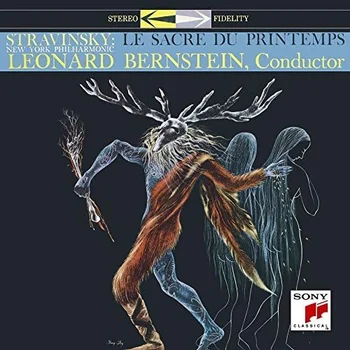
The recording is famous for its "edge-of-the-seat" intensity. The timpani strikes in the "Augurs of Spring" are delivered with a ferocity that borders on the violent, and the "Sacrificial Dance" possesses a terrifying momentum. The New York Philharmonic players of this era possessed a raw, muscular sound that perfectly suited the score’s aggressive nature. While it may lack the polished perfection of later digital recordings, the 1958 Bernstein account remains a testament to the work’s power to shock and exhilarate.
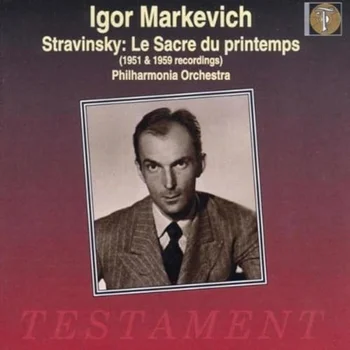
The Mid-Century Precision of Igor Markevitch and the Philharmonia Orchestra (1959)
Igor Markevitch’s relationship with The Rite of Spring was deeply personal; he had been a protégé of Diaghilev and a student of Nadia Boulanger, placing him in the direct lineage of the Parisian avant-garde. His 1959 stereo recording with the Philharmonia Orchestra is frequently lauded for its balance of discipline and volatility.
Markevitch’s interpretation is notable for its brisk tempos and biting orchestral colors. The brass playing is particularly acrid, emphasizing the "Pagan Russia" elements of the score. Unlike many contemporary recordings that soften the dissonances through lush acoustics, Markevitch and the EMI engineers captured a dry, punchy sound that highlights the score’s rhythmic grit. The Philharmonia’s ensemble work in the final sections is remarkably precise for the period, demonstrating why this recording has remained a staple of the discography for over six decades.
Russian Weight and Brooding Sensuality: Valery Gergiev and the Kirov Orchestra (1999)
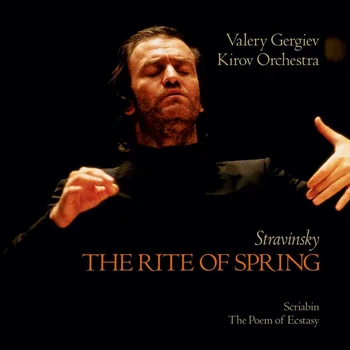
Valery Gergiev’s 1999 recording with the Kirov Orchestra (now the Mariinsky Orchestra) offers a distinctly Russian perspective on the work. Gergiev emphasizes the dark, earthy textures of the score, moving away from the "neon" brilliance of Western orchestras in favor of a heavier, more burnished sonority.
In this account, the "Spring Rounds" section is played with a deliberate, crushing weight that conveys the physical impact of a tribal procession. Gergiev’s pacing is flexible, allowing for moments of brooding sensuality in the quieter passages of Part II. The Philips engineering captures the massive scale of the Kirov’s sound, providing a sense of depth and atmosphere that makes the ancient ritualistic elements of the scenario feel tangible. It is a performance that prioritizes mood and cultural context over mechanical precision.
Atmospheric Detail: Simon Rattle and the City of Birmingham Symphony Orchestra (1987)
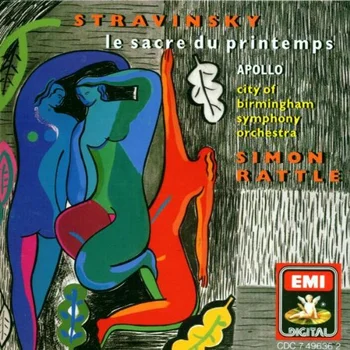
Simon Rattle’s 1987 recording with the City of Birmingham Symphony Orchestra (CBSO) reflects a more patient, detail-oriented approach to the score. Rattle, who has often spoken of the work’s influence on his career, focuses on the landscape-like evocations of the music.
The "Jeu du rapt" (Ritual of Abduction) is delivered with earthy energy, yet Rattle ensures that the middle-register woodwind lines—often lost in other recordings—are clearly audible. The EMI recording provides a warm, naturally spaced soundstage that emphasizes the score’s orchestral sophistication. Rattle’s interpretation is particularly effective in the transitional moments between sections, where he builds rhythmic tension gradually rather than relying on sudden shocks.
Chronology of The Rite of Spring’s Evolution
- 1911–1912: Stravinsky composes the score in Clarens, Switzerland, and Ustilug, Russia.
- 1913: Premiere at the Théâtre des Champs-Élysées, Paris, conducted by Pierre Monteux.
- 1921: A new production choreographed by Léonide Massine attempts to move away from Nijinsky’s original vision.
- 1929: Stravinsky makes his first recording of the work as a conductor (in a truncated version).
- 1940: Walt Disney’s Fantasia features an edited version of the score, introducing the music to a massive global audience, despite Stravinsky’s public disapproval of the arrangement.
- 1960: Stravinsky records the definitive stereo version of the work with the Columbia Symphony Orchestra.
- 2013: The centenary of the premiere is celebrated worldwide with hundreds of performances and new reconstructions of the original Nijinsky choreography.
Data and Technical Requirements of the Score
To execute The Rite of Spring as written, an orchestra must meet specific and demanding requirements:
- Woodwinds: 3 flutes (3rd doubling piccolo 2), piccolo, alto flute, 3 oboes (3rd doubling English horn 2), English horn, clarinet in E-flat and D, 3 clarinets in B-flat and A (3rd doubling bass clarinet 2), bass clarinet, 3 bassoons (3rd doubling contrabassoon 2), contrabassoon.
- Brass: 8 horns (7th and 8th doubling tenor tubas), 4 trumpets in C (4th doubling bass trumpet in E-flat), 3 trombones, 2 tubas.
- Percussion: 5 timpani (two players), bass drum, cymbals, tam-tam, crotales (tuned cymbals), triangle, guiro.
- Strings: A large section is required to balance the massive wind and brass forces, typically 16 first violins, 14 second violins, 12 violas, 10 cellos, and 8 double basses.
Broader Impact and Implications
The legacy of The Rite of Spring extends far beyond the concert hall. Its rhythmic innovations paved the way for the development of jazz, minimalism, and modern film scoring. Composers from Edgard Varèse to John Williams have cited the score as a primary influence on their use of orchestral color and pulse.
Furthermore, the "scandal" of 1913 established a new paradigm for the relationship between the avant-garde and the public, where controversy became a hallmark of artistic significance. Today, the work is no longer a cause for riots; instead, it is a rite of passage for every major conductor and a supreme test of an orchestra’s collective virtuosity. Whether through the surgical precision of Boulez or the primal fire of Bernstein, The Rite of Spring continues to challenge and redefine the boundaries of musical expression.