Oscar Stewart rocks out with the HE600 headphones from HiFiMAN, costing £719.
HiFiMAN, a company that has consistently pushed the boundaries of audio fidelity, has once again entered the high-end headphone market with the release of the HE600. Building on a legacy forged by legendary planar magnetic models such as the HE-6 and the more accessible HE-500, the HE600 arrives with the promise of capturing the sonic essence of its acclaimed predecessors while addressing the perennial challenge of demanding power requirements. Priced at £719, these headphones represent a significant investment for audiophiles seeking an engaging and dynamic listening experience. This review delves into the build, features, performance, and overall value proposition of the HiFiMAN HE600.

The Genesis of the HE600: A Legacy of Planar Magnetic Excellence
HiFiMAN’s journey in the audiophile world is intrinsically linked to its pioneering work with planar magnetic drivers. For years, the HE-6 stood as a benchmark, a highly sought-after headphone renowned for its exceptional sound quality but notorious for its insatiable need for power. This characteristic, while contributing to its unique sonic signature, often relegated it to the realm of dedicated audiophile setups capable of delivering substantial amplification. Recognizing the desire for a similar sonic profile in a more user-friendly package, HiFiMAN introduced the HE-500. This model, which the reviewer has owned for an extended period, offered a more approachable impedance and sensitivity, making it compatible with a wider range of amplification sources without compromising significantly on the core planar magnetic appeal.
The evolution continued with revised versions of the HE-6, including the HE-6 SE and HE-6 SE V2. While these iterations refined the driver technology and maintained a sonic lineage close to the original HE-6, they still presented considerable driving challenges. The HE600 emerges as the latest attempt to strike a delicate balance: to encapsulate the sonic spirit of the legendary HE-6 – its energy, detail, and engaging character – within a design that is significantly easier to drive. This objective naturally draws parallels to the HE-500, suggesting a lineage that prioritizes both performance and practical usability.
Launched last year, the HE600 aims to carve out its niche by offering a sound signature that deviates from the more generalized Harman curve, instead striving for a more captivating and immersive auditory experience. This review will scrutinize whether HiFiMAN has successfully achieved this ambitious goal, examining its construction, technical specifications, and, most importantly, its acoustic performance across a diverse range of musical genres.
Build and Features: A Blend of Robustness and Refinement
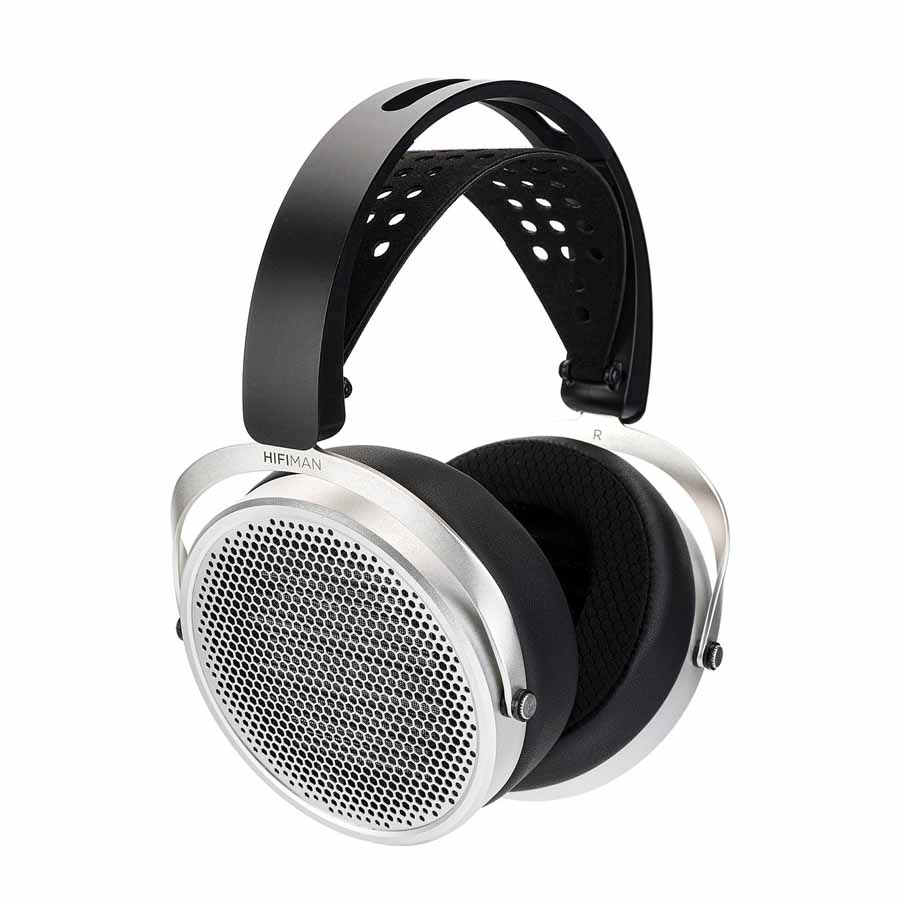
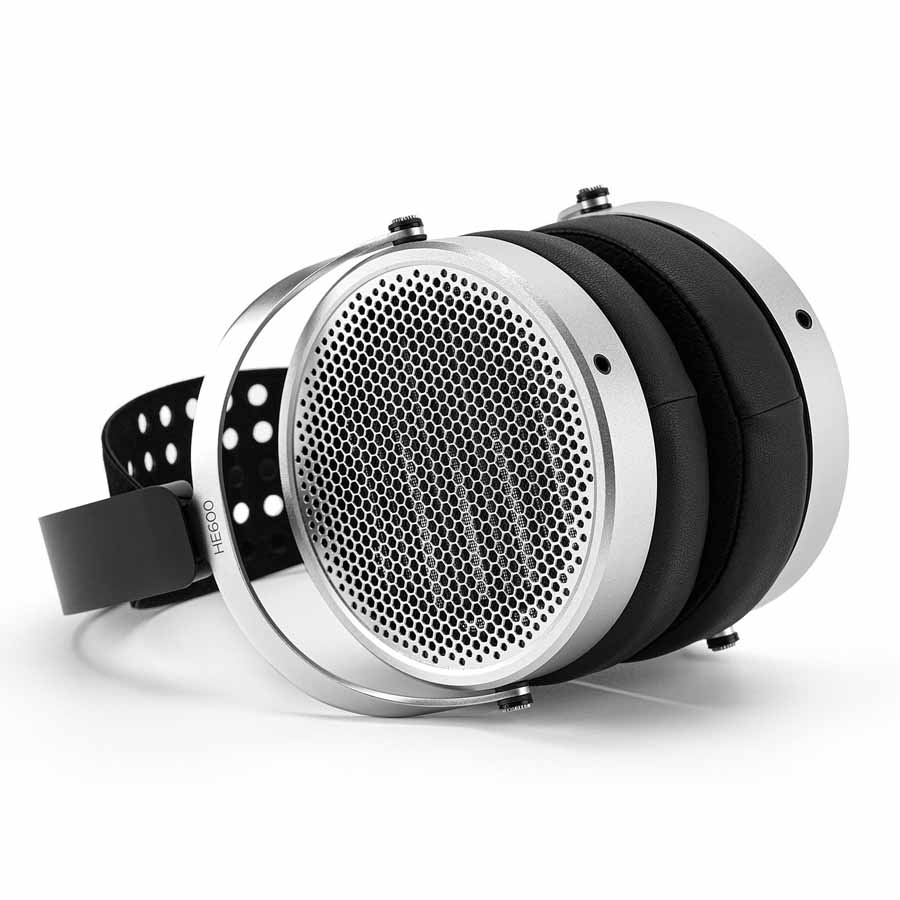
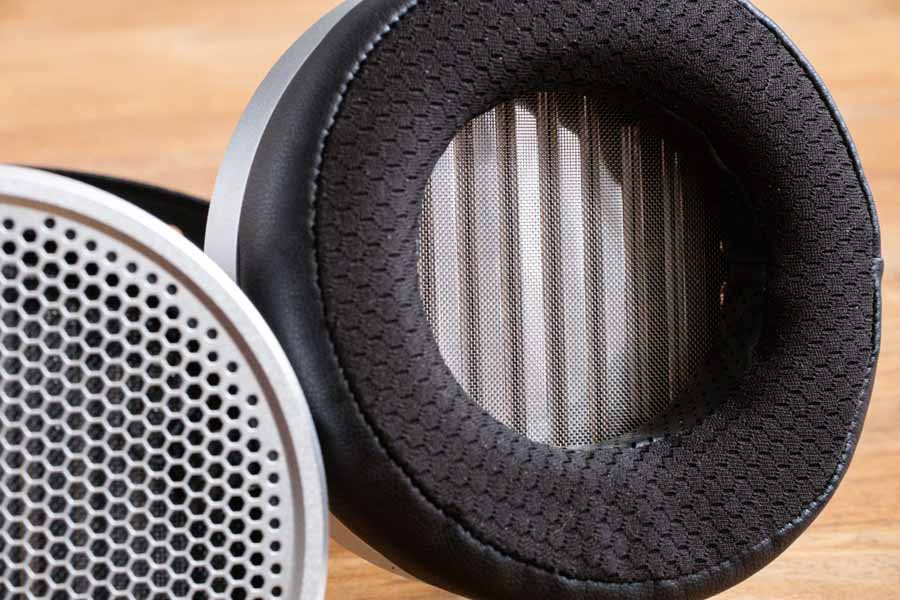
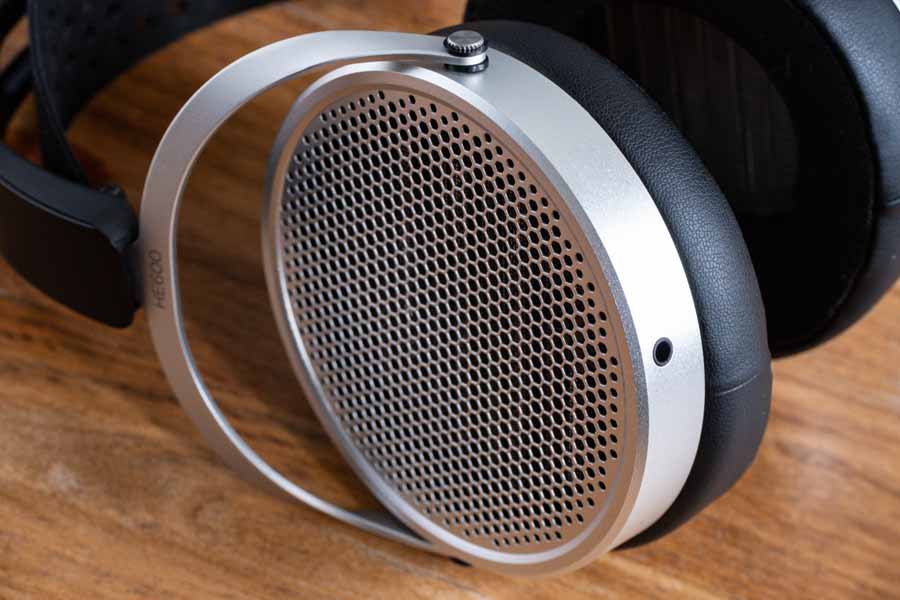
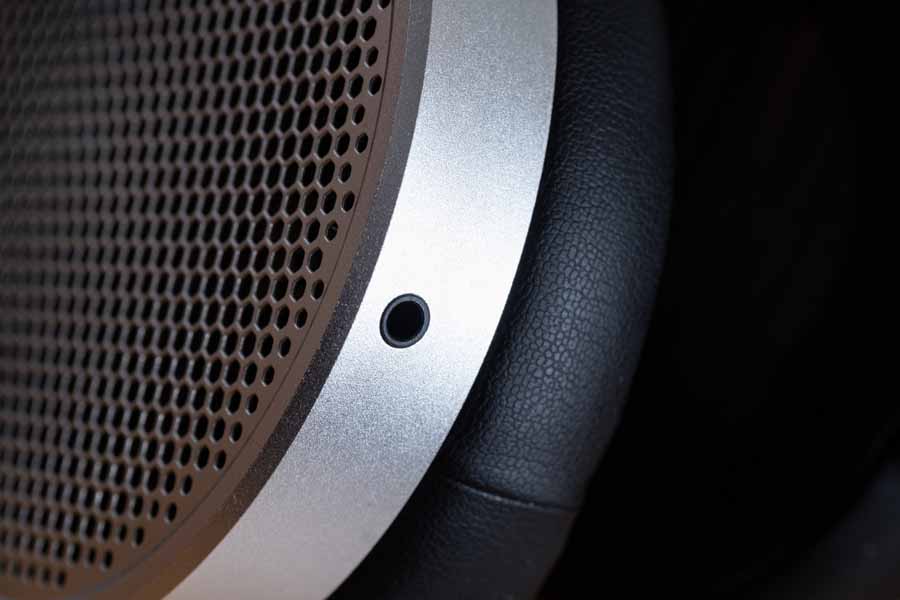
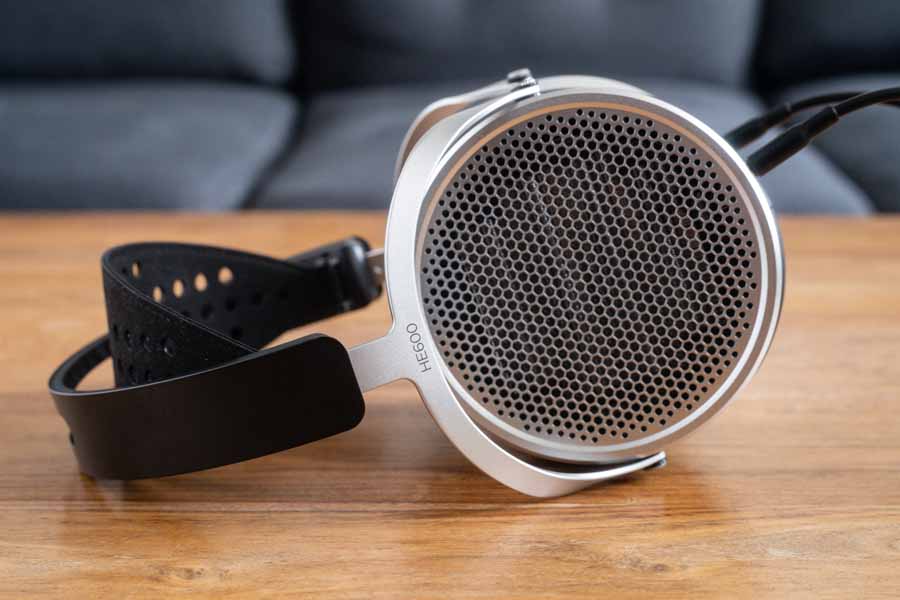
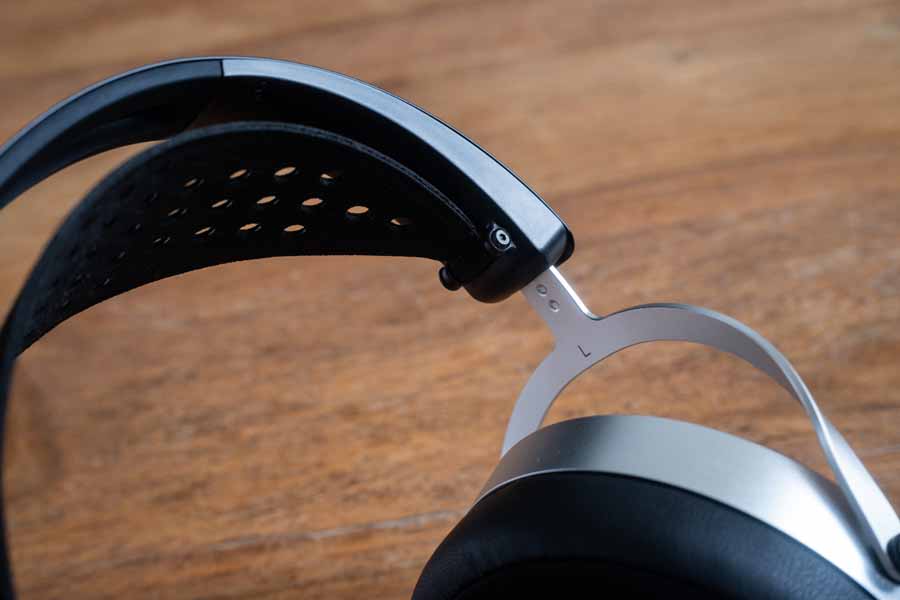
The physical design of the HE600 reflects HiFiMAN’s current design language, characterized by a blend of robust materials and thoughtful ergonomics. The headband features a comfort strap system, a welcome addition that distributes weight evenly across the head. The upper band is constructed from metal, providing a sense of durability, while strategically placed cosmetic plastic elements lend a refined aesthetic. The earcups and grilles are also fashioned from metal, contributing to the headphones’ premium feel and perceived longevity. The yokes, which connect the earcups to the headband, are similarly metal, offering both pivot and extension capabilities to facilitate a customizable fit.
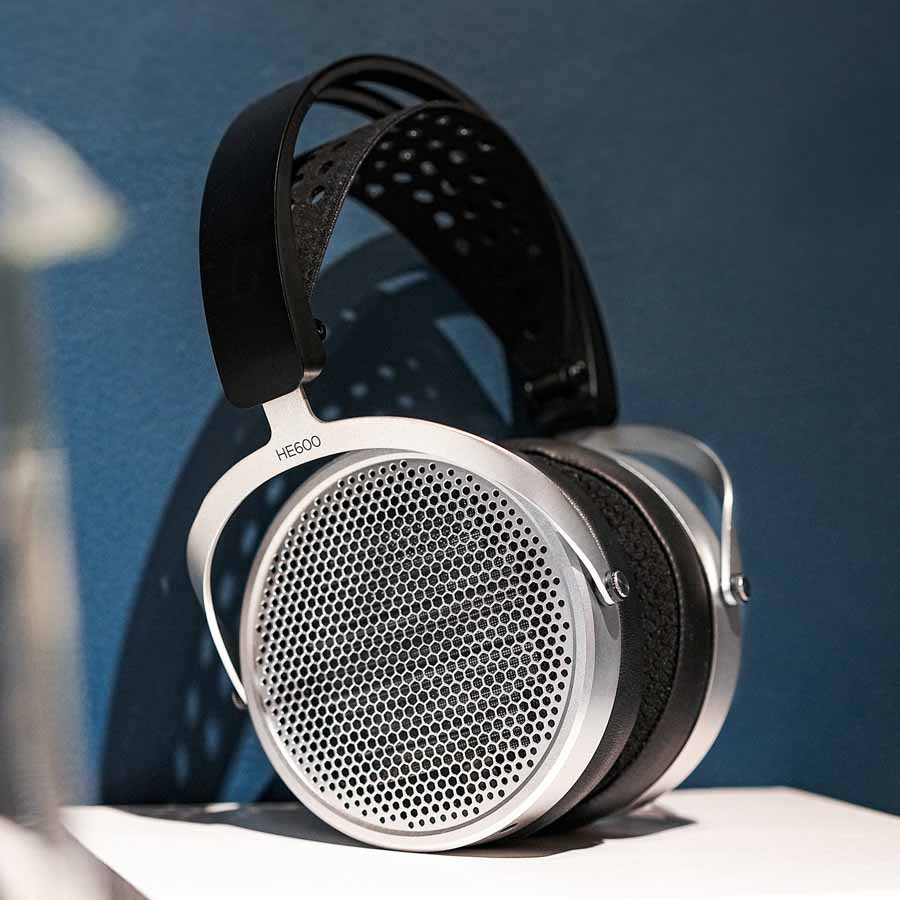
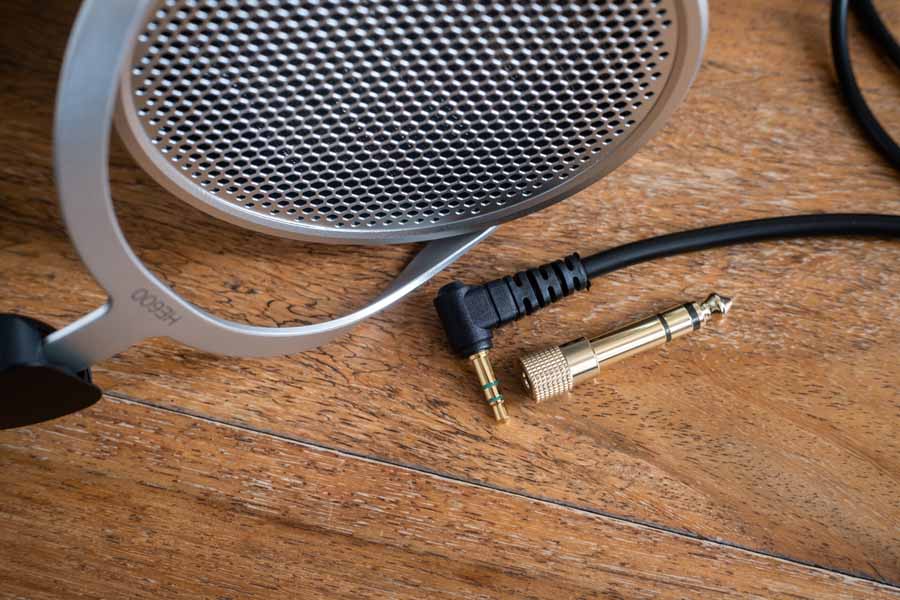
A point of consistency and a welcome one for many users is the adoption of 3.5mm detachable cables. HiFiMAN’s commitment to this standard connector across its range simplifies cable management and replacement. However, the stock cable included with the HE600 is described as being of average quality, akin to those found on more affordable models, and falls short of the premium, fabric-coated cables found on HiFiMAN’s higher-tier offerings.
While the overall build quality is commendable, a notable caveat arises concerning comfort. Despite the presence of well-cushioned earpads and the appreciated comfort strap headband, the reviewer found it necessary to extend the yokes to their near-maximum setting to achieve a proper fit. This could present a challenge for individuals with larger head circumferences. Furthermore, the out-of-the-box clamping force is noted as being somewhat high. While this can be mitigated to some extent by gently bending the metal headband outwards, it remains a factor that could impact long-term listening comfort for some users. The reviewer managed to achieve a comfortable fit for sessions lasting up to a couple of hours, suggesting that while not universally perfect, a satisfactory level of comfort is attainable.
Beyond the physical attributes, the HE600 incorporates HiFiMAN’s proprietary Gen 2 Neo supernano diaphragm technology, paired with enhanced magnet structures. This driver configuration is at the heart of the headphone’s sonic capabilities. Weighing in at a manageable 389g, the HE600 strikes a good balance between robust construction and comfortable wearability.
From a technical standpoint, the HE600 presents an impedance of 28 ohms, which is relatively low. However, its rated sensitivity of 92dB/mW places it on the lower end of the spectrum. This combination indicates that while not exceptionally difficult to drive in terms of impedance, the HE600 benefits significantly from a high-quality desktop amplifier capable of delivering substantial current to unlock its full sonic potential. This is a crucial consideration for prospective buyers, as pairing these headphones with an underpowered source may lead to compromised performance.
Setup and Use: A Dedicated Listening Environment
To thoroughly evaluate the HiFiMAN HE600, a meticulously curated listening setup was employed. The reference system comprised an SMSL D6S DAC, renowned for its clean digital signal processing, feeding into an iFi Audio iCAN Phantom headphone amplifier. The iCAN Phantom is recognized for its versatile amplification capabilities and its ability to drive demanding headphones. For an alternative perspective, the HE600 was also tested with the newer Luxsin X8 DAC/Amp, providing insights into how different amplification architectures might complement the headphones.
The source material consisted of a diverse library of music, primarily streamed via Qobuz for its high-fidelity offerings, supplemented by locally stored FLAC files derived from CD rips. The ROON platform was utilized for music management and playback, ensuring a seamless and high-resolution listening experience. This rigorous setup ensures that the performance observed is a true reflection of the HE600’s capabilities, rather than being limited by the supporting equipment.
Sound Quality: An Engaging and Energetic Sonic Signature
The initial impressions of the HiFiMAN HE600, formed shortly after its release, were overwhelmingly positive. The headphones deliver an "old school" HiFiMAN tuning that is both engaging and energetic, characterized by a significant sense of punch without sacrificing the retrieval of finer sonic details. This tuning aims to provide an auditory experience that is more visceral and involving than a purely neutral presentation.
Testing commenced with "Childhood Eyes" by Yellowcard, an upbeat pop-punk track that immediately showcased the HE600’s strengths. The articulate bass line was easily discernible, providing a solid foundation, while the kick drum exhibited excellent attack and impact. The reviewer highlighted the "snappiness" of the headphones, a characteristic that made the snares sound tight and precise. The overall layering of the music was impressive, with each instrument occupying its own distinct space within the soundstage. Unlike some other HiFiMAN models that prioritize expansive soundstages, the HE600 adopts a more intimate presentation, fostering a sense of closeness to the music while maintaining remarkable instrument separation. The violin passages, a signature element of Yellowcard’s sound, were rendered with clarity and never became muddled within the dense mix. Vocals were well-centered, with guitars and other instruments artfully arranged around them, ensuring that every nuance of the track was presented with clarity.
Tonally, the HE600 does not lean towards an overly thick or organic sound, nor does it strictly adhere to neutrality. Instead, it offers a slight boost in the bass region, a balanced midrange, and exceptionally clear treble that remains free from any hint of brightness or harshness. This finely tuned frequency response contributes to a sound that is both exciting and refined.
The HE600 demonstrates an adeptness at handling dynamic music across various genres. However, its more forward presentation truly shines with music that demands engagement. The track "Overcast" by Bury Tomorrow, from their album "Black Flame," features a dense and thick mastering. The HE600 managed to present this challenging track without devolving into a sonic mush, instead allowing each element to breathe. The double-kick drumming possessed considerable weight, and the downtuned guitars delivered a heavy, impactful sound without becoming dark or muddy. The transient response of the HE600 proved to be a standout feature, particularly during the track’s breakdown, where hits were delivered with both power and precision. Even in quieter passages, such as the drum-focused outro, the impact and depth were palpable.
Shifting gears to the hard rock anthem "Black Vultures" by Halestorm, the HE600 highlighted its ability to reproduce Lzzy Hale’s powerful vocals with remarkable clarity. The headphones handled female vocals with aplomb, exhibiting no sibilance issues. The treble was crisp, detailed, and extended, maintaining an absence of harshness or fatiguing peaks. The resolution in the treble region was particularly noteworthy, with cymbals possessing a vibrant energy while being rendered without any perceptible harshness. Halestorm’s energetic sound was faithfully reproduced, eliciting an immediate urge to headbang along to the music.
The electronic-infused pop of CHVRCHES’ "Good Girls" provided a different sonic landscape, yet the HE600 proved equally adept. The pulsating bassline was delivered with precision, and the vocals remained clear, detailed, and natural. Each layer of the music was given ample space, and the higher-pitched synthesizers were rendered without any hint of harshness. While acknowledging that the HE600 might not possess the same sheer fullness or low-end impact as the legendary HE-6 or HE-500, it compensates with a perceived sprightliness and an overall cleaner presentation. Nevertheless, it retains excellent low-end impact and depth when required, making it a highly engaging headphone with the right musical material.
The technical prowess of the HE600 was further tested with "G.O.A.T" by Polyphia, a track that demands exceptional performance across the entire frequency spectrum. The intricate guitar work, deep bass lines, and pervasive cymbal crashes serve as a formidable test for any audio system. The HE600 navigated this complex piece with sublime proficiency. The deep bass rumble was clearly articulated, and the drums, requiring significant punch and rapid transient response, never lagged or became indistinct. Guitars weaved around the soundstage with impressive clarity, and the layering remained spot on. Cymbals crashed with abundant sparkle and energy, without dominating the mix. The reviewer also noted the popularity of Polyphia’s "Playing God" at audio shows, highlighting the genre’s appeal for showcasing progressive, tech-metal music.
A dive into more extreme genres, specifically Deathcore with Suicide Silence’s "Hands of a Killer" from 2007, demonstrated the HE600’s versatility. While often perceived as pure noise by the uninitiated, digging beneath the surface reveals intricate guitar work and drumming. The HE600 proved instrumental in bringing out the best in this style of music. Mitch Lucker’s vocal performance, characterized by a seamless transition between low growls and higher screams, was rendered with impressive clarity. The HE600 made light work of this aggressive music, allowing each element to be heard distinctly. The responsive and snappy nature of the headphones, coupled with their forward sound signature, lends itself exceptionally well to extreme genres. Echoing the performance of the original HE-6 and HE-500 with metal music, the HE600 continues this legacy, proving itself to be a compelling choice for listeners of heavier music. The reviewer emphasized that while many headphones excel at jazz or classical music, few can do justice to more extreme genres, a domain where the HE600 truly shines.
Regarding system matching, the reviewer noted the synergistic performance with the Luxsin X8 DAC/Amp, particularly its built-in parametric equalizer (PEQ) which can be utilized with AI to create custom headphone profiles. While the PEQ did offer marginal improvements for personal taste, the reviewer found the iCAN Phantom to be a superior sonic match in its solid-state mode. The critical takeaway from system matching is the necessity of an amplifier with robust current delivery, as the HE600 thrives on ample power to achieve its optimal performance.
Quibbles: Areas for Improvement

The primary area identified for potential improvement in the HE600 is comfort. While the build quality is robust, the reviewer’s experience suggests that the headband length and yoke extension might not accommodate all head sizes comfortably, and the initial clamping force could be reduced for enhanced long-term wearability.
Conclusion: An Engaging Headphone for the Energetic Listener
The HiFiMAN HE600 emerges as a compelling option for those who prioritize a punchier, more energetic, and engaging sound signature. The reviewer’s inclination to use heavier music throughout the review was not merely a personal preference but a deliberate choice to highlight the HE600’s remarkable ability to do justice to such demanding genres. While the audiophile community may not universally gravitate towards these musical styles, for those who do, and who seek headphones that can truly bring these genres to life, the HE600 presents a strong contender.
While the HE600 can certainly reproduce more laid-back genres like jazz with pleasing results – Diana Krall, for instance, sounds great – its true potential is unlocked with music that demands dynamism and energy. The headphones come into their own when presented with engaging content, showcasing their inherent energy and their capacity to keep pace with complex and demanding musical passages.
The HE600 is an excellent choice for listeners who want to "rock out." The reviewer found themselves thoroughly immersed in heavier tracks while using these headphones, a testament to their fun and engaging nature when paired with appropriate music. Technically, they deliver a potent combination of punchy, full-bodied bass, a clear and articulate midrange, and well-rendered treble, all supported by excellent detail retrieval and layering. While they may not offer the vast soundstage found in some other HiFiMAN models, they excel in providing exceptional transient response and precise instrument separation, creating a sense of spaciousness within a more intimate presentation.
At a price point of £719, the HE600 offers considerable value for the level of sonic performance it delivers, particularly for those who appreciate its specific tuning. The build quality is solid, and the inclusion of standard features like detachable cables and replaceable earpads are expected at this price. The standout feature is undeniably the sound quality – energetic, engaging, dynamic, and punchy. The hard-hitting bass, clear midrange, and airy, crisp treble combine to create an exhilarating listening experience.
The reviewer’s affection for the overall sound and its energetic presentation is evident. The primary drawback remains the comfort, an aspect that HiFiMAN could potentially address in future iterations. The elevator pitch for the HE600 is clear: it’s a headphone for those seeking a dynamic and energetic sound signature that doesn’t compromise on detail. It hits hard, digs deep, and delivers a fun, engaging sound that is a pleasure to experience. While not optimized for vast soundstages for classical music, and handling middle-of-the-road jazz adequately, it truly excels with genres like metal, offering an immersive experience few other headphones can match. Ultimately, the HE600 consistently puts a smile on the listener’s face when enjoying heavy music, a sentiment that effectively encapsulates its appeal.
Technical Specifications:
- Driver Type: Planar Magnetic
- Diaphragm: Gen 2 Neo Supernano Diaphragm
- Impedance: 28 Ohms
- Sensitivity: 92 dB/mW
- Weight: 389g
- Cable Connector: 3.5mm Detachable
- Price: £719
The HiFiMAN HE600 represents a significant step in HiFiMAN’s ongoing commitment to delivering high-fidelity planar magnetic headphones that balance sonic excellence with improved user accessibility. While comfort remains a point of consideration, its energetic and engaging sound signature makes it a highly recommended option for enthusiasts seeking a dynamic and detailed listening experience, particularly for genres that benefit from a lively and impactful presentation.

Oscar Stewart
SUPPLIED BY HIFIMAN