Tekashi 6ix9ine Navigates Public Perception with Philanthropy Amidst Ongoing Rap Beefs

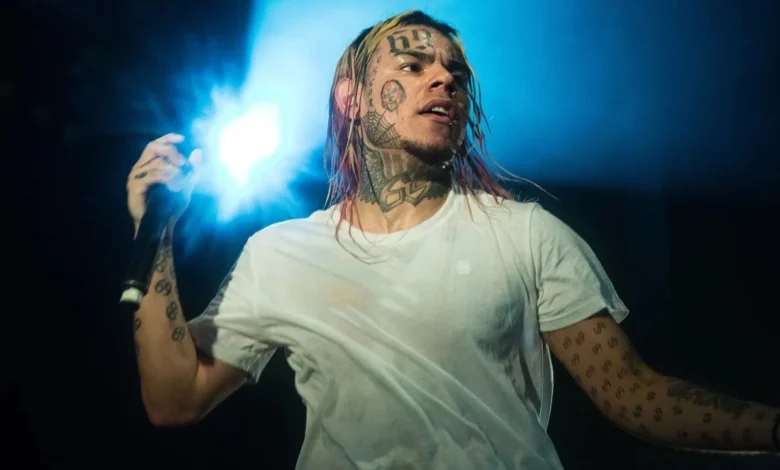
Rapper Tekashi 6ix9ine, known for his polarizing public image and often chaotic online presence, recently made headlines for a significant act of philanthropy, donating $25,000 to two families in need. This gesture, coming just weeks after his release from federal prison, offers a stark contrast to his usual provocative antics and ongoing feuds within the hip-hop community, prompting a reevaluation of his complex public persona. The donation, which specifically aided a Cleveland family whose 7-month-old daughter is awaiting a critical heart transplant, has ignited discussions about the artist’s motivations and the challenges he faces in rehabilitating his image.
Background: The Tumultuous Rise and Fall of Tekashi 6ix9ine
Born Daniel Hernandez, Tekashi 6ix9ine exploded onto the music scene in the late 2010s, quickly becoming a controversial figure known for his distinctive rainbow-colored hair, extensive tattoos, and aggressive, often confrontational lyrical style. His rapid ascent was fueled by viral music videos, chart-topping hits like "Gummo" and "Fefe," and a masterful, albeit often divisive, use of social media to cultivate a larger-than-life persona. This period was characterized by frequent online altercations with other artists, a pattern that would become a hallmark of his career.
However, 6ix9ine’s rise was inextricably linked to serious legal troubles. In November 2018, he was arrested on federal racketeering and firearms charges as part of an investigation into the Nine Trey Gangsta Bloods, a violent street gang with whom he was allegedly affiliated. Facing a potential life sentence, Hernandez made the highly controversial decision to cooperate with federal prosecutors, testifying against former associates. This move, widely perceived as "snitching" within the unwritten codes of hip-hop and street culture, garnered him immense scorn and earned him the label of a "rat" by many, including prominent figures in the music industry. His cooperation ultimately led to a significantly reduced sentence, and he was released from prison in April 2020, serving the remainder of his term under home confinement due to health concerns related to the COVID-19 pandemic.
Upon his full release, 6ix9ine immediately re-engaged with his fan base and detractors, often through calculated provocations designed to maintain his relevance. His post-prison strategy involved a strategic return to music with tracks like "Gooba," breaking streaming records, and a relentless continuation of his online trolling, ensuring he remained a constant topic of discussion, regardless of the sentiment. This carefully constructed public image of a defiant provocateur makes any act of genuine philanthropy particularly noteworthy.
The $25,000 Donation: An Unexpected Glimpse of Generosity
The recent $25,000 donation highlights a contrasting facet of 6ix9ine’s character. The rapper publicly shared details of the gift on his social media platforms, showcasing his direct interaction with the families. One recipient was from Lake Worth Beach, Florida, while the other, flown to Miami by the rapper, hailed from Cleveland, Ohio. The Cleveland family’s plight centered on their 7-month-old daughter, who requires a heart transplant to survive. Such a donation, directed towards a family facing immense medical and financial hardship, stands out against the backdrop of 6ix9ine’s typical online theatrics.
Observers and commentators have noted that this act caught many off guard, as it deviates from the long-standing narrative of 6ix9ine as solely a "clown" or a calculated provocateur. While the public nature of the donation could be interpreted as a strategic move for image rehabilitation, the direct impact on families facing critical circumstances suggests a potential underlying desire for positive contribution. This act of generosity has sparked debate: is it a genuine attempt to give back, a calculated public relations maneuver, or perhaps a complex combination of both? Regardless of the primary motivation, the immediate relief provided to these families is undeniable.
A Precedent of Rejection: The "No Kid Hungry" Incident
This recent philanthropic effort is not 6ix9ine’s first attempt at large-scale charity, though his previous endeavor met with a different outcome. In May 2020, following the success of his post-prison single "Gooba" and related merchandise sales, 6ix9ine publicly announced his intention to donate $200,000 (approximately £163,000) to the "No Kid Hungry" campaign, a prominent national organization dedicated to ending childhood hunger in America. The rapper posted about this planned donation on social media, framing it as a positive step.
However, the "No Kid Hungry" campaign swiftly and publicly rejected the substantial sum. In an official statement, the organization explained its policy, asserting, "We are grateful for Mr. Hernandez’s offer to donate to No Kid Hungry, but we are declining this donation. As a non-profit organization, we rely on the generosity of our donors and partners to help us feed kids everywhere. Our policy is to decline funding from donors whose activities do not align with our mission and values." This rejection sent a clear message about the deep-seated public relations challenges 6ix9ine faces. Despite the seemingly noble intent of the donation, the organization deemed his past actions, particularly his criminal history and controversial persona, incompatible with their values. This incident underscored the significant hurdles in his path to widespread public acceptance and image rehabilitation, highlighting that not all charitable acts are accepted at face value, especially from individuals with highly scrutinized pasts.
The Unwavering "Troll" Persona: Continued Rap Beefs
Despite these forays into philanthropy, 6ix9ine has shown no signs of abandoning his confrontational and provocative "troll" persona in the rap world. His recent actions demonstrate a persistent engagement in online feuds, often targeting other prominent artists.
One such incident involved rapper Young Thug. Following Young Thug’s appearance at Coachella on April 12, where he sported rainbow-colored hair, 6ix9ine quickly took to social media. He interpreted Thug’s aesthetic choice as a direct appropriation of his own distinctive image, which has long been characterized by vibrant, multi-colored hair. In response, 6ix9ine filmed himself in a dress and posted it online, ostensibly as a direct jab at the YSL rapper. The underlying message was clear: if an artist attempts to "copy" his style, 6ix9ine will escalate the provocation, out-trolling them every time to assert his originality and dominance in the realm of shock value. This move, while perhaps entertaining to some, reinforces his commitment to a persona built on conflict and spectacle.
Similarly, 6ix9ine reignited his long-standing animosity with Gucci Mane. The feud intensified when Gucci Mane released "Crash Dummy," a diss track reportedly aimed at fellow rapper Pooh Shiesty. Seizing the opportunity, 6ix9ine launched a scathing social media attack on Gucci Mane. He accused Gucci Mane of "snitching," a deeply charged accusation within hip-hop culture, especially ironic given 6ix9ine’s own history of cooperating with federal authorities. Simultaneously, 6ix9ine continued to vehemently criticize anyone who labels him a "rat." This complex and seemingly hypocritical stance underscores the intricate and often contradictory nature of his public narratives. He seemingly attempts to both condemn "snitching" and deny the label for himself, all while having famously engaged in the very act he criticizes others for. This tactic keeps him at the center of controversy, generating clicks and engagement, but also further solidifies his divisive reputation.
Broader Impact and Implications
The ongoing paradox of Tekashi 6ix9ine’s public life – the simultaneous pursuit of philanthropy and relentless provocation – raises significant questions about image, authenticity, and the nature of celebrity in the digital age. His $25,000 donation, while a genuinely positive act for the receiving families, exists in a constant tension with his calculated online antics. This dichotomy makes true image rehabilitation an uphill battle.
For one, the highly public nature of his charitable acts, coupled with his history, often leads to skepticism. Critics argue that such gestures are merely strategic maneuvers to soften his controversial image and distract from his past. The swift rejection by "No Kid Hungry" served as a stark reminder that genuine intentions, when perceived as originating from a tainted source, can still be met with institutional resistance. This highlights the enduring impact of his past legal troubles and the "snitch" label within the cultural landscape.
Furthermore, 6ix9ine’s continued engagement in rap beefs, replete with accusations and counter-accusations, ensures that his provocative persona remains dominant. While this strategy undeniably keeps him relevant in the fast-paced world of social media and hip-hop news cycles, it simultaneously overshadows any potential positive contributions. The constant stream of online drama reinforces the perception of him as a disruptive force rather than a reformed individual.
The implications for hip-hop culture are also noteworthy. 6ix9ine continually tests the boundaries of its unwritten codes, particularly concerning loyalty and cooperation with law enforcement. His ability to maintain a career, albeit a controversial one, despite having "snitched" challenges long-held tenets within the genre. His feuds, therefore, are not just personal spats but public debates on the moral compass of the industry itself.
In conclusion, Tekashi 6ix9ine remains a figure of profound contradictions. His recent act of charity offers a glimpse into a potentially more benevolent side, capable of genuine generosity. Yet, this is inextricably intertwined with a deeply entrenched persona built on confrontation and controversy. As he navigates his post-prison career, the public is left to grapple with the multifaceted reality of an artist who simultaneously seeks to help those in dire need and provoke his rivals, leaving his ultimate legacy as a complex and hotly debated subject.