Underworld and the creation of Second Toughest in the Infants remains a landmark moment in electronic music history

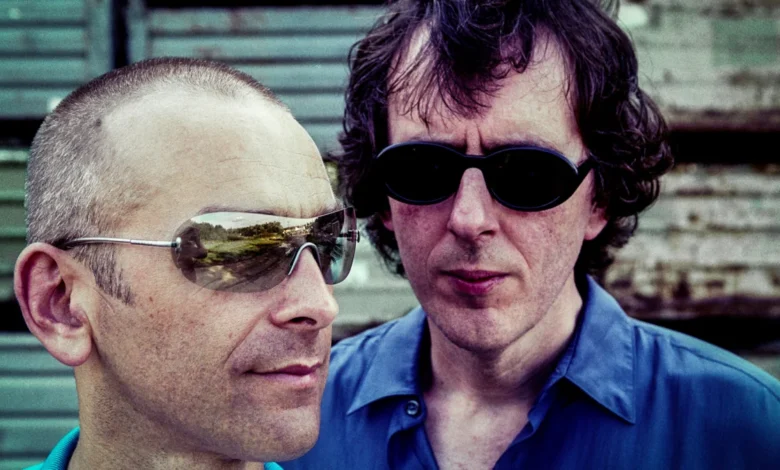
Released in 1996, the album Second Toughest in the Infants stands as a defining achievement for the British electronic music trio Underworld. Comprising Rick Smith, Karl Hyde, and Darren Emerson, the group was on the cusp of global superstardom when they dropped this record, arriving just months before their seminal track "Born Slippy .NUXX" would cement their status as household names. The album not only showcased the group’s transition from their earlier rave-oriented roots to a more sophisticated, nuanced sound, but it also highlighted the ingenuity of DIY production during an era when electronic music was shifting from underground clubs to the global mainstream.
The Genesis of a Masterpiece in a Romford Bedroom
While the finished product sounds polished, atmospheric, and expansive, the reality of its creation was far more modest. The recording process took place largely within a small, unassuming room—a spare bedroom measuring approximately twelve by fourteen feet—located in Rick Smith’s house in Romford, Essex.
The limitations of this space were profound. Noise management became a significant challenge, as the production process involved playing repetitive, bass-heavy electronic beats for extended periods. Smith has often noted the immense patience of his household during this time, as the room became a laboratory for what would eventually be hailed as a genre-defining sound. The contrast between the "dank club savagery" of the music and the domestic, suburban setting of its creation remains one of the more fascinating anecdotes in the history of British electronic music production.

Technical Limitations and Analog Ingenuity
The sonic identity of Second Toughest in the Infants was largely forged through a combination of vintage hardware and clever technical workarounds. In a 2010 retrospective interview, Rick Smith detailed the specific setup that allowed the trio to achieve their signature sound. The heart of their studio was a Soundcraft S600 series mixing console, which Smith described as "raw" and "beautifully basic."
Sequencing was handled by an Atari ST 1040, a staple of 1990s music production, running C-Lab Creator software. Unlike modern digital audio workstations (DAWs) that allow for perfect clock synchronization, the Underworld setup relied on disparate analog sources that were not always perfectly synced to a master digital clock. This technical imperfection, according to Smith, created a "magic between the space"—a subtle, organic jitter that gave the music a human quality often lacking in strictly quantized electronic tracks.
The recording chain was equally unorthodox by modern standards. Smith utilized an Akai MG14D 12-track tape recorder, synchronized to the Atari via a Fostex unit. Because hard-drive recording was not yet a standard, affordable option for independent producers, the band relied on Sony portable DAT machines for final captures. The lack of digital intervention—no plugins, no software-based compression, and no gate automation—meant that the final mixes were essentially live performances through the console, requiring precise physical manipulation of faders and outboard effects during the tracking process.
An Arsenal of Classic Hardware
The gear list for the album reads like a wish-list for contemporary vintage synth enthusiasts. Key instruments included the iconic Roland TR-909 and TB-303, which provided the foundational pulse of the record. The group also employed an ARP 2600, an OSCar synthesizer, and a Yamaha DX7 Mk1 for its distinctive digital textures. Sampling capabilities were relatively limited at the time; Smith famously used a Casio FZ-1, noting that the more prestigious Akai S900 was outside of their budget.

Other notable gear included:
- Neumann TLM 170: A high-end microphone that remains a staple of their studio to this day.
- Yamaha SPX90s: Used for stereo pitch and delay effects.
- Roland SD-3000: Employed as a mono delay line for creating complex feedback loops and dub-style delays.
- Nord Lead: Used to shape the album’s deep bass frequencies.
This reliance on hardware, while born of necessity, forced the group to make decisive creative choices early in the process. With no "undo" button and limited track counts, the music on Second Toughest in the Infants possesses a sense of intentionality and urgency that remains palpable nearly three decades later.
The Development of Pearl’s Girl
One of the standout tracks from the album, "Pearl’s Girl," offers a perfect case study in the band’s collaborative workflow. Smith recalled that the track was the result of a month-long gestation period. The initial spark came from a jam session involving Smith, Hyde, and Emerson that initially stalled.
"I revisited it again about a month later," Smith explained. The track was brought to completion with the help of engineer Mike Nielson, who assisted in the mixing process. Smith noted that "Pearl’s Girl" was a conscious departure from the standard house or techno conventions of the time. It leaned into a "rowdier" aesthetic and incorporated elements of drum and bass. Crucially, the track’s success was defined by its rhythmic ambiguity; it lacked the traditional "four-to-the-floor" kick drum pattern that dominated the dance floors of 1996, instead opting for a more syncopated, breakbeat-heavy approach. This willingness to experiment with the established blueprints of electronic music allowed the band to broaden their appeal beyond the traditional club circuit.
Broader Impact and Industry Implications
The success of Second Toughest in the Infants was a watershed moment for the "intelligent dance music" (IDM) and progressive house movements. At the time of its release, the music industry was grappling with the rise of rave culture and the integration of electronic music into the mainstream. Underworld managed to strike a delicate balance: they retained the grit and "savagery" required to keep the dance floor engaged, while simultaneously incorporating ambient, cinematic soundscapes that appealed to home listeners and critics alike.
From a commercial standpoint, the album acted as a bridge between the niche electronic underground and the global charts. By 1996, the group had established a reputation for high-quality production, and the album’s critical reception signaled that electronic music producers were no longer just "DJs" or "remixers," but legitimate songwriters and composers capable of creating cohesive, long-form albums.
Furthermore, the record served as a masterclass in independent production efficiency. By achieving such a high level of sonic fidelity using a mix of consumer-grade tape recorders and mid-range mixing desks, Underworld inadvertently provided a blueprint for the bedroom producer revolution that would follow in the early 2000s. Their ability to turn a cramped, noisy domestic space into a professional-grade creative environment proved that the quality of the output was determined more by the vision of the artist than the scale of the studio.
A Legacy of Innovation
Looking back at the chronology of Underworld’s output, Second Toughest in the Infants occupies a vital position. It sits between their early, experimental phase and the massive global success of the Trainspotting soundtrack and their subsequent stadium-filling tours. It represents the band at the height of their creative chemistry, where the interplay between Smith’s meticulous production, Hyde’s abstract, stream-of-consciousness lyricism, and Emerson’s rhythmic sensibilities was perfectly balanced.
The influence of this album can still be heard in contemporary electronic production. Modern producers, while benefiting from the limitless capabilities of digital software, often look to the techniques used on records like this to capture the "magic of the space"—the subtle inconsistencies and analog warmth that defined the electronic sound of the mid-1990s.
Today, Underworld’s legacy is defined by their refusal to remain static. Throughout their career, they have consistently shifted their sound, yet the foundations laid during the sessions in that Romford bedroom remain the core of their identity. The album stands not only as a nostalgic artifact of a bygone era of production but as a testament to the idea that with enough ingenuity, technical limitations can become the very tools that define an artist’s unique voice. By pushing the boundaries of what electronic music could be, Underworld helped redefine the genre for a generation, ensuring their place in the pantheon of electronic music pioneers.