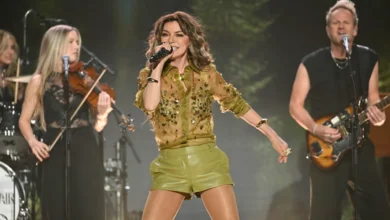
Global superstar Shania Twain, renowned as the undisputed Queen of Country Pop, made an indelible mark on Toronto’s iconic Horseshoe Tavern on Friday night, delivering an intimate and deeply personal set that seamlessly blended her chart-topping hits with a poignant introduction to the autobiographical tracks from her forthcoming album, Little Miss Twain. The sold-out "underplay" concert, held in a venue with a modest capacity of just 500, represented the fulfillment of a cherished childhood dream for the Canadian icon, offering fans a rare glimpse into her roots and the inspiration behind her latest musical journey. This unique performance, a stark contrast to her usual stadium and arena spectacles—including recent high-profile opening slots for Harry Styles in London—underscored Twain’s enduring connection to her heritage and her artistic evolution.
The Unforgettable Evening: A Dream Realized
The atmosphere inside the 78-year-old Horseshoe Tavern, affectionately known as "The ‘Shoe," was electric with anticipation. For Twain, who has sold over 100 million albums worldwide and garnered five Grammy Awards, playing this legendary Queen Street landmark was not merely another gig; it was a deeply emotional homecoming. "I grew up in northern Ontario. The dream in my little bar bands at the time, all through my youth and my teens, and even into my 20s, was to play the Horseshoe Tavern," the 60-year-old singer shared with the enraptured audience. "But we just weren’t established enough, so…this is my first time in the Horseshoe Tavern." She declared the night "the best night ever" early in her 75-minute set, her genuine joy palpable.
Twain’s connection to the venue goes beyond its storied history; it represents a full circle moment in her extraordinary career. Reflecting on the significance, she added, "I’m finally here, and I feel like it’s a very full circle moment. This is so historical. It’s a privilege to be here — finally." This sentiment resonated deeply with the audience, many of whom had followed her career from its nascent stages. The strategic decision to perform in such an intimate setting allowed Twain to strip away the grandiosity of her usual productions and connect with fans on a profoundly personal level, sharing stories and vulnerabilities that are often lost in larger venues.
The Setlist: A Blend of Eras and Raw Emotion
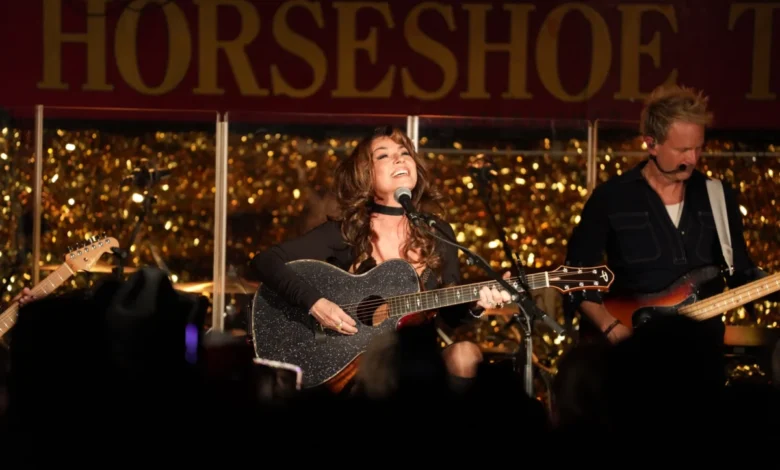
The evening commenced with an immediate injection of energy, as Twain opened with two of her biggest hits: "Come On Over" and "Any Man of Mine." These anthems instantly had the crowd singing along, phones held high to capture the moment. Dressed elegantly yet understatedly in a black bodysuit, shrug, tights, and knee-high suede boots, with her layered hair styled in loose curls, Twain exuded a radiant stage presence. She frequently strummed a sparkly, silver acoustic guitar, backed by a six-piece band that included four women and her longtime music director, Brent Barcus, adding to the evening’s rich, authentic sound.
What truly distinguished this performance was the seamless integration of her iconic hits with the new, deeply personal material. Between songs, Twain, seated on a stool against the venue’s glittery backdrop, transformed into a storyteller, sharing anecdotes from her upbringing in Timmins, Ontario – "the North." These narratives painted vivid pictures of her mother, her father, his beloved truck, learning to drive at age 10, her ripped blue jeans, and her childhood fantasy man. These deeply personal recollections served as the foundational bedrock for the new songs on Little Miss Twain. The lyrics held such profound meaning for Twain that several times, after performing a new track with the band, she would sing select verses again a cappella, ensuring every word resonated with the audience. This raw, unfiltered delivery underscored the album’s autobiographical intent.
Later in the set, Twain seamlessly transitioned back to her classics, igniting the crowd once more with "That Don’t Impress Me Much" and "You’re Still the One." The audience, a mix of long-time devotees and newer fans drawn by her recent resurgence, sang every word, transforming the small venue into a communal celebration of her enduring legacy. The night culminated with the karaoke favorite "Man! I Feel Like A Woman!", with Twain holding out the microphone for a massive singalong, before an impromptu encore of 2023’s "Giddy Up!", where she playfully encouraged the crowd to "lasso" along.
"Little Miss Twain": An Autobiographical Journey
The concert served as a pivotal preview for Little Miss Twain, an album slated for release on July 24, which promises to be Twain’s most introspective work to date. The tracks introduced at the Horseshoe Tavern offered a compelling glimpse into her past, reflecting on formative experiences and the landscapes of her youth.
She teed up the roots-rocker "Dirty Rosie," the lead single and opening track from the new album, by describing its inspiration: "my favorite truck." Twain recounted her early days learning to drive at age 10 on the "backroads and gravel roads of Timmins, Ontario, deep in the bush," behind the wheel of her dad’s pickup. This anecdote laid the groundwork for the song’s theme, celebrating a truck "that had purpose" over a shiny, clean one, a metaphor for authenticity and resilience. The song’s accompanying music video reportedly features this very truck, further cementing its personal significance.
Another track, "I’d Be Loving Me," was born out of a jam session with musicians who had played on Motown records. Twain described it as "my soul side coming out," highlighting her diverse musical influences and her continuous exploration of new sounds. This song, too, delved into her youth and upbringing, contrasting it with the allure and significance of the "big city" of Toronto.
The harmony-heavy "Stranger Things" was presented as the encapsulating song for the entire Little Miss Twain album. "It’s a reflection on my life growing up in the North, in Ontario," Twain explained, evoking imagery of "snow and trees and lakes and rivers and gold in the ground and all the things that we are about Ontario." This track, alongside others, painted a vivid sonic picture of her childhood environment, demonstrating how deeply her roots are intertwined with her artistic expression.
A particularly charming moment came when Twain reminisced about her childhood "fantasy man" – a lumberjack-type figure, twice her size, filling a door frame like a "Daniel Boone" character. She proudly asserted her own rugged capabilities as an "Ontario girl," stating, "I mean, I can chop wood, I can trap. Ontario girls, I can change tires." This blend of strength and romantic fantasy provided a humorous and relatable insight into her early dreams, directly inspiring one of the new album’s tracks.
The new album also features collaborations that underscore Twain’s broad appeal and artistic respect. She performed "Faded Blue Jeans," a track featuring Queens of the Stone Age singer Josh Homme. Twain clarified the song’s straightforward theme: her well-worn, hole-filled denim that repeatedly came back into style, symbolizing the life moments and memories woven into their fabric. Furthermore, the album’s title track, "Little Miss Twain," features country legend Tanya Tucker, a poignant nod to Twain’s mother’s dream of her becoming "the next Tanya Tucker." This collaboration not only honors her mother’s aspiration but also bridges generations of country music, showcasing Twain’s deep respect for her predecessors.
The Legendary Horseshoe Tavern: A Storied History
The Horseshoe Tavern itself played a starring role in the evening. Established in 1947, this venerable institution has been a cornerstone of Toronto’s live music scene for nearly eight decades. Its walls have absorbed the sounds of countless legends across multiple genres, earning it a revered status in North American music history. In its early days, under original owner Jack Starr, the Horseshoe became known as the "Grand Ole Opry of the North," attracting country music royalty. Waylon Jennings, Loretta Lynn, Conway Twitty, and Willie Nelson all graced its stage, establishing its reputation as a vital hub for country artists. More recently, Canadian rising star Josh Ross has also played there, connecting new talent with the venue’s rich legacy.
However, the Horseshoe’s influence extends far beyond country music. It has served as a launchpad and proving ground for rock and alternative acts, hosting global icons like The Rolling Stones, The Ramones, Foo Fighters, and Bryan Adams. This eclectic history speaks to its enduring appeal and its ability to adapt while maintaining its raw, authentic character. The venue has withstood the relentless march of urban development, including the construction of a subway stop next door, standing as a resilient monument to live music.
Adding another layer of Canadian musical heritage, a mural on the wall by the stage immortalizes the late Stompin’ Tom Connors, known for his famed foot-stomping performances, alongside The Tragically Hip’s late singer Gord Downie. Twain herself had spoken about Connors at another recent "underplay" in London, the Shacklewell Arms pub, even imitating his distinctive stomping, further cementing her connection to Canadian musical folklore and the spirit of venues like "The ‘Shoe." The venue’s unpretentious ambiance and historical weight provided the perfect backdrop for Twain’s nostalgic and heartfelt performance.
The "Underplay" Phenomenon: Strategic Intimacy
The decision for an artist of Shania Twain’s caliber to perform an "underplay" – a concert in a significantly smaller venue than their usual tour stops – is a calculated strategic move within the music industry. Tickets for the Horseshoe Tavern show, priced at $40 (approximately $30 USD), sold out in minutes, despite being non-transferable to deter scalping. A limited number were allocated for contest winners, industry professionals, media, and guests, underscoring the exclusivity of the event. Diehard fans who couldn’t secure tickets gathered on the sidewalk outside, hoping to catch a glimpse or hear the music, though the stage’s location far in the backroom made visual access impossible.
The motivations behind such an event are multifaceted. For the artist, it offers a unique opportunity to reconnect with their audience on a more personal, unfiltered level, far removed from the spectacle of arena tours. It allows for experimentation with new material in a low-pressure environment, gauging fan reactions to unreleased songs. For Twain, it was also deeply personal, fulfilling a lifelong dream and grounding her latest autobiographical work in the very Canadian landscape that inspired it.
From a marketing perspective, an "underplay" generates immense buzz and media attention precisely because of its rarity and exclusivity. It creates a sense of intimacy and authenticity that resonates strongly with fans, fostering a deeper bond. For an artist like Twain, who has achieved global superstardom, such a show serves to remind audiences of her roots and artistic integrity, reinforcing her image as a relatable, down-to-earth performer despite her monumental success. The contrast between her usual opulent productions and the gritty charm of the Horseshoe Tavern highlighted her versatility and willingness to embrace different performance contexts. The anecdote about a large trailer occupying the venue’s parking lot – because "the dive bar’s green room is not fit for a Twain" – humorously underscored this very contrast, emphasizing her superstar status even in the most humble settings.
Twain’s Enduring Legacy and Future Trajectory
Shania Twain’s performance at the Horseshoe Tavern was more than just a concert; it was a powerful statement about artistic evolution, personal fulfillment, and the enduring power of music to connect. Her willingness to be vulnerable, to share her personal stories, and to perform new, deeply autobiographical material in such an intimate setting signals a significant artistic phase. Little Miss Twain promises to be a reflective and introspective album, offering fans an unprecedented look into the life and experiences that shaped the global icon.
The concert succeeded largely on its spontaneity and the palpable joy Twain exhibited. She apologized good-naturedly for the "go with the flow" nature of the evening, including minor tech requests and half-joking about not knowing all the lyrics to her freshly recorded songs. This rawness only enhanced the authenticity of the experience, making the audience feel part of a unique, unscripted moment.
By returning to a venue that represents her humble beginnings and the dreams of her youth, Twain not only honored her past but also reaffirmed her present commitment to artistic integrity and connection with her audience. The Horseshoe Tavern concert was a testament to Shania Twain’s enduring legacy, her continuous growth as an artist, and her profound ability to weave her personal narrative into universally resonant music. As she embarks on this new chapter with Little Miss Twain, this intimate Toronto performance serves as a powerful prologue, promising an album that is as deeply rooted in her identity as it is globally appealing.