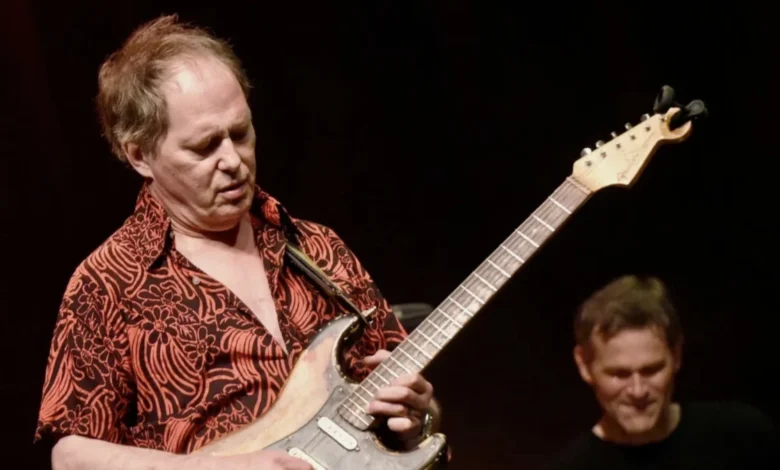
The music world is mourning the loss of Richard Lloyd, the co-founding guitarist of the seminal post-punk outfit Television, who passed away on Saturday morning at his home in Chattanooga, Tennessee. He was 75 years old. Lloyd’s death, confirmed by his family and subsequent reports, follows a period of illness; in August 2026, the guitarist publicly revealed a diagnosis of cholangiocarcinoma, a rare and aggressive form of bile duct cancer, which had necessitated a public appeal for support via crowdfunding.
Lloyd’s passing marks the end of a singular life dedicated to the craft of the electric guitar—a career that spanned over five decades and helped rewrite the DNA of modern rock. From his early days navigating the gritty, neon-lit corridors of 1970s New York City to his later years as a respected solo artist and session collaborator, Lloyd remained a restless, uncompromising figure who prioritized harmonic ingenuity over the conventional tropes of the punk movement he helped define.
A Chronology of a Post-Punk Architect
Born in Pittsburgh, Pennsylvania, Lloyd’s formative years were defined by an early obsession with the guitar. While his own accounts of his upbringing often included the legend of his apprenticeship under Velvert Turner—a close associate of Jimi Hendrix—Lloyd’s technical development was undeniable. His stories of personal encounters with Hendrix, including a legendary backstage altercation, served as a backdrop for a life lived in the shadow of guitar greatness, even as he carved out his own distinct identity.
In 1973, Lloyd moved to New York, a city teetering on the edge of a cultural explosion. It was here that he aligned with Tom Verlaine, Richard Hell, and Billy Ficca to form Television. While the band’s initial lineup was fluid, the synergy between Lloyd and Verlaine became the defining feature of the group. By 1975, with Fred Smith replacing Hell, the band’s sound—defined by interlocking, crystalline guitar lines—crystallized.
The band’s tenure at CBGB, the legendary club on the Bowery, remains one of the most significant chapters in American music history. Lloyd was a central, if sometimes pugnacious, advocate for the venue. He often asserted that he was the primary catalyst for transforming CBGB into the epicenter of the punk scene, working in tandem with management to secure a residency that allowed Television to experiment, rehearse, and ultimately invite other artists like Patti Smith, The Ramones, and Blondie to share the stage.
The Marquee Moon Legacy
Television’s 1977 debut album, Marquee Moon, is widely considered one of the greatest rock albums ever recorded. For many, it serves as the definitive text of post-punk. While the punk scene of the mid-70s was characterized by a "three-chords-and-the-truth" philosophy, Lloyd and his bandmates opted for something more sophisticated.
Lloyd’s approach to the fretboard was characterized by a rejection of standard power chords. Instead, he utilized harmonic dissonance and angular melodies that borrowed as much from jazz as they did from the avant-garde. His lead work on Marquee Moon allowed the band to extend songs into long, improvised movements that felt both structured and volatile.
The structural impact of this sound cannot be overstated. Bands ranging from the college-rock pioneers R.E.M. to the indie-rock innovators The Pixies and the post-hardcore torchbearers Fugazi have cited Television as a foundational influence. By proving that rock music could be intellectually rigorous and emotionally visceral simultaneously, Lloyd provided a roadmap for generations of alternative musicians.
Solo Endeavors and Collaborative Mastery
Following the dissolution of Television’s initial run in 1978, Lloyd embarked on a long and varied solo career. His 1986 release, Field of Fire, and the subsequent 1987 record, Real Time, garnered significant critical praise, establishing him as a guitarist whose skill set was far broader than his punk-era reputation suggested.
Throughout the 1990s and 2000s, Lloyd became an indispensable session player, most notably for the power-pop virtuoso Matthew Sweet. His contributions to the 1991 album Girlfriend are regarded as some of the most tasteful and technically precise guitar work of that decade. Lloyd’s ability to weave melodic textures into the pop framework of Sweet’s songs helped secure that album’s status as a classic of the era.
Despite his extensive resume, Lloyd often reflected on his career with a sense of detachment. In a 2000 interview, he famously dismissed the notion of career ambition, describing himself as a musician by "default." He viewed his life in music as a successful effort to avoid the traditional expectations of adulthood, finding in the guitar a sanctuary that allowed him to remain permanently tethered to his creative impulses.
Industry Reflection and Broader Impact
The news of Lloyd’s death has prompted an outpouring of tributes from across the musical spectrum. While the official statements from his estate have focused on his legacy as a pioneer, those who worked with him remember a man who was deeply protective of his art.
"Richard was the rare kind of player who treated every string as an opportunity to change the listener’s perspective," noted one contemporary producer who worked with Lloyd in the mid-2000s. "He wasn’t interested in the spotlight as much as he was interested in the architecture of a song. He built things that lasted."
The death of Richard Lloyd serves as a stark reminder of the passing of the original CBGB generation. As these architects of the New York scene depart, the cultural significance of their work has only grown. Recent musicological studies of the 1970s downtown scene have identified the "Television sound" as the pivot point where the aggression of early punk transitioned into the melodic complexity of what would eventually become alternative rock.
A Final Look at the Discography
For those looking to understand the breadth of Lloyd’s contribution, his discography remains a testament to his evolution. From the raw intensity of Television’s early live tapes to his polished, evocative solo work, the timeline of his career tracks the history of the instrument itself.
- 1973–1978: The Television era, yielding Marquee Moon and Adventure.
- 1986–1987: The emergence of his solo voice with Field of Fire and Real Time.
- 1991: Collaborative success with Matthew Sweet on Girlfriend.
- 2000–2018: A late-career resurgence, featuring consistent touring and his final studio effort, The Countdown.
Lloyd’s legacy is not found in chart positions or sales figures, but in the enduring influence of his style. By choosing to prioritize nuance over volume and complexity over simplicity, he challenged his peers to reach higher. His passing is a significant loss to the community of guitarists, but his influence remains etched into the fabric of every band that picks up an instrument to explore the boundaries of melody and dissonance.
As the music community processes the news, the focus remains on the immense, if often understated, weight of his work. Richard Lloyd leaves behind a body of music that serves as a masterclass in guitar composition, ensuring that while he has stepped away from the stage, his voice will continue to resonate through the countless artists who have spent decades trying to emulate his unique, singular sound.
In the final assessment, Lloyd’s life was exactly what he intended it to be: a lifelong pursuit of a craft that kept him young, creative, and perpetually at odds with the mundane. He lived on his own terms, played with his own rules, and left behind a blueprint for rock music that continues to define the genre to this day.
Related posts: