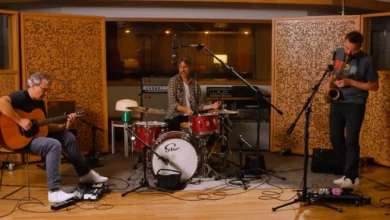
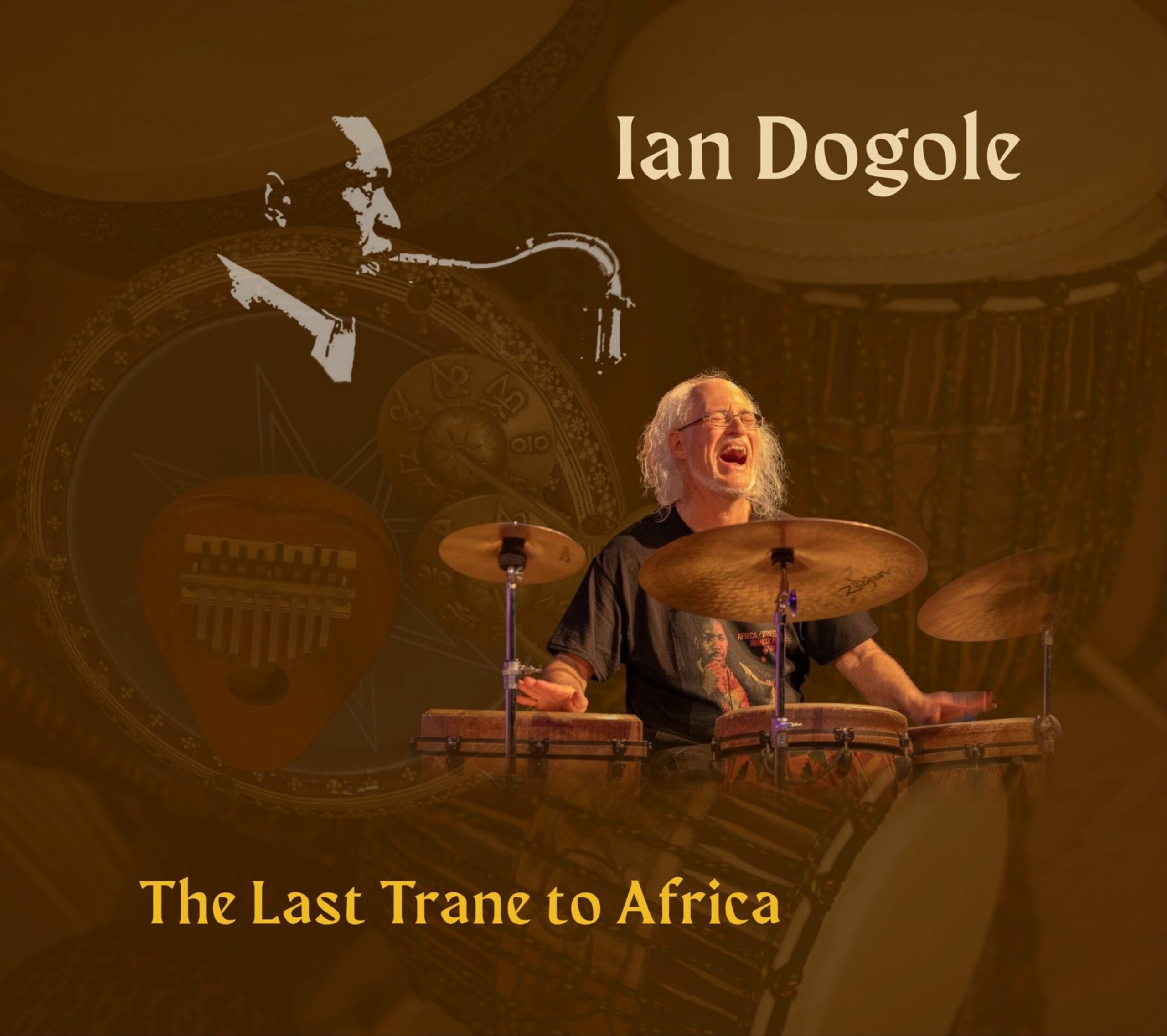
The evolution of modern jazz is often characterized by moments of profound discovery, where the boundaries of Western harmony meet the expansive rhythms of the global south. For percussionist and bandleader Ian Dogole, this journey began in the formative years of high school, a period defined by a singular obsession with the avant-garde and the spiritual dimensions of jazz. The catalyst for this lifelong exploration was Miles Davis’s seminal 1970 masterpiece, Bitches Brew, an album that dismantled the conventions of post-bop and ushered in the era of jazz-rock fusion. For Dogole, this recording was more than just a musical preference; it was a portal into a deeper, more complex world of sound that eventually led him to the works of John Coltrane, Sun Ra, Pharoah Sanders, and Cecil Taylor. Decades later, this trajectory has culminated in his latest project, The Last Trane to Africa, a sophisticated homage to the legends of jazz that doubles as a masterclass in global percussion and cross-cultural synthesis.
The Genesis of a Global Fusion Visionary
To understand the depth of The Last Trane to Africa, one must look back at the educational and artistic path Ian Dogole has trodden since the early 1970s. While many of his peers were focused on the mainstream rock or pop of the era, Dogole found himself "tumbling down the rabbit hole" of the jazz avant-garde. The music of Miles Davis provided the initial spark, but it was the spiritual intensity of John Coltrane that provided the enduring flame. Dogole’s fascination was not merely with the melodies, but with the rhythmic underpinnings that suggested a world beyond the standard 4/4 swing of the American songbook.
Following the "looking glass" of the 1960s avant-garde, Dogole immersed himself in the discographies of artists like Pharoah Sanders, whose explorations of African and Eastern textures redefined the role of the saxophone, and Cecil Taylor, whose percussive approach to the piano challenged the very nature of Western tonality. This immersion led Dogole to specialize in "Global Fusion," a genre he has championed for over four decades. By integrating instruments such as the hang (handpan), udu, talking drum, and kalimba into a jazz context, Dogole has created a sonic signature that bridges the gap between the ancient and the modern.
Reimagining Coltrane: The Significance of Africa
At the heart of Dogole’s new project is the track "Africa," a composition originally recorded by John Coltrane for his 1961 album Africa/Brass. The original recording was a landmark in jazz history, representing Coltrane’s first major-label exploration of African themes. While Coltrane used a large brass ensemble to mimic the sounds of the African wilderness and traditional chants, Dogole approaches the piece from a different angle. He utilizes his vast array of world percussion to ground the piece in authentic rhythmic cycles, providing a foundation that feels both grounded in tradition and liberated by improvisation.
The decision to title the project The Last Trane to Africa is a deliberate nod to Coltrane’s nickname ("Trane") and his unfulfilled desire to travel to the African continent before his untimely death in 1967. By reinterpreting "Africa," Dogole is not just performing a cover; he is completing a spiritual circle, bringing the music back to the rhythmic roots that Coltrane so deeply admired but was never able to experience firsthand.
Historical Context: The 1960s Avant-Garde and Spiritual Jazz
The music that inspired Dogole—produced primarily between 1965 and 1975—was created during a period of immense social and political upheaval. This era of "Spiritual Jazz" was characterized by a search for higher consciousness and a rejection of commercial constraints. Artists like Sun Ra claimed extraterrestrial origins to escape the confines of earthly racism, while others like Pharoah Sanders looked to the Sufi traditions and African folklore for inspiration.
Dogole’s work reflects a deep understanding of this history. He recognizes that the "avant-world" of Cecil Taylor and Sun Ra was not just about being "difficult" or "noisy," but about finding a new language to express the human condition. In The Last Trane to Africa, this historical awareness is palpable. The arrangements respect the source material’s intensity while introducing a contemporary clarity that makes the music accessible to a new generation of listeners.
Musical Analysis and Instrumentation
One of the defining features of Ian Dogole’s approach is his use of unconventional instrumentation. In an era where many jazz recordings rely on standard kits, Dogole’s palette includes:
- The Hang: A melodic percussion instrument that provides a haunting, ethereal quality to the modal sections of the music.
- The Udu: A Nigerian clay pot drum that offers deep, resonant bass tones and sharp percussive accents.
- The Talking Drum: Used to mimic the tonal shifts of human speech, adding a narrative quality to the rhythmic sections.
- The Kalimba: An African thumb piano that provides a delicate, cyclical melodic foundation.
In The Last Trane to Africa, these instruments are not used as mere "flavor" or exotic window dressing. Instead, they are central to the compositional structure. On the track "Africa," the polyrhythmic interplay between the percussion and the melodic instruments creates a dense, shimmering texture that evokes the "sheets of sound" technique pioneered by Coltrane.
Timeline of Development and Artistic Continuity
The development of The Last Trane to Africa can be viewed through a timeline of Dogole’s career milestones:
- 1970-1975: High school and college years. Discovery of Bitches Brew and the Coltrane quartet.
- 1980s: Formal study of non-Western percussion and the formation of early fusion ensembles.
- 1990s-2000s: Release of several critically acclaimed albums, including Ionospheres and Convergence, which solidified his reputation as a leader in Global Fusion.
- 2010s: Increased focus on the spiritual jazz era, leading to tribute performances honoring Pharoah Sanders and Alice Coltrane.
- 2020s: Recording and release of The Last Trane to Africa, a project that synthesizes fifty years of musical exploration.
This chronology demonstrates that Dogole’s latest work is not a sudden departure but the logical conclusion of a half-century of dedicated study. It represents a maturation of style where the "avant-garde" impulses of his youth have been tempered with the wisdom of a seasoned bandleader.

Broader Impact on the Jazz Landscape
The release of The Last Trane to Africa comes at a time when there is a significant resurgence of interest in spiritual and modal jazz. Artists like Kamasi Washington and Shabaka Hutchings have brought these sounds to the forefront of popular culture, introducing younger audiences to the legacies of Coltrane and Sanders. Dogole’s contribution to this movement is vital because he emphasizes the "Global" aspect of the fusion.
By placing African percussion at the center of the jazz idiom, Dogole challenges the Eurocentric view of harmony that has dominated jazz education for decades. He posits that the "future" of jazz lies in its ability to integrate with the rhythmic traditions of the world. This approach has implications for how jazz is taught and performed, suggesting a more inclusive, rhythmically diverse path forward.
Critical Analysis: A Bridge Between Eras
Critics have noted that Dogole’s strength lies in his ability to maintain the "searching" quality of the 1960s avant-garde without succumbing to chaos. The Last Trane to Africa is described as being both "disciplined and wild." The discipline comes from Dogole’s mastery of complex time signatures and his ability to lead an ensemble through intricate arrangements. The "wildness" comes from the improvisational freedom he allows his soloists, who are encouraged to push their instruments to their physical and sonic limits, much like the members of Coltrane’s classic quartet.
Furthermore, the project serves as a reminder of the power of the "album" as a cohesive statement. In an era of digital singles and streaming playlists, The Last Trane to Africa demands to be heard as a whole. It is a narrative journey that begins with the initial spark of discovery and ends with a profound sense of cultural and spiritual homecoming.
Conclusion: The Enduring Legacy of the Rabbit Hole
Ian Dogole’s journey, which began with a high schooler’s fascination with a Miles Davis record, has resulted in a body of work that stands as a testament to the power of musical curiosity. The Last Trane to Africa is more than a tribute album; it is a vibrant, living extension of the jazz tradition. By following the "Trane" to Africa, Dogole has found a way to honor his influences while carving out a unique space in the contemporary jazz landscape.
As the jazz world continues to evolve, the work of Ian Dogole serves as a reminder that the most profound innovations often come from looking backward as much as looking forward. By grounding his music in the spiritual lessons of the past and the global rhythms of the present, Dogole ensures that the "rabbit hole" of jazz remains as deep and inviting as ever for the next generation of listeners. Through his meticulous craftsmanship and unwavering vision, The Last Trane to Africa secures its place as a definitive document of modern Global Fusion.