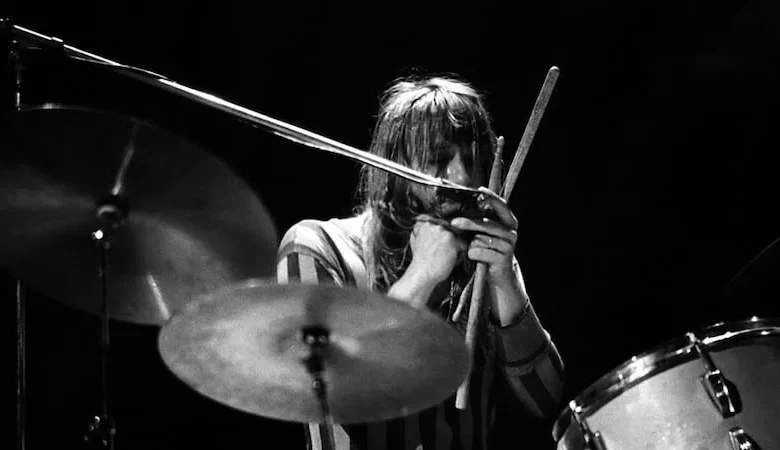
Following his departure from the pioneering psychedelic and jazz-rock ensemble Soft Machine in 1971, Robert Wyatt embarked on a new sonic journey with his short-lived but highly influential second outfit, Matching Mole. This cohesive, progressive quartet, comprised of fellow Canterbury scene talents, represented a pivotal moment in Wyatt’s artistic evolution. The band’s eponymous 1972 debut album serves as a potent distillation of Wyatt’s signature talents, his eminent stroke of wit, and a significant step in his exploration of avant-garde rock, free jazz, and the innovative use of the voice as an instrument.
The genesis of Matching Mole can be traced directly to Wyatt’s exit from Soft Machine, a band he co-founded and which had become increasingly experimental and complex. While Soft Machine navigated the burgeoning realms of jazz fusion and extended improvisation, Wyatt sought a more focused yet equally adventurous path. Matching Mole allowed him to revisit some of the sonic sensibilities that characterized early Soft Machine, particularly with Wyatt back behind both the drum kit and the microphone, his distinctive vocal style a central element. However, the project also served as a platform to further develop the avant-prog and free jazz leanings that had already surfaced in his critically acclaimed solo debut, The End of an Ear (1970).
The Genesis of a Sonic Experiment
The formation of Matching Mole in late 1971 was a deliberate move by Robert Wyatt to assemble a group of musicians who shared his progressive musical vision and his adventurous spirit. The core of the band comprised a constellation of talent from the fertile Canterbury scene, a region that had become a hotbed for innovative and genre-bending music. Key members included Dave MacRae on keyboards, Phil Lee on guitar, and Barry Guy on bass. MacRae, a formidable jazz pianist, brought a sophisticated harmonic and improvisational vocabulary, while Lee provided a more textured and often unconventional guitar approach. Barry Guy, a virtuoso bassist with a strong grounding in free improvisation, offered a dynamic and often unsettling rhythmic foundation.
Wyatt’s decision to step back into the role of primary vocalist and drummer was significant. On The End of an Ear, he had explored vocal textures and experimental soundscapes, often treating his voice as another instrument. With Matching Mole, he was able to integrate this approach within a more structured, albeit still highly experimental, band context. This allowed for a compelling interplay between his often deadpan, narrative vocal delivery and the complex instrumental passages. The band’s name itself, "Matching Mole," is a playful nod to the French phrase "machine mole," meaning "mole machine," a reference that subtly hints at the underground, burrowing nature of their sonic explorations.
The Eponymous Debut: A Spectrum of Innovation
The 1972 self-titled debut album, Matching Mole, stands as a testament to the band’s eclectic approach and Wyatt’s singular creative direction. The record masterfully navigates a spectrum of sonic territories, from meticulously crafted, almost clinically narrated deconstructions of pop song structures to sprawling, improvisational jams featuring the ethereal and often unsettling textures of the Mellotron. This duality is a hallmark of the album, showcasing both a keen intellect and a fearless embrace of the avant-garde.
Tracks like "Robert Wyatt’s Matching Mole" (which also served as the album’s opening track) exemplify this dynamic. It begins with a deceptively simple, almost childlike melody before evolving into intricate instrumental passages and Wyatt’s characteristic vocal interjections. The album is punctuated by moments of intense improvisation, particularly in pieces where the Mellotron, played by MacRae, creates vast sonic landscapes, evoking a sense of otherworldly exploration. Wyatt’s drumming, always a cornerstone of his musicality, is both precise and fluid, providing a solid yet adaptable rhythmic framework for the often-unpredictable musical currents.
The lyrical content on the album often carries Wyatt’s trademark blend of observational wit, philosophical musings, and a touch of surrealism. He possesses a unique ability to imbue seemingly mundane observations with profound meaning, often delivered in a detached, almost documentary-like style. This approach, combined with the band’s adventurous musical arrangements, creates a listening experience that is both intellectually stimulating and emotionally resonant. For instance, the exploration of sonic textures and the fragmentation of song structures can be seen as a commentary on the prevailing pop music landscape of the early 1970s, offering an alternative, more challenging artistic perspective.
Chronology of Matching Mole’s Existence
The lifespan of Matching Mole, while brief, was remarkably productive. The band was active primarily between 1971 and 1972, releasing two studio albums.
- Late 1971: Following his departure from Soft Machine, Robert Wyatt begins formulating the concept for Matching Mole. He recruits Dave MacRae, Phil Lee, and Barry Guy.
- February 1972: Matching Mole records its debut album, the self-titled Matching Mole. The sessions likely took place over a concentrated period, reflecting the band’s tight creative focus.
- April 1972: The eponymous debut album, Matching Mole, is released by Columbia Records. It garners critical attention for its innovative approach.
- 1972: The band undertakes live performances, showcasing their complex material to audiences in the UK and potentially beyond. These performances are crucial for developing their improvisational skills.
- Late 1972 / Early 1973: Matching Mole records its second and final studio album, Little Red Record. This album sees a slight shift in personnel, with Bill MacCormick joining on bass, replacing Barry Guy.
- February 1973: Little Red Record is released.
- 1973: Matching Mole disbands. The exact reasons for the disbandment are not always explicitly stated, but the fluid nature of musical collaborations and the individual artistic trajectories of its members likely played a role. Robert Wyatt’s own personal tragedy, a fall that left him paralyzed from the waist down in September 1973, would profoundly alter his musical trajectory and lead to further solo explorations, notably with his work on the album Rock Bottom.
Personnel and Musical Dynamics
The lineup of Matching Mole evolved slightly between their two studio albums, but the core of Wyatt’s vision remained consistent. The initial quartet for the debut album was:
- Robert Wyatt: Drums, Vocals
- Dave MacRae: Keyboards (including Mellotron)
- Phil Lee: Guitar
- Barry Guy: Bass
Barry Guy’s contributions were particularly noteworthy for his adventurous bass playing, deeply rooted in free improvisation. His ability to create complex, often dissonant lines provided a compelling counterpoint to MacRae’s more structured keyboard work.
For Little Red Record, the lineup saw a change:
- Robert Wyatt: Drums, Vocals
- Dave MacRae: Keyboards
- Phil Lee: Guitar
- Bill MacCormick: Bass
Bill MacCormick, who would later achieve prominence with the band Soft Heap and as a member of the reformed Soft Machine, brought a different, perhaps more grounded, rhythmic sensibility to the bass position. This subtle shift in personnel contributed to the distinct character of the second album, which is often perceived as slightly more concise and song-oriented, while still retaining the band’s experimental edge.
The interplay between the musicians was crucial. Dave MacRae’s mastery of the Mellotron, a keyboard instrument that produced sound by playing pre-recorded tapes of real instruments, was instrumental in creating the band’s signature atmospheric and often surreal sonic textures. Phil Lee’s guitar work often eschewed conventional rock soloing in favor of textural exploration, feedback manipulation, and angular melodic lines. Together, they created a soundscape that was both challenging and captivating.
Critical Reception and Enduring Legacy
Upon its release, Matching Mole was met with considerable critical interest, particularly within the circles of progressive and avant-garde music enthusiasts. While perhaps not achieving mainstream chart success, the album was recognized for its artistic integrity and its fearless exploration of musical boundaries. Critics lauded Wyatt’s unique vocal delivery, his sophisticated drumming, and the band’s inventive arrangements.
The album’s blend of structured composition and improvisational freedom resonated with an audience that was increasingly looking for music that pushed beyond the confines of traditional rock. The "voice as an instrument" approach, a concept Wyatt had explored on The End of an Ear, was further refined here, with his voice often used for its timbre and percussive qualities as much as for its lyrical content.
Matching Mole’s impact, though limited by its short duration, can be seen in its influence on subsequent generations of musicians who have embraced experimentalism, free improvisation, and the integration of diverse musical genres. The Canterbury scene itself left an indelible mark on progressive rock, and Matching Mole stands as a significant chapter within that legacy. The band’s willingness to deconstruct conventional song forms and to embrace the unpredictable nature of improvisation paved the way for further sonic experimentation in the years to come.
The fact that the band’s output is still discussed and re-evaluated decades later speaks to its enduring artistic merit. The music of Matching Mole, particularly the self-titled debut, offers a window into a specific moment in music history where artists were actively seeking to redefine the possibilities of rock music, drawing inspiration from jazz, classical, and avant-garde traditions.
Broader Context: The Canterbury Scene and Avant-Garde Evolution
Matching Mole emerged from the fertile ground of the Canterbury scene, a collective of musicians based in Canterbury, England, who, from the late 1960s onwards, forged a distinctive path in rock music. Bands like Caravan, Gong, and of course, Soft Machine, were characterized by their fusion of rock, jazz, psychedelic, and classical elements, often incorporating complex arrangements, extended instrumental passages, and a sense of playful, often surreal, lyricism. Robert Wyatt was a foundational figure in this movement through his work with Soft Machine.
Wyatt’s personal journey is inextricably linked to this scene. His departure from Soft Machine, a band that had become increasingly focused on instrumental virtuosity and complex jazz fusion, allowed him to pursue a more personal and vocal-centric artistic direction. The End of an Ear (1970) was a crucial precursor to Matching Mole, where Wyatt first explored the potential of his voice as a non-traditional instrument, incorporating vocalizations, sound effects, and a generally experimental approach to composition. This solo work signaled a desire to move away from the more conventional structures that even experimental rock could sometimes fall into.
Matching Mole, therefore, represented a synthesis of Wyatt’s past and his future aspirations. It allowed him to reconnect with the collaborative spirit of a band while charting a course that was distinctly his own. The "voice as an instrument" concept, so central to Matching Mole’s identity, was a direct continuation of his solo explorations. This involved not just singing lyrics, but using his voice for its percussive qualities, its tonal variations, and its ability to create abstract sonic textures, often in dialogue with the instrumental improvisations.
The band’s embrace of free jazz principles, particularly evident in the improvisational sections of their music, was also a significant departure for many in the rock scene. While jazz fusion was gaining traction, Matching Mole delved into more unbridled forms of improvisation, where musical structures could dissolve entirely, allowing for spontaneous creation. This element of unpredictability made their live performances particularly compelling and contributed to the challenging, yet rewarding, nature of their recorded output.
The Enduring Significance of Matching Mole
The eponymous debut album of Matching Mole is more than just a collection of songs; it is a manifesto of artistic independence and a testament to the power of sonic exploration. It encapsulates Robert Wyatt’s unique genius – his ability to weave together disparate musical threads into a cohesive, yet always surprising, tapestry. From the deceptively simple melodies that morph into complex improvisations to his lyrical observations that hint at deeper philosophical truths, Wyatt’s signature wit and profound musicality shine through.
The album’s relevance extends beyond its historical context. It continues to inspire musicians and listeners who appreciate music that challenges conventions, embraces the experimental, and prioritizes artistic vision over commercial compromise. In a musical landscape that often favors predictability, the fearless inventiveness of Matching Mole serves as a potent reminder of the boundless possibilities that lie at the intersection of rock, jazz, and avant-garde expression. It stands as a crucial document in the career of Robert Wyatt and a lasting contribution to the rich legacy of the Canterbury scene.