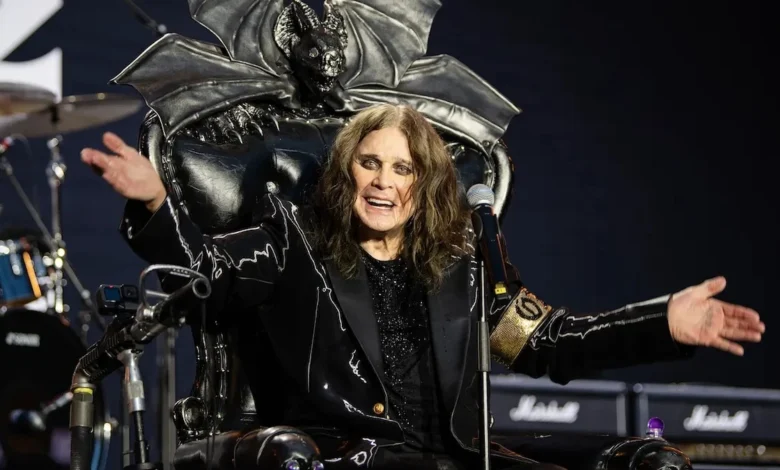
Birmingham, England, is poised to commemorate the enduring legacy of its native son, the legendary rock icon Ozzy Osbourne, with a dedicated observance dubbed "Ozzy Day" on July 22nd. This date holds particular significance as it marks the one-year anniversary of the passing of the "Prince of Darkness," an event that reverberated through the global music community. The city-wide celebration will encompass a diverse programme of events, including live music performances, heartfelt tributes, and various other activities designed to honour Osbourne’s profound influence on music and culture.
A City’s Tribute to a Global Icon
The initiative for "Ozzy Day" underscores Birmingham’s deep pride in its most famous musical export. Sam Watson, Chair Central of the Birmingham Business Improvement District, articulated the collaborative spirit behind the event, stating, "Ozzy Day is a fantastic example of Birmingham working together to celebrate the legendary Ozzy Osbourne. By bringing together businesses, cultural organisations and public spaces, we’re creating a city centre wide experience that encourages people to celebrate the legacy of a truly global, Birmingham-born icon." This sentiment is echoed by Councillor Deborah Harries, Cabinet Member for Culture at Birmingham City Council, who added, "Ozzy Osbourne is one of Birmingham’s foremost cultural figures, and we continue to honour his legacy here in the city, where his journey began. I am glad to see the city partners coming together to celebrate Ozzy’s influence on music and his pride in his hometown." These statements highlight the multifaceted nature of the celebration, aiming to engage residents and visitors alike in a collective remembrance of a figure whose journey from the industrial heartlands of England to the pinnacle of global stardom remains an inspiring narrative.
The planned activities for "Ozzy Day" are expected to transform parts of Birmingham into a vibrant tribute zone. While specific details of the programme are still emerging, it is anticipated that local venues will host bands performing covers of Black Sabbath and Ozzy Osbourne’s solo material. Public spaces might feature art installations inspired by his imagery, screenings of documentaries chronicling his career, and interactive exhibits detailing his life and times. Local businesses, from pubs to record stores, are also likely to participate, offering themed promotions and creating an atmosphere that resonates with Osbourne’s unique persona. The collaboration between civic authorities and business entities is a strategic move, designed not only to honour a cultural hero but also to stimulate local tourism and economic activity, drawing fans from across the United Kingdom and beyond to experience the birthplace of heavy metal and its most famous proponent.
Ozzy Osbourne: The Aston Roots of a Rock Legend
To fully appreciate the significance of "Ozzy Day," one must delve into the formative years of John Michael Osbourne, born in Aston, Birmingham, on December 3, 1948. Growing up in a working-class family amidst the industrial landscape of post-war Birmingham, Osbourne’s early life was marked by the struggles common to the era. He held several manual jobs before finding his true calling in music. His distinct voice and magnetic stage presence were evident even in his nascent musical endeavours, but it was with the formation of Black Sabbath in 1968 that his destiny truly began to unfold.

Black Sabbath, comprising Osbourne on vocals, Tony Iommi on guitar, Geezer Butler on bass, and Bill Ward on drums, is widely credited with pioneering the heavy metal genre. Their sound, characterized by dark, ominous riffs, doom-laden lyrics, and Osbourne’s distinctive wailing vocals, emerged from the industrial gloom of Birmingham, reflecting the anxieties and realities of their surroundings. Albums like Black Sabbath (1970), Paranoid (1970), and Master of Reality (1971) not only defined a new musical style but also influenced countless bands across generations, cementing Birmingham’s place as the undisputed birthplace of heavy metal. The band’s enduring connection to their hometown was a source of immense pride for Osbourne, a sentiment he frequently expressed throughout his illustrious career.
After his departure from Black Sabbath in 1979, Osbourne embarked on a phenomenally successful solo career, further solidifying his status as a rock icon. Albums such as Blizzard of Ozz (1980) and Diary of a Madman (1981), featuring the prodigious guitar talents of Randy Rhoads, produced timeless hits and demonstrated his continued artistic vitality. His solo career saw him become a global phenomenon, captivating audiences with his theatrical performances and larger-than-life persona, earning him the moniker "Prince of Darkness." Beyond music, Osbourne’s cultural impact expanded significantly with the MTV reality show "The Osbournes" in the early 2000s, which offered a comedic and often chaotic glimpse into his family life, introducing him to a new generation of fans and further cementing his pop culture status. Despite his global fame, Osbourne consistently maintained a strong connection to his Birmingham roots, often speaking fondly of his upbringing and the city that shaped him.
A Chronology of Farewell and Lasting Legacy
The decision to establish "Ozzy Day" on July 22nd is intrinsically linked to the poignant timeline of Ozzy Osbourne’s final years and his passing. For several years leading up to his death, Osbourne openly discussed his health struggles, including a severe fall in 2019 that exacerbated previous injuries and led to a series of spinal surgeries. Despite these challenges, his spirit remained unbroken, and his desire to perform for his fans persisted.
His final concert, a deeply emotional event dubbed "Back to the Beginning," took place at Birmingham’s iconic Villa Park in early July 2025. This performance was particularly significant as it marked his last appearance both as a solo artist and, poignantly, with his original band, Black Sabbath. The choice of Villa Park, the home stadium of Aston Villa Football Club, a team Ozzy passionately supported throughout his life, further underscored the profound connection to his hometown. The concert was more than just a musical performance; it was a homecoming, a final communion with the fans and the city that had been the backdrop to his entire life story. The atmosphere was reportedly electric, a mixture of joyous celebration and palpable melancholy, as attendees understood they were witnessing a historic moment.
Tragically, just 17 days after this momentous farewell performance, Ozzy Osbourne passed away on July 22nd, 2025. His death sent shockwaves through the music world, prompting an outpouring of tributes from fellow musicians, critics, and millions of fans worldwide. The decision by Birmingham to declare July 22nd as "Ozzy Day" serves as a permanent memorial, transforming a day of sorrow into an annual occasion for celebration and remembrance, ensuring that his immense contributions are never forgotten.
The Evolution of Legacy: The Digital Avatar

Beyond the physical commemorations in Birmingham, the preservation of Ozzy Osbourne’s legacy is also venturing into the digital realm. Recently, his widow, Sharon Osbourne, and son, Jack Osbourne, announced the development of an interactive Ozzy avatar. This groundbreaking project aims to create a digital representation of the metal legend, capable of engaging with fans and potentially even "performing" in virtual environments. Jack Osbourne elaborated on the initiative, noting that the project embodies "the digital DNA of Ozzy Osbourne, voice, image [and] movement."
This interactive avatar represents a significant step in the evolution of posthumous artistry and celebrity legacy management. Utilizing advanced motion capture technology, sophisticated AI, and extensive archival material, the avatar is designed to capture the essence of Osbourne’s unique stage presence and personality. The implications of such a project are vast, potentially allowing future generations to experience a form of live performance, interact with his persona, and explore his extensive catalogue in new and immersive ways. It speaks to a broader trend in the entertainment industry where technology is increasingly used to preserve and reanimate the images and performances of deceased artists, offering new avenues for fan engagement and revenue generation for their estates. While the concept of digital avatars can spark debates about authenticity and artistic integrity, for the Osbourne family, it is a means to ensure that Ozzy’s iconic presence continues to resonate with fans indefinitely, transcending the boundaries of time and physical presence.
Broader Impact and Future Implications
The establishment of "Ozzy Day" carries significant cultural, economic, and social implications for Birmingham and beyond. Culturally, it solidifies Birmingham’s rightful claim as a crucible of musical innovation, specifically as the birthplace of heavy metal. By honouring Osbourne, the city reinforces its identity as a vibrant cultural hub with a rich musical heritage, capable of producing artists of global stature. This recognition can inspire future generations of musicians from the West Midlands, showcasing the potential for local talent to achieve international renown.
Economically, "Ozzy Day" is expected to be a boon for Birmingham. Large-scale cultural events invariably draw tourists, and a celebration of an icon like Ozzy Osbourne has the potential to attract fans from all corners of the globe. This influx of visitors will benefit local businesses, including hotels, restaurants, shops, and transportation services. The Birmingham Business Improvement District’s involvement highlights the strategic intent to leverage cultural heritage for economic growth, potentially establishing "Ozzy Day" as an annual fixture that contributes significantly to the city’s tourism revenue. It could also encourage investment in music-related infrastructure and cultural initiatives within the city.
Socially, the event fosters a sense of community and collective pride. For Birmingham residents, it’s an opportunity to celebrate a shared heritage and connect over their admiration for one of their own. For fans worldwide, it provides a focal point for mourning and celebration, a chance to gather and share their appreciation for the artist who shaped a genre and provided the soundtrack to many of their lives. The synergy between traditional commemorative events and cutting-edge digital initiatives like the interactive avatar demonstrates a forward-thinking approach to legacy management, ensuring that Ozzy Osbourne’s influence continues to be felt in both tangible and virtual spaces.
As Birmingham prepares to celebrate its first "Ozzy Day," the event stands as a powerful testament to the enduring power of music and the profound impact of one man’s journey from Aston to international stardom. It is a moment for the city to proudly showcase its heritage, for fans to remember a legend, and for the world to acknowledge the lasting legacy of the Prince of Darkness, Ozzy Osbourne. Further details regarding the comprehensive programme of events for "Ozzy Day" are available via official announcements from the Birmingham City Council.