The landscape of television comedy has once again been stirred by the inimitable Larry David, whose latest HBO series, Life, Larry, and the Pursuit of Unhappiness, has delivered a particularly pointed piece of political satire in its fourth episode, titled "Deepthroat." This installment, which aired on Fridays on HBO and HBO Max, directly targets Robert F. Kennedy Jr., a prominent figure known for his controversial anti-vaccine stance and, more recently, his independent presidential candidacy. The episode’s sharp critique of Kennedy’s views, delivered through David’s signature brand of cringe comedy and biting social commentary, marks a significant moment in the show’s nascent run, firmly establishing its willingness to engage with contemporary political and public health debates.
The Incisive Satire of "Deepthroat"
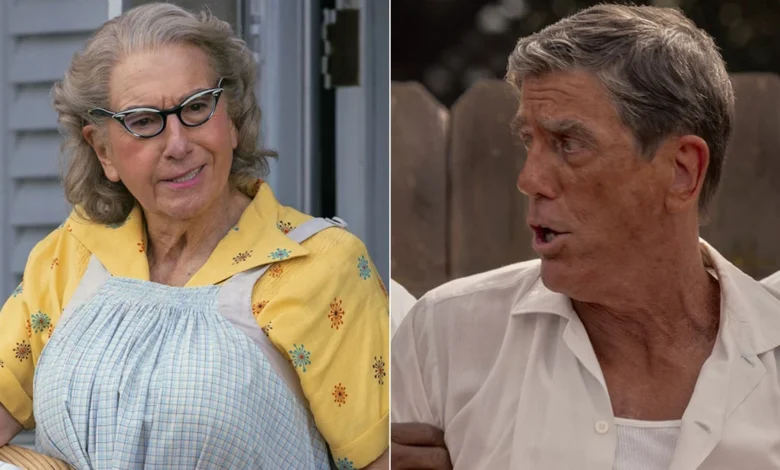
Episode 4 of Life, Larry, and the Pursuit of Unhappiness unfolds with a sketch that meticulously constructs a scenario designed to lampoon anti-vaccine sentiments. Larry David, ever the master of transformation, appears in drag as the proud mother of Jonas Salk, the American medical researcher and virologist who developed one of the first successful polio vaccines. In this comedic setup, David’s character is engaged in a boastful conversation with her neighbor, Evelyn, portrayed by veteran comedian Judy Gold, about her son’s monumental achievement in eradicating the terrifying disease of polio. The scene initially plays out as a lighthearted celebration of scientific triumph and maternal pride, setting the stage for the abrupt introduction of conflict.
The comedic tension escalates dramatically with the arrival of another neighbor, named Bobby, played by Gregg "Jeep" Perrie. Bobby immediately launches into a tirade against the polio vaccine, vehemently declaring, "that vaccine’s gonna kill people. It’s gonna give them heart attacks!" This dialogue is a thinly veiled, direct parody of the rhetoric often employed by Robert F. Kennedy Jr. and other vaccine skeptics, who frequently disseminate misinformation about vaccine safety and efficacy, often citing unsubstantiated links to various health ailments. The character of Bobby embodies the alarmist and scientifically unfounded claims that have fueled vaccine hesitancy movements globally.
The sketch culminates with David’s character, the mother of Jonas Salk, expressing profound despair and outrage at Bobby’s ignorance. Her impassioned plea, "If some idiot, some moron, ever put you in charge, that would be a dark day for humanity," serves as the episode’s most direct and scathing indictment of Kennedy’s public health views. The scene concludes with Bobby being forcibly removed and taken to a psychiatric ward, a hyperbolic but symbolically potent conclusion that underscores the show’s judgment on the rationality of such anti-vaccine positions. This dramatic resolution not only provides a comedic punchline but also reflects a broader societal exasperation with the spread of misinformation regarding public health.
Larry David’s Enduring Legacy of Social Commentary
Larry David’s comedic career, spanning decades, has consistently been defined by his incisive observational humor, his willingness to push social boundaries, and his unique ability to find humor in the most awkward and contentious aspects of human interaction. From co-creating Seinfeld, a show celebrated for its "show about nothing" approach that brilliantly dissected everyday minutiae, to his critically acclaimed Curb Your Enthusiasm, where he played an exaggerated version of himself navigating the absurdities of Los Angeles life, David has cemented his status as a comedic icon. His style is characterized by a relentless pursuit of social justice, albeit through the lens of a curmudgeonly and often self-sabotaging protagonist.
Life, Larry, and the Pursuit of Unhappiness appears to be a natural evolution of this comedic philosophy, taking the meta-narrative and improvisational feel of Curb Your Enthusiasm and applying it to a broader canvas of societal critique. The show’s format, which allows David to explore various sketches and scenarios, provides an ideal platform for tackling sensitive subjects. The targeting of figures like RFK Jr. and, in a previous episode, former President Donald Trump, indicates a deliberate shift towards more overt political satire compared to the often more localized social grievances of Curb Your Enthusiasm. This new series leverages David’s established persona to comment on larger societal issues, moving beyond personal annoyances to address matters of significant public concern.
The decision to tackle the anti-vaccine movement directly aligns with David’s history of confronting perceived irrationality and hypocrisy. Throughout his career, his characters have often served as proxies for the audience’s own frustrations with illogical social norms or unjust behaviors. By depicting the "Bobby" character as not only misinformed but also ultimately removed from society for his dangerous views, David’s show takes a clear stance, aligning itself with scientific consensus and public health advocacy.
The Personal and Political Dimensions: David, Hines, and RFK Jr.
The satirical attack on Robert F. Kennedy Jr. in Life, Larry, and the Pursuit of Unhappiness carries an additional layer of complexity due to the personal history between David and Kennedy. It is widely known that Larry David played a pivotal role in introducing Kennedy to his former Curb Your Enthusiasm co-star, Cheryl Hines. Hines, who played David’s on-screen wife for many seasons, eventually married Kennedy in 2014. This personal connection adds a potent, almost Shakespearean, dimension to the public comedic roasting.
Reports, including those from Variety, confirm that the friendship between David and Kennedy eventually soured. The dissolution of their relationship is attributed to Kennedy’s increasing alignment with the political establishment of a previous presidential administration, a development that reportedly caused a rift between the two men. While the specific details of their falling out remain largely private, the public nature of Kennedy’s anti-vaccine advocacy and his subsequent political career as an independent presidential candidate have placed him at odds with the scientific community and many public figures, including, it now seems, his former friend Larry David.
The decision to parody RFK Jr. so directly, knowing his wife Cheryl Hines would not be making an appearance on the new show, suggests a clear boundary being drawn. It signifies that David’s comedic principles and his stance on public health issues supersede personal allegiances, at least in the context of his artistic output. This move by David could be interpreted as a public statement, using his platform to express his strong disagreement with Kennedy’s views, even at the cost of potential personal discomfort. The absence of Hines from the new series, explicitly confirmed by the episode’s content, further underscores the separation between David’s professional endeavors and his former co-star’s marital ties.
The Broader Context: The Anti-Vaccine Movement and Public Health
The anti-vaccine movement, which has gained significant traction in recent decades, particularly in the wake of the COVID-19 pandemic, poses a substantial challenge to global public health. Its adherents often propagate unsubstantiated claims about vaccine dangers, linking them to autism, chronic illnesses, and various other health conditions, despite overwhelming scientific evidence to the contrary. The Centers for Disease Control and Prevention (CDC), the World Health Organization (WHO), and virtually every major medical and scientific body worldwide unequivocally affirm the safety and efficacy of vaccines.
The polio vaccine, specifically referenced in David’s sketch, serves as a powerful symbol of medical triumph. Developed in the 1950s by Jonas Salk, it virtually eradicated polio in many parts of the world, a disease that once caused paralysis and death in tens of thousands of children annually. The historical context of the polio vaccine highlights the profound impact of scientific innovation in combating infectious diseases and saving countless lives. By choosing this particular vaccine as the subject of the parody, David draws a direct line between historical medical achievements and the contemporary skepticism that threatens to undermine such progress.
Robert F. Kennedy Jr. has become one of the most visible and vocal proponents of vaccine skepticism, often challenging established scientific consensus and advocating for policies that contradict public health recommendations. While the source article incorrectly states he is the "U.S. Department of Health and Human Services Secretary," it is important to clarify that Kennedy is an independent presidential candidate known for his anti-vaccine advocacy. The show’s satirical depiction of "Bobby" being "in charge" and David’s character’s fear of such a scenario directly reflects real-world concerns about the potential influence of such views on public policy and health outcomes. The sketch thus serves not only as a comedic piece but also as a public health statement, reinforcing the importance of scientific literacy and trust in established medical institutions.
Satire as a Tool for Social and Political Commentary
Political satire has a long and storied history as a vital component of public discourse, offering a unique lens through which to critique power, challenge prevailing narratives, and spark debate. From ancient Greek comedies to the political cartoons of the Enlightenment, and from Saturday Night Live to The Daily Show, humor has consistently been employed to dissect complex issues, expose hypocrisy, and humanize contentious figures. In an increasingly polarized society, satire can sometimes cut through the noise more effectively than traditional news or earnest debate, reaching audiences who might otherwise be disengaged.
Larry David’s latest foray into this realm with Life, Larry, and the Pursuit of Unhappiness positions him firmly within this tradition. By targeting both former President Trump and RFK Jr., the series signals its intention to be a significant voice in contemporary political commentary. The power of David’s satire lies in its ability to combine sharp intellectual critique with uncomfortable, relatable humor. The absurdity of the situations he creates, like a mother of Jonas Salk debating an anti-vaccine conspiracy theorist, highlights the inherent illogicality of the views being parodied. This approach allows the show to deliver a serious message about the dangers of misinformation without sacrificing its comedic integrity.
The implication of such pointed satire is manifold. For supporters of Kennedy, it may be dismissed as biased or unfair, further entrenching their views. However, for those who align with scientific consensus, it offers catharsis and validation, using humor to confront what they perceive as dangerous falsehoods. Public health advocates are likely to welcome David’s intervention, seeing it as a powerful cultural endorsement of vaccine science. The use of comedy to address such a serious topic also has the potential to introduce these discussions to a broader audience, fostering critical thinking and encouraging engagement with public health issues.
Reactions, Repercussions, and the Future of the Series
While immediate official statements from Robert F. Kennedy Jr. or his campaign regarding the episode have not been reported, the nature of such a direct parody inevitably invites scrutiny and discussion. Public reaction on social media platforms and in media commentary has been swift, with many applauding David for his courage and wit, while others have criticized the perceived bias or the targeting of a political figure. The episode is likely to generate significant debate, highlighting the ongoing cultural clashes around vaccine policy and the role of celebrity influence in political discourse.
The decision to feature such a controversial parody early in the series’ run suggests a deliberate strategy by David and HBO to position Life, Larry, and the Pursuit of Unhappiness as a relevant and provocative voice in the current cultural climate. Following a previous episode where David, alongside Rob Reiner as George Washington, "ruthlessly mocked President Trump," the show has clearly established a pattern of engaging with high-profile political figures and contentious issues. This indicates that viewers can expect more of this kind of biting social and political commentary in future installments.
The series, airing new episodes on Fridays on HBO and HBO Max, is poised to continue its exploration of societal absurdities through David’s unique comedic lens. The "Deepthroat" episode, with its unsparing critique of anti-vaccine rhetoric through the parody of RFK Jr., marks a bold statement, affirming the show’s commitment to addressing complex issues with humor and conviction. It underscores the enduring power of satire to shape public opinion, challenge misinformation, and provide a much-needed comedic outlet for collective frustrations in an increasingly perplexing world. As the series progresses, it will be interesting to observe how David continues to navigate the delicate balance between personal connections, political commentary, and the pursuit of comedic excellence.