A Symphonic Convergence: Travis Scott, James Blake, and Ludwig Göransson Unveil "When I’m Home" for Christopher Nolan’s Epic The Odyssey

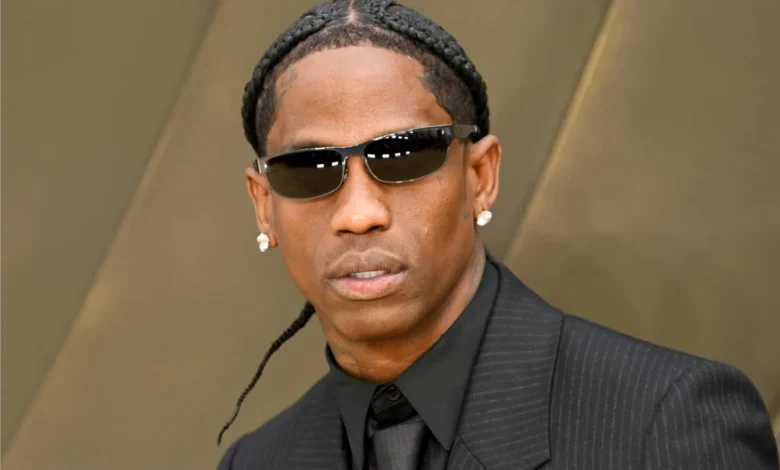
The cinematic and musical worlds have converged with the release of "When I’m Home," the evocative end credits song for Christopher Nolan’s highly anticipated film, The Odyssey. This five-minute atmospheric track is a collaborative masterpiece featuring hip-hop titan Travis Scott, experimental electronic artist James Blake, and Academy Award-winning composer Ludwig Göransson. The song, which serves as the poignant closing statement to Göransson’s original soundtrack, was made publicly available on July 17, coinciding with the film’s widespread theatrical release on Friday. This collaboration not only underscores Nolan’s innovative approach to filmmaking but also highlights a growing trend of integrating diverse musical talents into the fabric of major cinematic productions, bridging ancient narratives with contemporary artistic expression.
The Genesis and Soundscape of "When I’m Home"
"When I’m Home" immediately distinguishes itself with its profound atmospheric quality, perfectly encapsulating the themes of longing, journey, and eventual return central to Homer’s epic poem. Travis Scott, known for his distinctive vocal delivery and psychedelic trap soundscapes, references the classical text with lyrical allusions that ground the modern track in its ancient source material. His verses navigate the narrative with a gravitas that belies his contemporary genre, demonstrating a versatility that has captivated both critics and audiences. James Blake contributes a "ghostly chorus," a signature element of his acclaimed work, which imbues the track with an ethereal, haunting beauty. Blake’s often melancholic yet deeply resonant vocalizations create an emotional core, providing a stark contrast and complement to Scott’s more grounded delivery.
At the helm of the track’s intricate production is Ludwig Göransson, the film’s principal composer. Göransson, celebrated for his innovative scores that blend orchestral grandeur with contemporary sounds, orchestrates "When I’m Home" with a sparse yet deliberate touch. His production gradually builds in intensity, mirroring the epic scope and emotional arcs of the film. The subtle layering of instrumentation, from minimalist synth textures to more expansive string arrangements, guides the listener through a sonic journey that reflects Odysseus’s arduous path. Notably, the track’s writing credits include Christopher Nolan himself, alongside Scott, Blake, and Göransson, indicating a deep level of creative involvement from the director in shaping the film’s musical finale. This collective authorship speaks volumes about the integrated artistic vision behind The Odyssey, where music is not merely an accompaniment but an intrinsic narrative component.
Christopher Nolan’s Reimagining of The Odyssey
Christopher Nolan’s The Odyssey is an ambitious cinematic adaptation of Homer’s ancient Greek epic poem, a narrative that has captivated humanity for millennia. The film casts an impressive ensemble of A-list talent to bring this timeless tale to life. Matt Damon stars as Odysseus, the legendary king of Ithaca, whose decade-long struggle to return home after the Trojan War forms the core of the story. His journey is fraught with mythical creatures, divine interventions, and profound personal sacrifices. Tom Holland portrays Telemachus, Odysseus’s son, who embarks on his own quest to find his missing father and reclaim his birthright. Anne Hathaway takes on the role of Penelope, Odysseus’s steadfast wife, who fends off a horde of persistent suitors in her husband’s absence, embodying resilience and unwavering loyalty.
The supporting cast further elevates the film’s prestige, featuring acclaimed actors such as Robert Pattinson, Zendaya, Lupita Nyong’o, Charlize Theron, and Samantha Morton in pivotal roles. Each actor contributes to the rich tapestry of characters, from gods and goddesses to formidable adversaries and loyal allies, populating the mythological landscape of ancient Greece. Nolan’s direction is lauded for its characteristic blend of intellectual complexity, visual grandeur, and immersive storytelling, transforming a classical text into a modern cinematic spectacle.
Critics have overwhelmingly praised The Odyssey. NME, in a glowing five-star review, hailed the film as "a big story made impossibly huge," suggesting it "might just be the director’s most accomplished film to date." The review particularly highlighted Göransson’s "visceral score," noting that it makes The Odyssey "land harder than even 3,000 years of cultural heft have a right to." This critical reception underscores the success of Nolan’s vision in not only faithfully adapting a foundational work of literature but also in imbuing it with a contemporary resonance that speaks to modern audiences. The film’s critical and commercial success reaffirms Nolan’s status as a visionary filmmaker capable of delivering both intellectual depth and blockbuster appeal.
Travis Scott: From Hip-Hop Icon to Homeric Bard
One of the most intriguing aspects of The Odyssey is the casting of Travis Scott in a significant role. Scott appears as a bard, a traditional storyteller who recounts tales from the Trojan War near the beginning of the film and makes a brief return later in the narrative. This casting choice, initially surprising to some, was a deliberate and thoughtfully conceived decision by Christopher Nolan, aimed at drawing a profound connection between ancient and modern forms of storytelling.
Nolan elaborated on his rationale, stating, "I cast him because I wanted to nod towards the idea that this story has been handed down as oral poetry, which is analogous to rap." This statement reveals a deep understanding of the historical roots of both epic poetry and hip-hop. Homeric epics like The Odyssey were originally performed orally, passed down through generations by bards who used rhythm, rhyme, and improvisation to captivate their audiences. Similarly, rap music, at its core, is a form of oral poetry, where lyricists craft intricate narratives, convey emotions, and comment on society through rhythmic speech and poetic devices. By casting Scott, Nolan not only pays homage to this ancient tradition but also bridges a perceived cultural divide, suggesting that the fundamental human need for storytelling remains constant, even as its forms evolve.
This is not Scott’s first foray into Nolan’s cinematic universe. He previously collaborated with the acclaimed director and Ludwig Göransson on "The Plan," a track recorded for Nolan’s 2020 mind-bending thriller, Tenet. That collaboration proved successful, demonstrating Scott’s ability to contribute effectively to a film’s sonic identity while maintaining his unique artistic voice. This established working relationship likely facilitated his casting in The Odyssey, allowing for a seamless integration of his talent into the film’s ambitious narrative and a deeper understanding of Nolan’s artistic demands. Scott’s presence in the film not only broadens its appeal to a younger, more diverse audience but also serves as a powerful artistic statement about the timeless nature of storytelling and the unexpected places where ancient myths can find new life.
A Collaborative Symphony: Göransson and Blake’s Contributions
Ludwig Göransson’s role in The Odyssey extends far beyond the end credits song. As the film’s primary composer, he crafted the entire score, an undertaking that required immense skill to complement Nolan’s grand vision without overshadowing it. Göransson’s compositional style is characterized by its dynamic range and genre-bending approach. He has a remarkable ability to fuse traditional orchestral arrangements with contemporary electronic elements, world music influences, and intricate rhythmic structures. This versatility has earned him critical acclaim and multiple awards, including an Academy Award for Best Original Score for Black Panther and widespread recognition for his work on films like Oppenheimer and series like The Mandalorian. For The Odyssey, his "visceral score," as described by NME, likely employs a blend of epic orchestral motifs, suspenseful percussive elements, and emotionally resonant themes to guide the audience through Odysseus’s perilous journey. His ability to build intensity through sparse production, as evidenced in "When I’m Home," is a hallmark of his craft, allowing the music to breathe and evolve alongside the narrative.
James Blake’s contribution to "When I’m Home" is equally pivotal. Known for his distinctive falsetto, minimalist electronic productions, and deeply emotional songwriting, Blake brings a unique sonic texture to the collaboration. His "ghostly chorus" in the track serves as an atmospheric anchor, providing a melancholic yet beautiful counterpoint to Scott’s rawer delivery. Blake’s music often explores themes of isolation, vulnerability, and the search for connection, which resonate profoundly with Odysseus’s long separation from home and family. His signature use of space and reverb in his production further enhances the track’s ethereal quality, creating an auditory landscape that feels both ancient and futuristic. This fusion of Blake’s introspective artistry with Scott’s bolder expression, all under Göransson’s masterful production, creates a rich, multifaceted sound that is both emotionally resonant and intellectually stimulating.
Interweaving Ancient Myth and Modern Sound
The collaboration on "When I’m Home" and its integration into The Odyssey represents a fascinating interweaving of ancient myth with modern artistic sensibilities. Homer’s The Odyssey is not merely a tale of adventure; it is a profound exploration of human nature, identity, loyalty, and the relentless pull of home. These universal themes transcend time and culture, making the epic perpetually relevant. By engaging artists like Travis Scott and James Blake, Nolan actively seeks to re-contextualize these themes for a contemporary audience, demonstrating that the struggles and triumphs of Odysseus are not confined to the annals of history but echo in the challenges faced by individuals today.
The choice of hip-hop and electronic music, genres often associated with innovation and breaking traditional boundaries, to conclude a film based on an ancient epic is a deliberate artistic statement. It suggests that storytelling, regardless of its origin, remains a dynamic and evolving art form. The lyrical content from Scott, referencing Homer’s original poem, acts as a direct bridge, ensuring that the modern interpretation remains tethered to its source while allowing for fresh perspectives. This blend highlights the enduring power of myth and its capacity to be reinterpreted and revitalized through new artistic mediums, fostering a dialogue between the past and the present.
A History of Creative Partnership
The artistic synergy between Christopher Nolan, Travis Scott, and Ludwig Göransson is not a novel development but rather an evolution of a previously established collaborative dynamic. The trio’s work on "The Plan" for Nolan’s 2020 film Tenet served as a foundational experience. For Tenet, Scott crafted a track that mirrored the film’s complex, non-linear narrative, characterized by its enigmatic lyrics and a sonic landscape that felt both disorienting and exhilarating. Göransson’s production for "The Plan" was instrumental in translating Nolan’s intricate conceptual framework into an auditory experience that complemented the film’s temporal manipulation.
This prior success undoubtedly paved the way for the expanded collaboration on The Odyssey. It demonstrated that Scott’s unique artistic voice could be harmoniously integrated into Nolan’s meticulously constructed cinematic worlds, enhancing the film’s themes rather than merely serving as a commercial add-on. The shared experience on Tenet would have fostered a mutual understanding of each other’s creative processes and artistic goals, making the subsequent collaboration on "When I’m Home" a more fluid and deeply integrated artistic endeavor. This recurring partnership underscores a deliberate strategy by Nolan to work with artists who can push the boundaries of cinematic sound, proving that meaningful artistic relationships can yield groundbreaking results across different projects.
Industry Trends and Crossover Appeal
The collaboration on "When I’m Home" reflects a broader trend in the film industry where major filmmakers and studios are increasingly incorporating high-profile contemporary music artists into their scores and soundtracks. This strategy aims to achieve several objectives: enhancing the film’s cultural relevance, broadening its audience appeal, and creating cross-promotional opportunities. The inclusion of artists like Travis Scott and James Blake, who command vast and diverse fan bases, introduces The Odyssey to demographics that might not typically engage with a classical adaptation. This crossover appeal can translate into increased box office revenue and sustained cultural conversation around the film.
Furthermore, such collaborations often lead to critically acclaimed musical works that stand independently of the film, as seen with "When I’m Home." This song is not merely a promotional tool but a significant artistic creation in its own right, capable of resonating with listeners long after they have seen the film. This approach challenges traditional notions of film scoring, moving beyond the functional role of background music to position the soundtrack as an integral, dynamic component of the cinematic experience, capable of driving narrative and emotional impact. It signals a progressive shift towards a more holistic and integrated approach to filmmaking, where various artistic disciplines converge to create a richer, more immersive product.
Recent Developments: Travis Scott’s Public Engagements
While the release of "When I’m Home" and Travis Scott’s involvement in The Odyssey mark a significant artistic achievement, recent reports have also brought attention to other aspects of the rapper’s public engagements. In a separate incident that occurred shortly before the song’s release, DJ John Summit publicly accused Scott of "forcing" his way onto the stage and interrupting his set at Lilly’s Club Monte Carlo in Monaco.
According to Summit’s account, Scott arrived late to the venue and subsequently climbed over Summit’s decks, initiating his own performance. Summit later communicated his frustration, stating that his show had been "shut down" due to "another artist showing up late and forcing his way onto the stage." Footage of the incident circulated online, depicting Scott taking over the stage. As of the time of this reporting, Travis Scott has not publicly commented on the incident. This event, while unrelated to his work on The Odyssey, highlights the ongoing scrutiny and public attention that surrounds high-profile artists, underscoring the complexities of managing a global music career that spans both carefully curated artistic collaborations and spontaneous public appearances.
Conclusion
The release of "When I’m Home" and its integration into Christopher Nolan’s The Odyssey represents a landmark moment in contemporary cinema and music. It is a testament to the power of interdisciplinary collaboration, where the distinct talents of Travis Scott, James Blake, and Ludwig Göransson merge to create a piece that is both deeply rooted in classical tradition and boldly modern in its execution. Nolan’s visionary casting of Scott as a bard underscores a profound connection between ancient oral poetry and modern rap, while Göransson’s masterful score and Blake’s ethereal vocals weave a rich sonic tapestry that enhances the film’s epic narrative. As The Odyssey captivates audiences worldwide, "When I’m Home" stands as a powerful reminder of storytelling’s enduring power and its infinite capacity for reinvention, proving that the journey home, whether literal or metaphorical, remains a timeless and universal theme.