The series represents a departure from traditional recital formats, functioning as a hybrid of high-level performance and intellectual dialogue. By deconstructing the psychological landscapes of history’s greatest musical minds, "Two Faces of the Dream" aims to present classical music not as a static monument of the past, but as a living, breathing expression of human vulnerability and triumph.
Concept and Narrative: The Dual Nature of Creation
The thematic core of the series is inspired by the literary and musical inventions of Robert Schumann, one of the most influential composers of the Romantic era. Schumann, who was famously open about his struggles with mental health and his multifaceted personality, created two distinct alter egos to represent the contrasting sides of his creative spirit: Florestan and Eusebius.
Florestan embodied the passionate, impulsive, and often volatile side of Schumann’s nature, while Eusebius represented the introspective, lyrical, and dreamy qualities of his psyche. In "Two Faces of the Dream," these characters serve as a metaphor for the universal duality of the human experience. The concert explores how these internal forces—the bold and the quiet, the rational and the emotional—clash and harmonize within the creative process.
Unlike a standard concert where the music is presented without commentary, this series incorporates structured dialogue. Performers engage with the audience to decode the emotional and physical underpinnings of the repertoire. This approach is designed to demystify the "genius" trope, instead revealing the composers as individuals navigating the complexities of their own mental and emotional worlds.
The 2026 National Tour Chronology
The Ottawa performance is a centerpiece of a broader national effort by Harmonaire Musique to bring high-caliber chamber music to diverse Canadian audiences. The 2026 season has been a milestone for the organization, reflecting a period of significant growth under its current artistic leadership.
The tour began in Montreal, where Harmonaire Musique is headquartered, featuring prominently in The Blue Lounge Concert Series. From there, the program traveled to Kingston for the Cataraqui Chamber Music Festival, establishing a footprint in Eastern Ontario before moving toward the capital. Following the June engagement in Ottawa, the series is slated to travel westward to Vancouver and eastward to Halifax, ensuring a truly coast-to-coast dialogue on the intersection of music and psychology.
This timeline marks the first full year of programming curated by Ying Zhang since she assumed the role of Artistic Director in August 2025. Her vision has focused on "curatorial direction that emphasizes the human narrative," a strategy that has seen a measurable increase in audience engagement and subscription interest across the tour’s various stops.
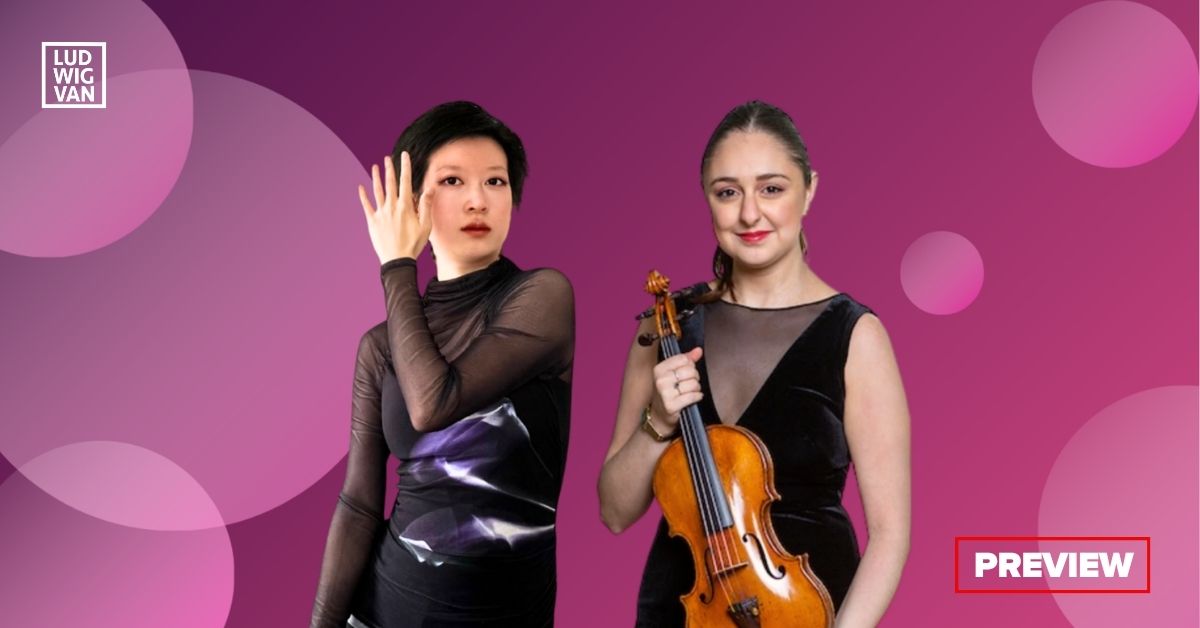
Artistic Profiles: Ying Zhang and Julia Mirzoev
The success of "Two Faces of the Dream" relies heavily on the technical proficiency and interpretive depth of its lead artists. Both Ying Zhang and Julia Mirzoev bring a wealth of international experience and academic rigor to the stage.
Ying Zhang, Piano and Artistic Direction
Ying Zhang’s journey to the helm of Harmonaire Musique began in China, where she received her foundational training at the Conservatory of Music’s affiliated middle and high schools. Her move to Canada marked a significant turning point in her career. At the Schulich School of Music at McGill University, Zhang earned both her Bachelor’s and Master’s degrees in Piano Performance. Her time at McGill was marked by high honors, including the Paul-Marcel Gélinas et Verna-Marie Parr Gélinas Piano Award and the Outstanding Achievement in Piano award.
Furthering her studies at the San Francisco Conservatory of Music, where she earned a Post-Graduate Professional Studies Diploma, Zhang developed a repertoire that is notably broad. While she is a specialist in the Romantic works of the 19th century—essential for a program centered on Schumann—she is also a dedicated proponent of 20th-century compositions and newly commissioned contemporary works. As Artistic Director, Zhang has been instrumental in selecting programs that challenge both the performer and the listener, moving beyond the "warhorses" of the piano repertoire to find pieces that speak to modern sensibilities.
Julia Mirzoev, Violin
Collaborating with Zhang is Toronto native Julia Mirzoev, a violinist whose career is defined by a string of prestigious awards and a reputation for "unflinching musicality." Mirzoev’s academic pedigree includes degrees from the University of Toronto, McGill University, and the Yale University School of Music. Her accolades are numerous, including the Golden Violin grand prize at McGill—the largest instrument award in Canada—and the Broadus Erle graduating prize at Yale.
Mirzoev is a veteran of the international competition circuit, having taken top prizes at the Michael Hill International Violin Competition and the Irving M. Klein International Competition. Her experience as a soloist has seen her perform with the Toronto Symphony Orchestra, Sinfonia Toronto, and the Montréal Bach Festival Orchestra, among others.
A critical component of Mirzoev’s performance is her instrument. She performs on the 1747 "Palmason" Janarius Gagliano violin, an exceptional instrument on loan from the Canada Council for the Arts Instrument Bank. The Instrument Bank is a prestigious program that provides Canada’s most talented professionals with the use of fine historic instruments, valued in the millions of dollars, to help elevate their international careers. The presence of the Gagliano in the Ottawa concert adds a layer of historical resonance to the "Two Faces of the Dream" program.
Institutional Context and Support
Harmonaire Musique’s ability to mount a national tour of this scale highlights the robust network of support for classical music in Canada. The organization has positioned itself as a bridge between the academic and professional worlds, frequently collaborating with institutions like the Taylor Academy at the Royal Conservatory and L’Orchestre des Jeunes du Mont-Royal, where Mirzoev serves as a coach.
The choice of Huguette Labelle Hall in Ottawa for the June 7 performance is also significant. Located within the Tabaret Hall at the University of Ottawa, the venue is known for its excellent acoustics and its role as a hub for the city’s intellectual and cultural life. By hosting the concert in a space associated with higher learning, Harmonaire Musique reinforces the "dialogue" aspect of the series, inviting a crowd that is as interested in the "why" of the music as they are in the "how."
Broader Impact and Educational Implications
The "Two Faces of the Dream" series arrives at a time when the classical music industry is grappling with the need for modern relevance. Data from various arts councils suggest that audiences are increasingly seeking "experiential" performances—events that offer more than just a passive listening experience. By integrating storytelling and psychological analysis into the concert format, Harmonaire Musique is responding to this shift.
Furthermore, the focus on the "inner world of the composer" aligns with contemporary societal interests in mental health and the creative process. By discussing Schumann’s struggles and his use of music as a tool for psychological integration, Zhang and Mirzoev provide a historical context for modern conversations about wellness and art.
This educational component extends to the artists’ private lives as well. Both Zhang and Mirzoev are deeply involved in pedagogy. Mirzoev’s background in a family of music educators and her current roles at the Taylor Academy ensure that the insights gained from this tour will be passed down to the next generation of Canadian musicians.
Implications for the Canadian Arts Landscape
The 2026 tour of "Two Faces of the Dream" serves as a testament to the resilience and evolution of the Canadian chamber music scene. It demonstrates that there is a significant appetite for sophisticated, narrative-driven classical programming outside of the traditional symphony hall environment.
As the series moves toward its Ottawa date, it stands as a highlight of the capital’s summer cultural calendar. The collaboration between a Montreal-based organization and performers with deep roots in Toronto and international training reflects the interconnected nature of Canada’s arts community. For audiences in Ottawa, the June 7 concert offers a rare opportunity to hear a 1747 Gagliano in the hands of a master, while gaining a deeper, more intimate understanding of the music that has shaped the Western canon.
The success of the tour thus far suggests that the "dialogue-concert" format may become a permanent fixture in Harmonaire Musique’s future seasons. By prioritizing the "humanity" of the composer, the series does more than just play music; it fosters a sense of empathy and connection between the past and the present, the artist and the audience. This holistic approach ensures that classical music remains a vital, inquisitive, and deeply personal art form in the 21st century.
Related posts: