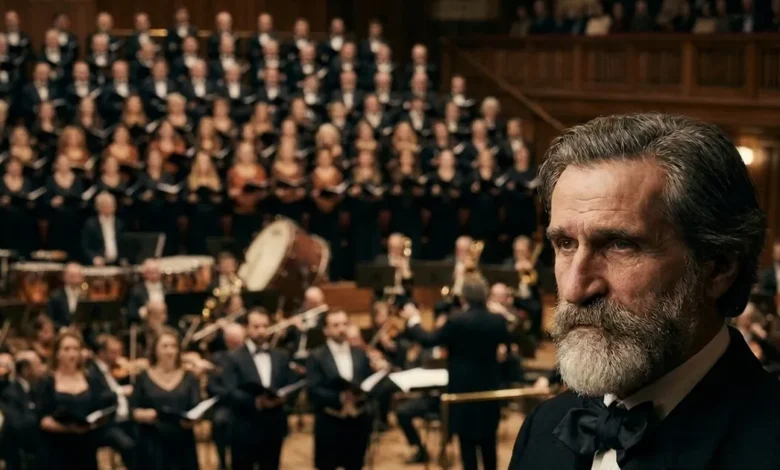
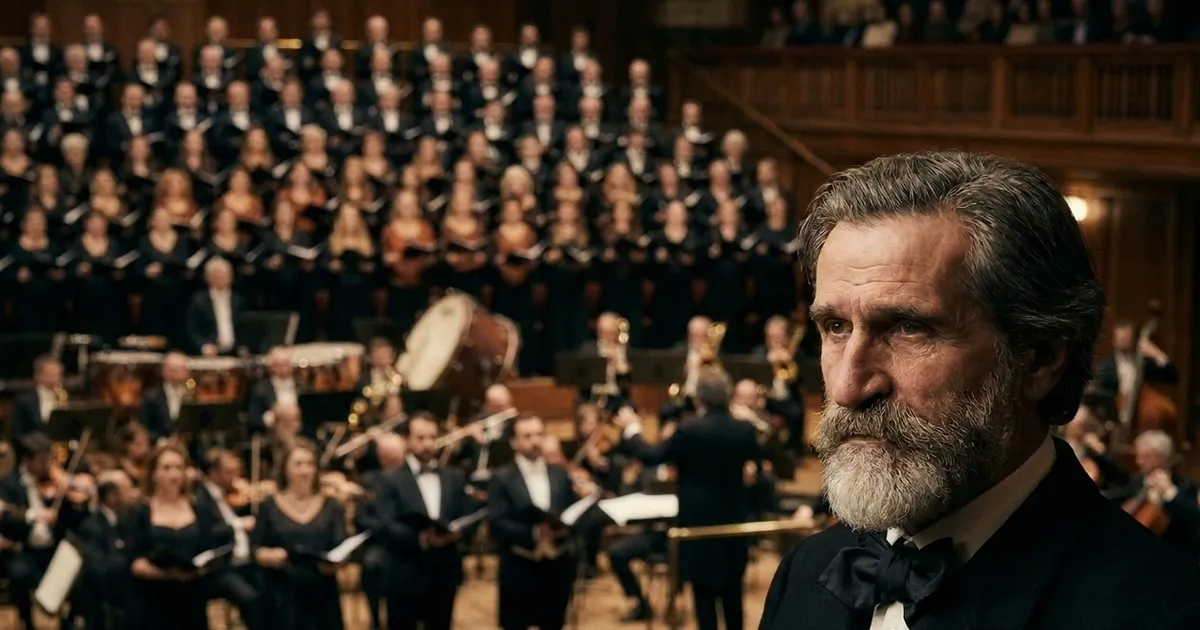
The Messa da Requiem by Giuseppe Verdi stands as one of the most significant choral masterpieces in the Western canon, representing a profound intersection of liturgical tradition and operatic drama. Composed in 1874, the work was a deeply personal tribute to Alessandro Manzoni, the celebrated Italian novelist and poet whom Verdi revered as a symbol of Italian national identity. While the Requiem utilizes the traditional Latin Mass for the Dead, its explosive emotional range and virtuosic demands for soloists, chorus, and orchestra have sparked over a century of debate regarding whether the work is a sincere religious expression or, as some critics once suggested, "an opera in ecclesiastical robes."
The Historical Context and Genesis of the Requiem
The origins of the Requiem trace back to 1868, following the death of Gioachino Rossini. Verdi proposed a collaborative mass, the Messa per Rossini, to be written by thirteen different Italian composers. Although Verdi completed his contribution—the "Libera me"—the project collapsed due to administrative failures and a lack of cooperation among the participants. However, the seed of a large-scale funeral work remained in Verdi’s mind.
The true catalyst arrived on May 22, 1873, with the passing of Alessandro Manzoni. Verdi was so devastated by the loss of his friend and idol that he found himself unable to attend the funeral in Milan. Instead, he sought to honor Manzoni through his craft. He wrote to his publisher, Giulio Ricordi, expressing his desire to compose a Requiem to be performed on the first anniversary of Manzoni’s death. Verdi completed the score in early 1874, incorporating a revised version of the "Libera me" he had originally written for Rossini.
The premiere took place on May 22, 1874, at the San Marco church in Milan, with Verdi himself conducting. The performance featured a massive ensemble, including a chorus of 120 and an orchestra of 100. It was an immediate sensation, though it quickly moved from the sanctuary to the concert hall—specifically La Scala—where its theatrical power could be fully unleashed.
Chronology of Critical Reception
From its inception, the Requiem divided the musical world. The most famous early criticism came from Hans von Bülow, the prominent German conductor and critic, who dismissed the work as "Verdi’s latest opera, in ecclesiastical dress," without even hearing it. This critique reflected a broader 19th-century tension between the perceived sobriety required for sacred music and the vivid, emotional style of Italian Romanticism.
However, the tide turned quickly. Johannes Brahms, after studying the score, famously remarked, "Bülow has made a fool of himself. This is the work of a genius." Nearly twenty years later, in 1892, Bülow wrote a formal apology to Verdi, admitting his initial judgment had been clouded by prejudice. Today, the work is recognized not as a contradiction of liturgical intent, but as a universal meditation on mortality, fear, and the hope for deliverance.
Compositional Structure and Technical Requirements
The Requiem is scored for four soloists (soprano, mezzo-soprano, tenor, and bass), a large double chorus, and an expansive orchestra. Its structure follows the standard Roman Catholic funeral mass but is dominated by the "Dies irae," a terrifying depiction of the Day of Wrath that recurs throughout the work as a structural anchor.
- Requiem et Kyrie: A hushed, prayerful opening that introduces the four soloists.
- Dies irae: The longest section, containing the famous hammering choral chords and the "Tuba mirum," which utilizes four offstage trumpets to simulate the sounding of the last judgment from the corners of the earth.
- Offertorio: A lyrical section for the solo quartet.
- Sanctus: A brilliant, festive eight-part double fugue for the chorus.
- Agnus Dei: A movement of stark simplicity, beginning with the soprano and mezzo-soprano in octaves.
- Lux aeterna: A trio for the lower three soloists, characterized by shimmering orchestral textures.
- Libera me: The dramatic finale, featuring a soprano solo that alternates between desperate chanting and soaring pleas for mercy, ending not in triumph, but in a quiet, unsettled prayer.
Analysis of Essential Recordings
The discography of Verdi’s Requiem is vast, reflecting the various ways conductors approach the "sacred vs. theatrical" divide. The following recordings represent the pinnacle of performance history, each offering a unique perspective on Verdi’s vision.
The Devotional Standard: Carlo Maria Giulini (1964)
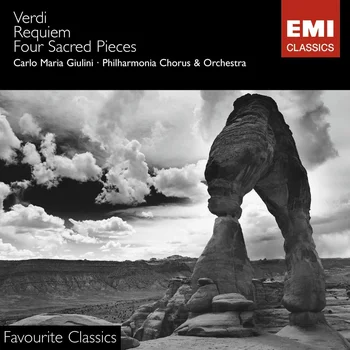
Carlo Maria Giulini’s recording with the Philharmonia Orchestra and Chorus is widely regarded as the "gold standard" for those who view the Requiem as a spiritual document. Giulini, known for his deep humility and lyrical sensitivity, avoids sensationalism. His soloists—Elisabeth Schwarzkopf, Christa Ludwig, Nicolai Gedda, and Nicolai Ghiaurov—deliver performances of immense refinement. While the 1964 master tapes suffer from slight distortion during the massive choral climaxes, the spiritual intensity of the performance remains unsurpassed.
The Modern Benchmark: Antonio Pappano (2009)
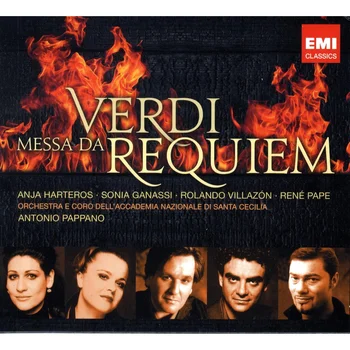
For listeners seeking modern digital sound without sacrificing Italianate passion, Antonio Pappano’s recording with the Orchestra dell’Accademia Nazionale di Santa Cecilia is the primary recommendation. Pappano, a seasoned opera conductor, perfectly balances the work’s theatrical fire with its moments of rapt stillness. Soprano Anja Harteros is particularly lauded for her "Libera me," which captures the necessary blend of fear and radiant hope.
The Monumental Approach: Fritz Reiner (1960)
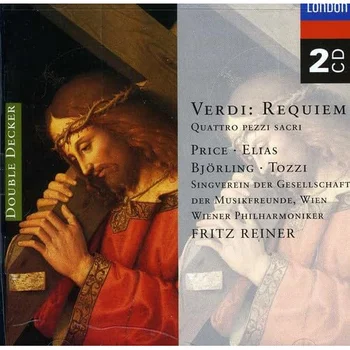
Fritz Reiner’s account with the Vienna Philharmonic is characterized by its massive scale and slow, deliberate tempos. This recording is famous for its "trance-like" opening and the sheer vocal power of its soloists, including a young Leontyne Price and the legendary Jussi Björling in one of his final recordings. It is a performance that emphasizes the "Last Judgment" aspect of the work with overwhelming weight.
The Theatrical Firebrand: Georg Solti (1967)
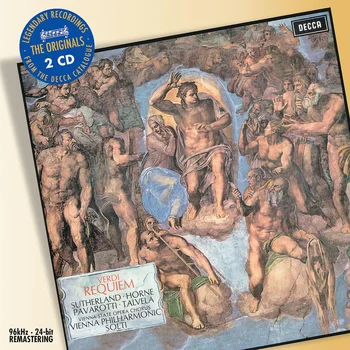
Sir Georg Solti’s recording is the antithesis of Giulini’s. It is high-octane drama, recorded with the "Decca Sound" that emphasizes clarity and impact. The star attraction here is the young Luciano Pavarotti, whose "Ingemisco" is a masterclass in Italian tenor singing. Solti treats the score as a vivid drama, pushing the Vienna Philharmonic to its limits.
Historical Intensity: Arturo Toscanini (1951)
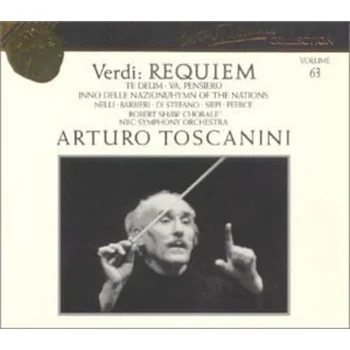
No discussion of the Requiem is complete without Arturo Toscanini. His 1951 live recording with the NBC Symphony Orchestra is legendary for its ferocity. Toscanini, who knew Verdi personally, conducts with a relentless drive that makes the "Dies irae" feel like a physical assault. Despite the dated monaural sound, the sheer electricity of the performance provides a direct link to the 19th-century performance tradition.
The Period Instrument Perspective: John Eliot Gardiner (1992)
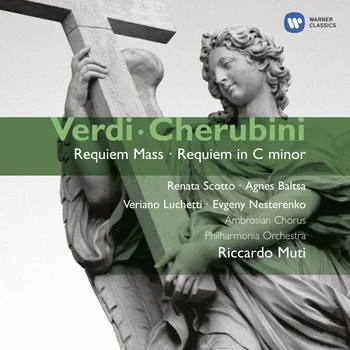
John Eliot Gardiner’s recording with the Orchestre Révolutionnaire et Romantique was a landmark in performance practice. By using period instruments, Gardiner stripped away the "heavy" late-Romantic sound often associated with the work. The result is a performance of startling clarity, where the brass instruments "bite" through the texture rather than blending, and the Monteverdi Choir provides a level of precision rarely heard in larger symphonic choruses.
The Spiritual Centenary: Claudio Abbado (2001)
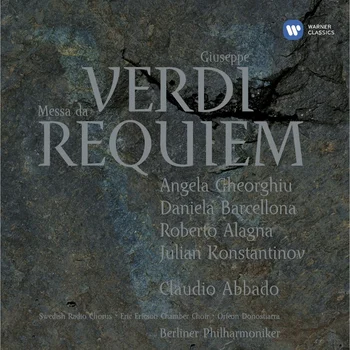
Recorded during the centenary of Verdi’s death, Claudio Abbado’s performance with the Berlin Philharmonic is a deeply moving document. Conducted shortly after Abbado’s recovery from a serious illness, the performance possesses an inward, philosophical quality. Angela Gheorghiu’s contribution to the "Libera me" is noted for its palpable sense of vulnerability.
Choral Precision: Robert Shaw (1987)
Robert Shaw, arguably the greatest choral conductor of the 20th century, produced a recording with the Atlanta Symphony Orchestra that remains an audiophile favorite. The focus here is on the chorus; the dynamic shading and rhythmic accuracy are peerless. The recording is also famous for the "bass drum from hell" in the "Dies irae," which has tested the limits of many high-end speaker systems.
Broader Impact and Legacy
The Messa da Requiem secured Verdi’s legacy not just as a man of the theater, but as a composer of universal significance. It paved the way for other non-liturgical requiems that prioritized human emotion over ritual, such as those by Brahms (though his was earlier and different in scope) and later, Benjamin Britten.
In the 21st century, the work continues to be a staple of the international repertoire, performed at moments of national mourning and as a showcase for the world’s greatest orchestras. Its enduring power lies in its honesty; it does not offer the easy comfort of a traditional church service. Instead, it grapples with the raw reality of death and the desperate human desire for "eternal rest," making it as relevant today as it was at its 1874 premiere. Whether viewed as a sacred prayer or a theatrical masterpiece, Verdi’s Requiem remains an essential experience for any student of Western music.