Questlove on the Evolution of Sampling and the Future of Music Production in the Age of Artificial Intelligence

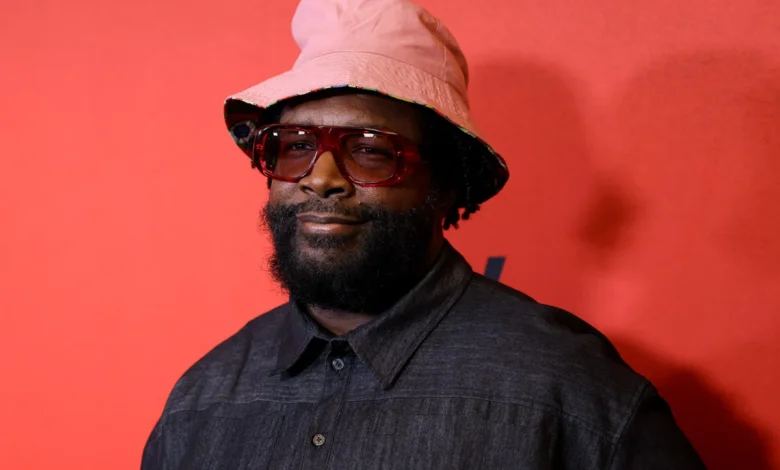
The history of recorded music is fundamentally a history of iteration, where the sounds of the past serve as the raw material for the innovations of the future. Questlove—the multi-hyphenate drummer, bandleader of The Roots, and increasingly prominent music historian—has spent his career at the epicenter of this creative cycle. Through his directorial work on acclaimed documentaries such as Summer of Soul and his recent deep dive into the legacy of Earth, Wind & Fire, he has established himself as a definitive chronicler of the sounds that shaped modern popular culture. In a recent appearance on the Billboard On the Record video podcast, Questlove offered a comprehensive analysis of the art of sampling, tracing its trajectory from a niche technical experiment to the legal and technological flashpoint it has become in the 21st century.
A Chronology of the Sampling Revolution
To understand the current landscape of music production, one must first view sampling not as a shortcut, but as a deliberate extension of human musical synergy. The timeline of this practice is marked by distinct eras of technological capability and legal scrutiny.
In the early 1970s, the technological infrastructure for digital sampling was largely non-existent, and the practice was limited to analog tape manipulation or live re-playing of musical motifs. The turning point arrived with the advent of high-end digital synthesizers, most notably the Fairlight CMI. Introduced in 1979, the Fairlight carried a price tag in the six-figure range, effectively gatekeeping the technology for elite producers such as Quincy Jones, Herbie Hancock, and Stevie Wonder.
The mid-1980s saw a democratization of these tools, but the true paradigm shift occurred in June 1988 with the release of Public Enemy’s It Takes a Nation of Millions to Hold Us Back. For a generation of producers, this album served as a masterclass in density and historical recontextualization. By layering dozens of disparate samples into a cohesive, aggressive sonic architecture, the production team—known as The Bomb Squad—transformed the act of record collecting from a passive hobby into an active form of composition.
The Wild West: 1988–1991
Questlove characterizes the period between 1988 and 1991 as the "Wild West" of hip-hop production. During these three years, the industry lacked a formal framework for clearing samples, and copyright holders were largely unaware of the extent to which their back catalogs were being repurposed. Albums such as the Beastie Boys’ Paul’s Boutique and De La Soul’s 3 Feet High and Rising stand as monuments to this era, utilizing complex, multi-layered collages that would be prohibitively expensive—if not legally impossible—to clear by today’s standards.
The transition from this lawless period to the modern era of strict copyright enforcement was precipitated by the landmark 1991 legal battle between Gilbert O’Sullivan and Biz Markie. When a federal judge ruled that Markie’s unauthorized use of a snippet from O’Sullivan’s "Alone Again (Naturally)" constituted copyright infringement, the legal reality of the music industry shifted overnight. This ruling necessitated the creation of the current "sample clearance" system, which imposes both significant financial costs and logistical hurdles on producers, fundamentally altering the creative process.
The Technical Evolution and the Role of Producers
Beyond the legal implications, Questlove notes that the evolution of production was heavily influenced by the adoption of the drum machine and the standardizing of song structures. He points to Sly and the Family Stone’s 1971 album, There’s a Riot Goin’ On, as an early, crucial application of electronic rhythm, moving the drum machine from a mere metronome to a creative instrument.
Later, the work of Rick Rubin in the 1980s helped bridge the gap between long-form, club-oriented hip-hop and the traditional three-to-four-minute radio format favored by pop and rock. By applying a structured, verse-chorus-verse approach to the raw energy of hip-hop, producers like Rubin and their contemporaries codified the modern recording standard. Questlove argues that this synthesis of old and new—what he describes as a "metaphorical protest against time moving forward"—is the soul of the practice. Whether it is the breakbeats of the 1980s or the complex interpolations of today, the goal remains the same: the preservation and re-ignition of human emotion.
The Modern Frontier: Catalog Sales and Generative AI
In the contemporary music economy, the conversation has shifted toward the massive acquisition of legacy music catalogs by private equity firms and major labels. These entities often view these assets not just as passive revenue streams, but as intellectual property to be actively revived.
Questlove notes a dichotomy in the current market: some catalog holders act as "highway cops," fiercely guarding their assets against any unauthorized use, while others are actively inviting producers to iterate on their libraries. He highlights the existence of exclusive, high-level producer circles—which he likens to an "Olympic Dream Team"—that are given curated access to these catalogs to create fresh content.
However, the rise of generative AI presents a new and contentious challenge. The recent trend of using AI to generate "original" audio that mimics the style of classic artists, followed by the sampling and chopping of that AI-generated content to bypass copyright, represents a significant escalation in the battle over intellectual property.
Analysis of the AI Impact
The implications of AI in music production are two-fold: aesthetic and ethical. From an aesthetic perspective, Questlove remains skeptical, citing a personal aversion to the "digital distortion" often found in current AI-generated audio. He suggests that while AI models may reach a level of technical perfection in the coming decade, they currently lack the "magic of imperfection" that characterizes human musical synergy.
Ethically, however, the stakes are higher. The debate centers on the concept of "reskilling" intellectual property. Questlove argues that the current distribution of wealth in the music industry—already strained between creators, engineers, labels, and publishers—is ill-equipped to handle the disruption of AI. His stance is clear: if AI platforms are built using the work of human artists, there must be transparency and, crucially, a fair mechanism for compensation.
"I’m not anti-technology," Questlove asserts. "I love sampling, CGI, and other digital inventions." The fundamental issue, he suggests, is ensuring that the transition into the AI era does not result in the further devaluation of the human creator. As the industry grapples with these technological shifts, the tension between the "outlaw" spirit of early sampling and the modern demand for institutional control will likely define the next chapter of music history.
For producers and listeners alike, the path forward involves balancing the excitement of new tools with the necessity of protecting the legacy of the artists who came before. As Questlove’s own career demonstrates, the most enduring music is that which respects the past while daring to reshape it for the future. Whether that future is built on human collaboration or augmented by algorithmic assistance, the central requirement remains the same: the capture of energy, emotion, and the ever-evolving synergy of sound.