The Evolution of an Era How Dire Straits and Sting Redefined the Music Video Landscape with Money For Nothing

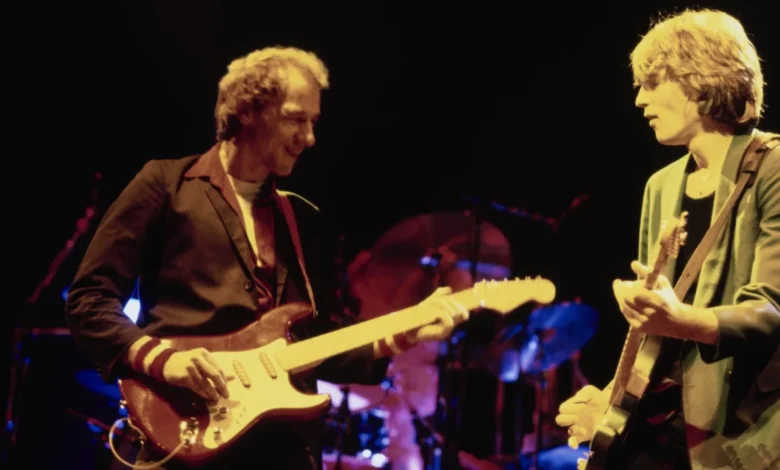
The landscape of popular music underwent a seismic shift in the early 1980s, driven by the emergence of MTV: Music Television. Launched on August 1, 1981, the network transformed the industry from an auditory medium into a visual one, creating a new hierarchy where telegenic appeal often outweighed musical complexity. While many established artists struggled to adapt to this new paradigm, the British rock band Dire Straits managed to navigate the transition with a unique blend of satire and strategic cooperation. Their 1985 hit "Money for Nothing" remains a definitive artifact of this era, serving as both a scathing critique of the music video culture and a beneficiary of the very system it sought to lampoon.
The Genesis of a Satirical Masterpiece
The inspiration for "Money for Nothing" did not come from a high-concept brainstorming session in a boardroom, but rather from a mundane encounter in an appliance store in New York City. Mark Knopfler, the lead singer and guitarist of Dire Straits, found himself observing a wall of television sets all tuned to MTV. Nearby, a group of delivery workers was watching the screen with a mixture of bewilderment and resentment.
Knopfler, known for his observant songwriting, noticed the workers were providing a running commentary on the musicians appearing on screen. They grumbled about the "pampered stars" who appeared to be making a fortune without performing what they considered "real work." The workers’ vernacular—filled with phrases like "money for nothing" and "chicks for free"—struck Knopfler as a perfect representation of a specific blue-collar perspective on the burgeoning video age.
Knopfler reportedly asked for a pen and paper from a store employee and began transcribing the dialogue verbatim. This "found dialogue" became the foundation of the song’s lyrics. By writing from the perspective of the delivery man, Knopfler created a narrative layer that allowed the band to participate in the MTV phenomenon while simultaneously distancing themselves from its perceived shallowness.
Recording at AIR Studios and the Technical Digital Revolution
The recording of "Money for Nothing" took place at AIR Studios on the Caribbean island of Montserrat, a facility founded by legendary Beatles producer George Martin. This period was significant not just for the music created, but for the technology employed. The album Brothers in Arms was one of the first major releases to be recorded using a Sony 24-track digital tape machine.
This transition to digital recording was a hallmark of the mid-80s, and Dire Straits was at the forefront. The pristine, high-fidelity sound of the album became a selling point for the newly introduced Compact Disc (CD) format. In fact, Brothers in Arms is often credited with being the first album to sell over a million copies on CD, significantly outpacing its vinyl sales at the time. The technical precision of the recording provided the perfect canvas for Knopfler’s signature guitar sound, which, on this specific track, took on a grittier, more industrial tone than his previous work.
The Sting Collaboration and the I Want My MTV Connection
One of the most recognizable elements of "Money for Nothing" is the falsetto introduction and background vocal refrain: "I want my MTV." This line was a direct reference to a highly successful marketing campaign launched by MTV in 1982. At its inception, MTV faced significant hurdles; many cable providers were reluctant to carry a 24-hour music channel. To create consumer demand, the network’s executives, including Les Garland and Bob Pittman, devised a campaign where rock stars would look into the camera and plead, "I want my MTV," encouraging viewers to call their cable companies.
The Police, led by Sting, were among the most prominent supporters of this campaign. When Dire Straits were recording in Montserrat, Knopfler learned that Sting was vacationing on the island. In a moment of serendipity, Knopfler invited Sting to the studio to contribute vocals.
Sting’s contribution went beyond mere backing vocals. He suggested that the "I Want My MTV" line be sung to the melody of The Police’s 1980 hit "Don’t Stand So Close to Me." This melodic interpolation meant that Sting was eventually given a formal songwriting credit on the track, alongside Knopfler. The presence of Sting’s voice provided an immediate sense of familiarity to listeners and further cemented the song’s connection to the MTV brand, even as the lyrics poked fun at it.
The Innovative Music Video and CGI Milestones
Ironically, the song that criticized the visual artifice of the 1980s became famous for its groundbreaking music video. Directed by Steve Barron, the video for "Money for Nothing" was a pioneer in the use of computer-generated imagery (CGI). At a time when most videos relied on film or basic video effects, Barron proposed using the Bosch FGS-4000 Micro-6 computer to create 3D animated characters.
The video featured blocky, neon-colored characters—the "Delivery Man" and his assistant—moving through a stylized appliance store. While primitive by modern standards, the animation was revolutionary in 1985. Initially, Mark Knopfler was resistant to the idea of a music video, preferring to let the music stand on its own. However, Barron and the network convinced the band that a high-concept video was essential for the song’s success.
The video was the first ever to be aired on MTV Europe when the network launched on August 1, 1987. It won "Video of the Year" at the 1986 MTV Video Music Awards, proving that Dire Straits had successfully mastered the medium they were satirizing.
Chart Performance and Commercial Impact
"Money for Nothing" was an unprecedented commercial success. Released as the second single from Brothers in Arms, it reached the number one spot on the Billboard Hot 100 in the United States, staying there for three consecutive weeks. In the United Kingdom, it reached number four.
The success of the single propelled the album Brothers in Arms to the top of the charts worldwide. The album spent 14 non-consecutive weeks at number one in the UK and nine weeks at number one in the US. To date, the album has sold over 30 million copies globally, making it one of the best-selling albums in music history.
Beyond sales, the song was a critical darling. At the 28th Annual Grammy Awards in 1986, "Money for Nothing" won the award for Best Rock Performance by a Duo or Group with Vocal. It was also nominated for Record of the Year and Song of the Year.
Controversies and Lyrical Interpretation
Despite its success, "Money for Nothing" was not without controversy. The song’s second verse features the perspective of the delivery worker using a homophobic slur to describe a "flamboyant" rock star on the television screen. Knopfler intended the lyrics to be a portrayal of an ignorant character, not a reflection of his own views. He argued that the song was a character study in the vein of a short story or a play.
However, the use of the slur led to the song being edited for radio in many markets. In later years, the controversy persisted. In 2011, the Canadian Broadcast Standards Council (CBSC) initially banned the unedited version of the song from Canadian radio airwaves following a listener complaint. The ban was later rescinded after a public outcry, with the CBSC acknowledging the song’s artistic context while still noting the offensive nature of the language. Today, most radio stations play an edited version that omits the controversial verse entirely.
Chronology of Key Events
- 1981: MTV launches in the United States, changing music promotion forever.
- 1982: The "I Want My MTV" advertising campaign begins, featuring stars like Sting and Pete Townshend.
- Late 1984: Mark Knopfler observes delivery workers in a New York appliance store, inspiring the lyrics for "Money for Nothing."
- Winter 1984-1985: Dire Straits records the Brothers in Arms album at AIR Studios, Montserrat. Sting records his guest vocals during a chance visit.
- May 1985: The album Brothers in Arms is released.
- June 1985: "Money for Nothing" is released as a single.
- September 1985: The song reaches No. 1 on the Billboard Hot 100.
- September 1986: The music video wins "Video of the Year" at the MTV VMAs.
- August 1987: MTV Europe launches, choosing "Money for Nothing" as its inaugural broadcast.
Broader Impact and Industry Implications
The legacy of "Money for Nothing" extends far beyond its chart positions. It marked a turning point in the professionalization of the music video. Before this track, many artists viewed videos as a secondary promotional tool. The success of the "Money for Nothing" video, with its high production costs and technological innovation, signaled that the video was now an integral part of the artistic product itself.
Furthermore, the song’s success on the CD format helped solidify the transition from analog to digital media. By providing a high-quality digital recording that appealed to audiophiles and casual listeners alike, Dire Straits helped the industry move toward the digital age, a move that would eventually lead to the streaming era.
The song also remains a case study in the power of branding. By incorporating the "I Want My MTV" slogan, Dire Straits created a symbiotic relationship with the network. MTV received constant promotion through a hit song, and Dire Straits received heavy rotation that ensured their global superstardom. It was a masterclass in navigating the commercial realities of the 1980s music industry while maintaining a sense of artistic irony.
In the decades since its release, "Money for Nothing" has maintained its status as a classic rock staple. Its distinctive guitar riff, recognized by the Rock and Roll Hall of Fame as one of the songs that shaped rock and roll, continues to influence guitarists today. While the cultural context of MTV has changed, the song’s exploration of class, celebrity, and the intersection of art and commerce remains as relevant as ever. Through a combination of observational songwriting, technological bravery, and a timely collaboration with Sting, Dire Straits created a work that defined an era and changed the course of music history.
Related posts: