The touring landscape for global pop sensation Ed Sheeran has shifted dramatically in recent weeks, leaving the superstar’s highly anticipated "LOOP" tour in a state of unprecedented logistical flux. Following a cascade of professional departures triggered by a high-profile controversy involving support act Macklemore, Sheeran finds himself facing a vacuum of talent for his opening slots. In a twist of timing that has captured the attention of the music industry and social media, Guitar Center’s "Open for Legends" contest—an initiative launched weeks before the current fallout—remains active, creating an unintentional, high-stakes recruitment drive for a tour currently embroiled in geopolitical tensions.
The Chronology of the Tour Collapse
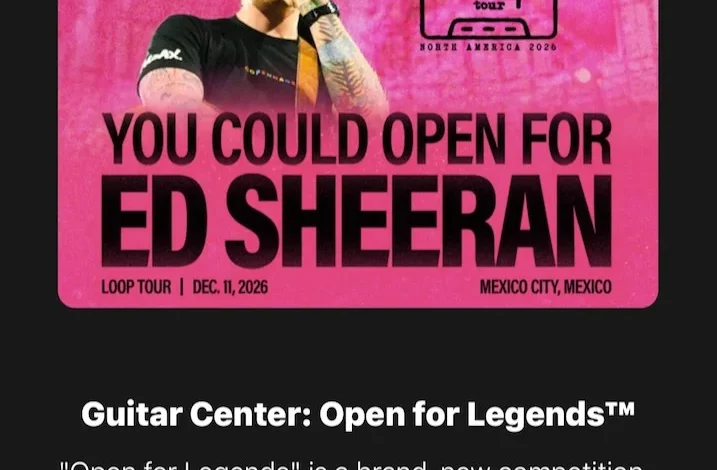
The sequence of events that led to the current vacancies began in mid-August 2026. On August 19, Guitar Center announced the "Open for Legends" campaign, a promotional initiative designed to give independent musicians a platform to perform at major venues. The marketing materials were framed as a standard industry opportunity, promising winners a chance to gain national exposure on stages associated with high-profile artists, including Sheeran.
However, the domestic stability of the "LOOP" tour began to fracture in September. The primary catalyst was the involvement of rapper Macklemore, who had been tapped as a primary support act. During a series of live performances, Macklemore utilized his platform to make vocal, pro-Palestine statements. These remarks reportedly drew immediate scrutiny from stakeholders and organizers associated with the tour, leading to intense pressure on Sheeran to distance himself from the rapper.
By the second week of September, reports confirmed that Sheeran had opted to remove Macklemore from the tour roster. The fallout was swift. As a show of solidarity with the ousted artist, several other musicians slated to serve as openers for the tour subsequently withdrew. The abandonment was not limited to vocalists; reports indicate that even members of the backing band have vacated their roles, leaving the "LOOP" tour facing a profound technical and performance-based void.
The Guitar Center Conundrum
The "Open for Legends" portal, which serves as the bridge between this crisis and the public, was never intended to address a mass-resignation scenario. When the contest was established, it was a routine partnership deal. Now, it stands as a surreal, open-ended solution for a tour that is currently lacking the infrastructure to perform at its previously scheduled capacity.
As of this writing, the application page remains fully operational. The contrast between the contest’s original intent—to showcase talent—and its current reality is striking. A review of the ongoing submissions shows a mix of earnest entries from independent artists hoping for a break and a wave of performative or satirical submissions from users commenting on the controversy. The latter group has utilized the platform to voice their dissent regarding the tour’s management, essentially turning a corporate marketing tool into a public bulletin board for grievances.
Industry Context and Economic Implications
The "LOOP" tour is a massive economic engine, involving millions of dollars in ticket sales, logistics, venue rentals, and staffing. When an act of this size loses its support structure, the financial and legal ramifications are extensive.
Typically, tour contracts contain "force majeure" clauses and performance guarantees. The withdrawal of a backing band is particularly catastrophic; unlike an opening act, which can be replaced with a local artist or a different touring act, a backing band is essential to the core musical performance. Without the specific instrumentalists who have rehearsed the show, Sheeran may be forced to either postpone dates to facilitate a new round of rehearsals or significantly alter the show’s production value to rely more heavily on the loop-pedal technology for which he is famous.

Furthermore, the optics of the situation have placed Sheeran in a precarious position with his fanbase. By removing Macklemore, he faced backlash from those who view the move as a suppression of political expression. Conversely, had he retained the rapper, he likely would have faced pressure from tour sponsors and venue owners concerned about the potential for further protests or boycotts at concert sites.
Analysis of the "Open for Legends" Participation
The decision by Guitar Center to leave the contest open is a point of debate. From a brand management perspective, the contest represents a significant investment in digital infrastructure and prize fulfillment. Closing it prematurely might be interpreted as an admission of instability regarding the tour itself. However, by keeping it open, the company faces the risk of the campaign becoming permanently associated with the controversy.
Data from the application site shows a significant spike in traffic, not all of which is driven by legitimate artists. The "trolling" phenomenon, where individuals submit entries that mock the tour’s situation, highlights a broader trend in digital age activism. When large-scale institutional decisions are made—such as the firing of a high-profile artist—the digital infrastructure surrounding those institutions often becomes a secondary site for protest.
Official Responses and Future Outlook
To date, neither the Ed Sheeran management team nor the organizers of the "LOOP" tour have released a comprehensive statement detailing how they intend to fill the empty slots. The situation remains fluid, with industry analysts suggesting that the tour may undergo a "re-branding" or a restructuring of the setlist to accommodate a solo performance format.
A representative for the concert production industry, speaking on condition of anonymity, noted that: "The challenge here isn’t just finding someone who can play the songs. It’s finding someone who can endure the level of scrutiny currently attached to this tour. Any act that steps into those opening slots is immediately going to be asked for their stance on the events that led to the vacancies. It is a highly charged environment that most management teams would advise their artists to avoid."
The Broader Impact on Touring Standards
This incident serves as a case study for the intersection of political activism and the global touring industry. As artists increasingly use their platforms to discuss sensitive geopolitical issues, the risk profile for large-scale tours has increased. Promoters are now forced to consider "morality clauses" and political sensitivity in a way that was rarely a primary concern in decades past.
The "LOOP" tour controversy may eventually be viewed as a turning point in how corporate sponsors—like Guitar Center—and major artists vet their collaborative partners. The integration of independent artist contests into the marketing mix of major tours was meant to democratize the industry, but this week has proven that such initiatives are highly susceptible to the volatile nature of public discourse.
As the industry watches the "LOOP" tour, the primary question remains whether the show can proceed without the original support structure. For now, the "Open for Legends" contest continues to tick forward, serving as a reminder that in the modern music business, the line between a professional opportunity and a public relations crisis is often a single, ill-timed social media post away. The coming weeks will determine whether the tour finds a path forward or if the current vacancies represent an irreparable crack in the "LOOP" tour’s foundation.