The Departure of Robert Ames from the London Contemporary Orchestra Marks a Watershed Moment for British Classical Music

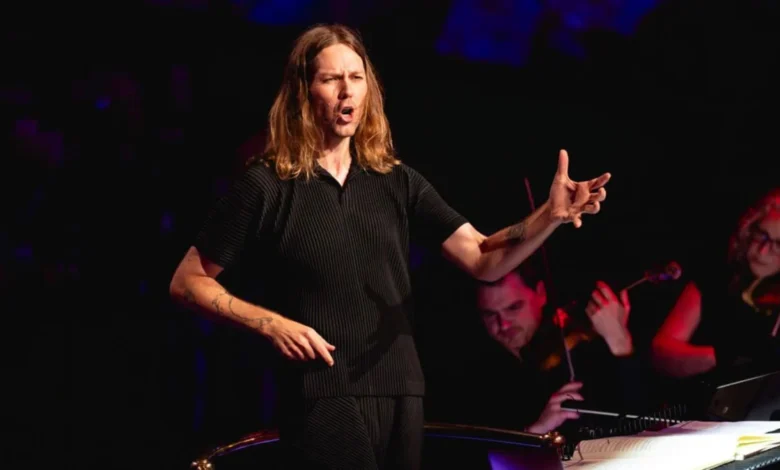
The recent announcement that Robert Ames is stepping down as co-artistic director and co-principal conductor of the London Contemporary Orchestra (LCO) represents a profound shift in the landscape of contemporary classical music. For nearly two decades, Ames has been the driving force behind the LCO, an organization that evolved from a niche ensemble focused on modernist repertoire into one of the most versatile and influential musical institutions in the United Kingdom. His departure, signaled by a searing critique of the current socioeconomic barriers within the arts, serves as both an end of an era and a catalyst for a national conversation regarding access, class, and the future of the orchestral profession.
A Legacy of Innovation: The Origins of the LCO
Founded in 2008, the London Contemporary Orchestra emerged during a period of relative stagnation in the traditional concert hall circuit. Ames and his co-founders sought to bridge the gap between rigorous avant-garde composition and the burgeoning independent music scene. In its nascent years, the LCO became synonymous with performances of works by composers such as Mark-Anthony Turnage, Kaija Saariaho, and Iannis Xenakis. These programs were not merely performances; they were statements of intent that the orchestra could navigate the most complex contemporary scores with technical precision and intellectual depth.
As the ensemble matured, it transcended the typical boundaries of "contemporary classical." By the mid-2010s, the LCO had established itself as the preferred partner for high-profile collaborations with major artists, most notably Radiohead. This trajectory helped normalize the presence of orchestral textures in experimental rock, film scores, and electronic music, effectively expanding the audience for contemporary classical music. For 18 years, Ames served as the architect of this hybrid identity, balancing the prestige of the concert hall with the aesthetic freedom of the studio.
The Guardian Op-Ed: A Departure of Principle
The announcement of Ames’s resignation was accompanied by an op-ed in The Guardian, titled "I co-founded an orchestra 18 years ago. Since then, I’ve seen doors close for working-class musicians." This piece marked a departure from the typical, often sanitized press releases associated with leadership transitions in the arts. Instead of focusing on his professional accolades or future artistic endeavors, Ames directed his final public statement as LCO director toward the structural inequality plaguing the industry.
Ames argued that the barrier to entry for professional musicians has become increasingly prohibitive. The rising costs of music education, the precarious nature of freelance labor, and the decline of state-funded support have created an environment where only those with significant financial backing can sustain a career. His public stance, which caught many in the industry off-guard, challenged the perception of the classical music sector as a meritocracy. By framing his exit within the context of these systemic failures, Ames moved the discussion away from his personal tenure and toward the existential threat facing the next generation of orchestral players.
Chronology of the LCO’s Evolution
The development of the LCO under Ames can be tracked through several key phases of institutional growth:
- 2008: The formation of the LCO, prioritizing the performance of works by living composers and the exploration of new acoustic territories.
- 2010–2014: A period of rapid expansion in the orchestra’s reputation, marked by residencies and an increase in high-profile commissions.
- 2015–2018: The solidification of the LCO’s role as a creative hub, facilitating collaborations with iconic acts like Radiohead and Jonny Greenwood, which brought the ensemble international visibility.
- 2019–2025: Increased focus on film scoring and large-scale experimental events, cementing the orchestra as a pillar of London’s creative economy.
- 2026: The announcement of Ames’s departure, coinciding with a final global tour and a public critique of the arts sector’s exclusionary practices.
Economic Realities and the "Freelance Crisis"
Ames’s concerns are corroborated by wider economic data concerning the arts sector in the United Kingdom. According to reports from the Creative Industries Policy and Evidence Centre, there has been a steady decline in the number of working-class individuals entering the creative arts over the past decade. The "class ceiling" in the arts—a term popularized by sociologists such as Dr. Sam Friedman—suggests that even when individuals from lower socioeconomic backgrounds enter the creative sector, they are often pushed out by the inability to sustain periods of unpaid or low-paid work, which are standard in the early years of a freelance musical career.
For a conductor like Ames, who has operated at the intersection of high-art and commercial music, the "hustle" is a known reality. However, his recent intervention suggests that the baseline for entry has become unsustainable. The LCO, like many similar organizations, relies heavily on a pool of freelance musicians. When the cost of living in major cultural hubs like London rises, the financial burden on these freelancers intensifies, leading to a "brain drain" where talented musicians leave the profession entirely for more stable employment.
Global Impact and Continued Artistic Reach
Despite his resignation from the LCO, Ames remains an active force on the international stage. His ongoing tour with the Icelandic post-rock band Sigur Rós serves as a testament to his continued relevance and his ability to operate at the highest levels of global performance. During his recent appearance in Bilbao, he reflected on the nature of his work, noting that he has conducted for the band nearly 100 times. This dedication to long-term collaboration underscores his commitment to the synthesis of disparate musical genres.
The industry response to his departure has been mixed but largely appreciative of his candidness. While some institutional figures have remained silent on his political critiques, many working musicians have taken to social media to voice their agreement, citing the same pressures Ames described. The widespread sharing of his op-ed indicates that his sentiments resonate deeply with the current generation of performers who feel that the traditional pathways to success are closing.
Broader Implications for the Future of Orchestral Leadership
The departure of a co-founder from an established institution always triggers questions about succession and artistic direction. For the London Contemporary Orchestra, the challenge will be to maintain the balance between the experimental spirit that Ames championed and the financial stability required to survive in an increasingly difficult economic climate.
Furthermore, Ames’s departure may set a precedent for how artistic directors use their platforms. By linking his professional transition to a wider societal issue, he has effectively elevated the profile of the "musician-advocate." This suggests a possible shift in the responsibilities of leadership in the arts, where directors are expected not only to curate seasons but to address the material conditions that allow their musicians to work.
As the LCO moves forward into its post-Ames era, the focus will undoubtedly be on how the organization adapts to these changing conditions. Whether the LCO can continue to be a site of radical experimentation while addressing the socioeconomic inequities raised by its former leader remains the central question. For now, Robert Ames’s exit serves as a stark reminder that the future of classical music is not just about the notes on the page, but about who is permitted to perform them and at what cost. The legacy he leaves behind is not merely a catalog of successful concerts, but a challenge to the industry to justify its own sustainability in an age of rising inequality.