Future Sounds of Jazz Vol. 16 Arrives as a Genre-Defying Exploration of Modern Improvisation and Electronic Fusion

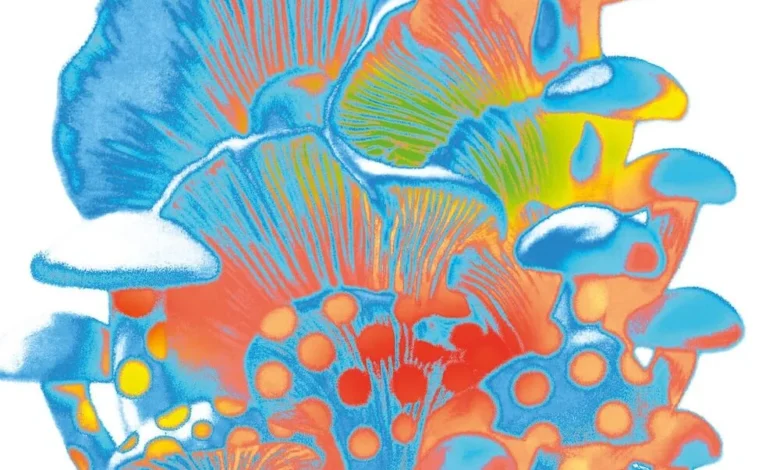
The contemporary landscape of improvised music and club culture has reached another milestone with the release of Future Sounds of Jazz Vol. 16, the latest installment in the celebrated compilation series curated by German selectors Michael Reinboth and Michael Rütten. Spanning two distinct physical and digital discs, the compilation acts as both an acoustic forecast of where modern music is heading and a historical wormhole connecting past traditions with futuristic soundscapes.
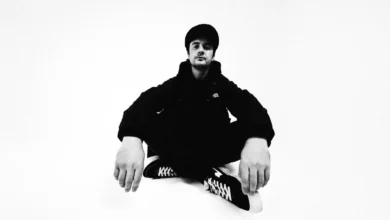
Rather than adhering to the rigid boundaries traditionally associated with the genre, the release moves fluidly through jazz, dub, electronic music, free improvisation, and psychedelia. The sequencing mirrors the intuitive logic and emotional peaks of a carefully curated late-night DJ set, bridging the gap between seated listening rooms and dimly lit dance floors. The tracklist assembles an eclectic international roster of avant-garde creators, including DJ Oil, Bitchin Bajas, Booker Stardrum, Nico Zam, Ilhan Ersahin, and Momoko Gill. Ultimately, the project serves as a compelling reminder that the future of jazz remains gloriously undefined, continuously mutating to absorb the influences of the digital age.
The Evolution of a Curatorial Institution
To understand the cultural significance of Future Sounds of Jazz Vol. 16, one must examine the deep roots of the compilation series within the European electronic and jazz underground. Established decades ago by Michael Reinboth—founder of the influential Munich-based label Compost Records—the series was conceived during a period when club culture and acoustic jazz were frequently viewed as mutually exclusive entities.
In the late 1990s and early 2000s, the intersection of broken beat, downtempo electronica, and live instrumentation began to capture the attention of forward-thinking DJs. Reinboth, alongside co-curator Michael Rütten, recognized that a quiet revolution was taking place in basement clubs and independent studios worldwide. Musicians were trading traditional conservatories for laptop production suites, while electronic producers were sampling classic Blue Note records and inviting live saxophonists and percussionists into their sessions.
Over the course of sixteen volumes, the series has charted this evolution meticulously. It has consistently offered a platform for underground innovators long before they achieved broader critical acclaim. By refusing to pounce on fleeting commercial trends, the curators have maintained a reputation for curatorial integrity, treating each volume not merely as a commercial product, but as a cultural document chronicling the shifting tides of contemporary improvised music.
Inside the Sonic Architecture of Volume 16
The structural design of Future Sounds of Jazz Vol. 16 relies heavily on contrasts, juxtaposition, and seamless transitions. Spread across two distinct discs, the collection avoids linear chronological progression in favor of a thematic narrative built on mood and texture.
Disc one typically establishes the atmospheric framework, leaning into hypnotic rhythms, deep bass frequencies, and spacious arrangements. Artists such as Bitchin Bajas contribute meditative, drone-inflected tapestries that evoke the minimalist traditions of Terry Riley or Steve Reich, yet grounded in modern synthesizer exploration. These ambient passages are counterbalanced by the kinetic energy of percussionists like Booker Stardrum, whose intricate time signatures and polyrhythmic foundations inject a vital organic pulse into the synthesized soundscapes.
Disc two accelerates the journey, diving deeper into the intersection of club culture and live improvisation. Contributions from veterans like Ilhan Ersahin bring a smoky, cosmopolitan jazz sensibility to the proceedings, characterized by melancholic saxophone lines that float effortlessly over contemporary beat production. Meanwhile, emerging talents such as Momoko Gill and Nico Zam challenge conventional notions of song structure, utilizing dissonance, microtonal adjustments, and sudden dynamic shifts to keep the listener in a state of constant discovery.
The inclusion of French producer DJ Oil further bridges the generational and geographic divides inherent in the compilation. Known for his work with Troublemakers, DJ Oil infuses the collection with a distinctly Mediterranean warmth and a deep reverence for vintage soul-jazz, trip-hop, and dub production techniques.
Industry Context and the Modern Hybrid Landscape
The release of Future Sounds of Jazz Vol. 16 arrives at a pivotal moment for the global music industry. Over the past decade, the barriers separating traditional jazz from electronic music, hip-hop, and indie rock have steadily dissolved. Cultural epicenters such as London, Chicago, Los Angeles, and Berlin have fostered vibrant, interconnected scenes where artists routinely cycle through multiple genres in a single performance.
Streaming data and independent label metrics indicate a significant resurgence in audience appetite for hybrid instrumental music. Younger demographics, accustomed to algorithmically curated genre fluidity, have increasingly embraced jazz not as a historical artifact preserved in amber, but as a living, breathing medium capable of expressing contemporary anxieties and technological realities.
Compilations like those curated by Reinboth and Rütten play a vital role in this ecosystem. In an era dominated by single-track streaming algorithms and personalized playlists, a thoughtfully sequenced double-disc compilation offers a curated narrative arc. It challenges listeners to sit with unfamiliar sounds, contextualizing underground experiments alongside established luminaries.
Critical Reception and Cultural Implications
Initial responses from music critics, tastemakers, and independent record store owners have highlighted the compilation’s daring scope and cohesive sequencing. Reviewers have particularly praised the curators’ ability to weave disparate stylistic threads—ranging from Detroit techno aesthetics to spiritual jazz and avant-garde composition—into a unified listening experience.
Industry analysts suggest that projects of this nature carry important implications for the future of independent record labels and niche physical media. Despite the dominance of digital streaming platforms, specialized double-LP and CD releases continue to thrive among dedicated audiophiles and collectors who value tactile packaging, liner notes, and the imprimatur of trusted curators.
Furthermore, by shining a light on international artists who operate outside the major label apparatus, Future Sounds of Jazz Vol. 16 reinforces the interconnected nature of the global underground music community. As economic and geopolitical pressures continue to complicate international touring for independent musicians, curated compilations serve as crucial cultural conduits, ensuring that boundary-pushing art travels across borders and reaches receptive audiences worldwide.
Ultimately, Future Sounds of Jazz Vol. 16 stands as a testament to the resilience and adaptability of improvised music. By refusing to look backward with nostalgia, Reinboth and Rütten have captured a living snapshot of a genre in perpetual motion—one where the only certainty is that the boundaries of sound will continue to expand.