Mastodon Fights Back: Band Files to Dismiss Lawsuit From Late Guitarist Brent Hinds Estate

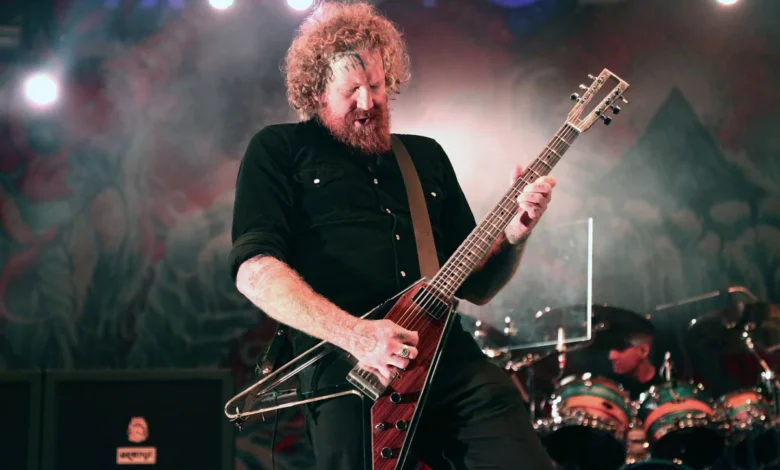
The legal battle between the members of the Grammy-nominated heavy metal band Mastodon and the estate of their late co-founder and guitarist, Brent Hinds, has entered a critical new phase. Attorneys representing the individual members of Mastodon filed formal paperwork in federal court asking a judge to dismiss substantial portions of a lawsuit brought against them by Billy Hinds, father of the late musician and representative of his estate. The 20-page memorandum targets the legal foundations of the original complaint, picking apart specific phrases, contesting claims of personal liability, and clarifying the contentious circumstances surrounding the use of Brent Hinds’s likeness on the band’s latest studio album, Marrow Deep.
The ongoing litigation highlights the delicate and often volatile intersection of creative partnerships, corporate structures, and estate law within the modern music industry. As both legal teams prepare for what could be a prolonged courtroom struggle, the motion to dismiss provides the first detailed look at Mastodon’s defense strategy. The band’s legal counsel argues that large portions of the estate’s claims fail to state a valid legal claim, maintaining that the lawsuit misinterprets corporate liability, contractual obligations, and intellectual property rights.
At the heart of the dispute is a web of business arrangements, informal departures, and artistic decisions made in the wake of Brent Hinds’s sudden passing in August 2025. While the original complaint filed by the Hinds estate in September sought to hold the individual members personally accountable for millions in damages, unpaid royalties, and alleged theft of business interests, the band’s recent filing seeks to dismantle these assertions piece by piece.
A Detailed Breakdown of Mastodon’s Motion to Dismiss
The core argument of Mastodon’s defense rests on the corporate structure of the band itself. In their memorandum, the band’s lawyers emphasize that Mastodon operates as a limited liability company (LLC), a legal shield designed to protect individual members from personal, individual accountability for corporate debts, business disputes, or operational decisions. According to the filing, the estate’s attempt to drag the individual musicians—such as Brann Dailor, Bill Kelliher, and Troy Sanders—into personal liability is legally unfounded.
Furthermore, the filing disputes the notion that the band owes the estate any financial compensation for utilizing Brent Hinds’s image on the cover art for Marrow Deep. The band maintains that the estate failed to establish the existence of a fiduciary relationship that would restrict Mastodon’s use of promotional or artistic imagery involving its founding members, current or past. The lawyers argue that the estate’s framing of the album cover as an unauthorized exploitation of likeness ignores standard industry practices and the collaborative nature of the band’s visual history.
Another major battleground in the legal papers is the issue of "conversion"—a legal term for theft or wrongful deprivation of property rights. The estate’s original complaint alleged that the band unlawfully stripped Brent Hinds of his 25 percent ownership interest in Mastodon. The band’s lawyers counter this by pointing out a critical omission in the complaint: while the estate alleges that Mastodon purported to redeem those interests and refused to recognize the estate’s rights, it fails to allege that the band ever physically seized, transferred, or withheld any stock certificates, partnership documents, or tangible corporate assets embodying Hinds’s ownership stakes.
Finally, the defense takes aim at the estate’s attempts to dictate future conduct. The band’s legal team argues that the lawsuit seeks to improperly regulate Mastodon’s future actions regarding the use of Hinds’s likeness, rather than seeking legal clarity or remedy for past grievances. "To the extent it seeks to prohibit future uses, it seeks to direct [Mastodon’s] future conduct rather than obtain guidance concerning its own," the paperwork states, asserting that such preventative injunctions have no legal basis under the current claims.
Timeline of Events: From Departure to Litigation
To understand the complexity of the current legal battle, it is necessary to examine the sequence of events that led up to the filing of the lawsuit. The relationship between Brent Hinds and his bandmates underwent significant strain in early 2025, culminating in a mutual decision to part ways.
March 2025: Brent Hinds and the remaining members of Mastodon officially and mutually parted ways following creative and operational differences. However, according to the estate’s subsequent legal filings, this separation was never formally finalized or codified into binding legal agreements before Hinds’s death.
August 2025: The music community was rocked by the sudden and tragic passing of Brent Hinds at the age of 51. Tributes poured in from fans, fellow musicians, and industry veterans mourning the loss of one of metal’s most innovative and distinctive guitarists.
Shortly After August 2025: In the wake of Hinds’s death, discussions began between the band’s business entities and representatives of Hinds’s estate regarding a buyout of his remaining business interests and shares in Mastodon. As part of this process, a subsidiary company associated with the band issued an $80,000 check intended to represent Hinds’s calculated share of the enterprise.
September 2025: The estate of Brent Hinds, represented by his father Billy Hinds, rejected the $80,000 check, refusing to cash it. Shortly thereafter, the estate formally filed a multi-faceted lawsuit against Mastodon in federal court. The complaint alleged breach of fiduciary duty, conversion of assets, unpaid compensation, and unauthorized use of Hinds’s likeness on the upcoming album cover for Marrow Deep.
Late September 2025: Mastodon released a public statement expressing deep sorrow over the public airing of what they characterized as a private business dispute. The band strongly denied any ill intent, stating their intention to vigorously defend what they described as a meritless lawsuit.
November 2025: Mastodon’s newly released studio album, Marrow Deep, hit shelves and streaming platforms, featuring artwork that prominently incorporated imagery of Brent Hinds, thereby intensifying the ongoing dispute over likeness rights.
December 2025: The legal proceedings reached a new milestone when Mastodon’s defense team filed the 20-page memorandum asking a judge to dismiss large swaths of the estate’s complaint based on technical, contractual, and corporate law grounds.
The Financial and Business Dispute: The Buyout Controversy
At the center of the financial disagreements is the concept of a corporate buyout. When band members leave high-profile, incorporated musical acts, standard industry practice dictates a formal valuation of assets, publishing rights, touring revenues, and merchandise shares, followed by a buyout agreement that relinquishes the departing member’s equity in exchange for a lump sum or structured payout.
The Hinds estate argues that the $80,000 check offered by Mastodon’s subsidiary was drastically undervalued and did not reflect the true worth of a founding member’s quarter-share in a multi-platinum, globally touring enterprise. Furthermore, the estate contends that because the separation paperwork was never fully executed prior to Hinds’s death, his full ownership rights remained intact, meaning his estate inherited his complete 25 percent stake.
Mastodon’s legal team tells a different story. In their dismissal motion, the lawyers argue that the estate cannot simultaneously claim that a binding buyout agreement was breached while also arguing that no valid buyout price was ever agreed upon. The filing points out that the complaint fails to allege that Hinds himself ever proposed a specific purchase price when he initially requested to be bought out of the band’s business interests. Without an agreed-upon purchase price or a finalized contract, the defense argues, the estate’s claims regarding the buyout process collapse under basic contract law.
Furthermore, the band’s response addresses the broader implications of evaluating a band member’s shares posthumously without prior formal agreements. The defense maintains that corporate entities cannot be held liable for failing to execute a transaction that was still in the exploratory and negotiation phases at the time of the artist’s death.
Industry Implications and Legal Precedents
The lawsuit between Mastodon and the estate of Brent Hinds carries significant implications for the broader music industry, particularly for legacy rock and heavy metal bands operating as corporate entities. As bands mature, accumulate valuable intellectual property, and establish corporate structures to manage millions of dollars in touring revenue, merchandise, and publishing catalogs, the mechanics of members leaving—or passing away—become increasingly complex.
Legal experts note that disputes over likeness rights and posthumous album art are becoming more common as digital distribution and physical packaging intersect with estate planning. When a band uses the image of a deceased co-founder on an album released after their death, questions inevitably arise regarding moral rights, publicity rights, and existing merchandising agreements.
In Mastodon’s case, the outcome of this motion to dismiss could set a crucial precedent regarding how courts view the separation of personal and corporate liability within band LLCs. If the judge agrees with Mastodon that individual members cannot be held personally liable for internal corporate and contractual disputes, it would reinforce the protective legal boundaries that artists establish to safeguard their personal assets from band-related litigation. Conversely, if the court allows the estate’s claims of breach of fiduciary duty and conversion to move forward, it could pave the way for a more aggressive scrutiny of how bands handle the equity of departing or deceased members.
Public Relations and Fan Reactions
Beyond the courtroom, the legal battle has created a difficult public relations environment for Mastodon. Known for decades of critical acclaim, tight-knit camaraderie, and a fiercely loyal fan base, the band found itself thrust into an unwanted spotlight when private financial matters spilled into the public domain.
The release of Marrow Deep—an album deeply colored by the emotional weight of Hinds’s passing—was inevitably overshadowed by headlines regarding the lawsuit. Fans across social media and music forums have expressed mixed emotions, torn between reverence for Hinds’s legendary contributions to the band’s signature sound and the realization that business disputes in the music industry can turn adversarial even among lifelong collaborators.
When the lawsuit was first filed in September, Mastodon released a measured statement acknowledging the tragedy while drawing a firm line in the sand regarding the merits of the legal action. "Sadly, a private business dispute with the estate of our dear departed friend Brent Hinds was made public," the band said at the time. "We strongly deny allegations of ill intent on our part and intend to vigorously defend what we believe is a meritless lawsuit."
As of press time, representatives for Mastodon have declined to provide additional comments beyond their official court filings. Counsel for Billy Hinds and the estate has not yet issued a formal public response to the band’s motion to dismiss, though they are expected to file opposing legal briefs in the coming weeks.
Next Steps in the Federal Court
With the filing of the motion to dismiss, the legal timeline moves into the briefing phase. The Hinds estate will be given a designated window to respond to Mastodon’s arguments, attempting to demonstrate to the presiding judge that their original complaint meets all necessary legal standards to proceed to discovery and trial. Following the estate’s response, Mastodon’s legal team will have the opportunity to submit a reply brief.
Ultimately, the federal judge overseeing the case will review the arguments and decide whether to dismiss the lawsuit in whole or in part, or to allow the litigation to proceed toward a full trial. Regardless of the legal outcome, the case serves as a somber reminder of the complex realities that persist long after the music stops, as grieving families and surviving bandmates navigate the difficult intersection of art, commerce, and law.
Related posts: