Mississippi Records Bridges Decades of Outsider Sound with the Release of Roman Norfleet and Be Present Art Group Masterpiece The Remembering

For nearly a quarter of a century, Mississippi Records has established itself as an essential institution for the preservation and dissemination of outsider music across genres. Founded by Eric Isaacson, the independent label has evolved from its initial focus on rural blues into a multidisciplinary operation championing gutter-punk, astral jazz, pop oddities, and a vast spectrum of global folk traditions. Operating out of a physical storefront in Portland, Oregon, Mississippi Records functions simultaneously as a neighborhood café, an instrument repair workshop, and the Portland Museum of Modern Art. This holistic approach to community engagement extends far beyond the Pacific Northwest. Over the course of more than 200 cataloged releases, Isaacson has pioneered a principled, ethical reissue methodology. The label routinely collaborates directly with artists and their families to construct respectful historical documents, assist in registering intellectual property rights, and connect marginalized musicians with archival institutions dedicated to preserving their cultural legacies.
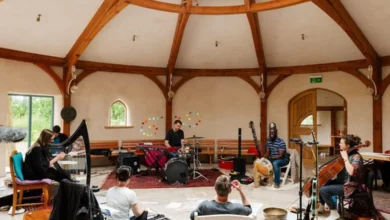
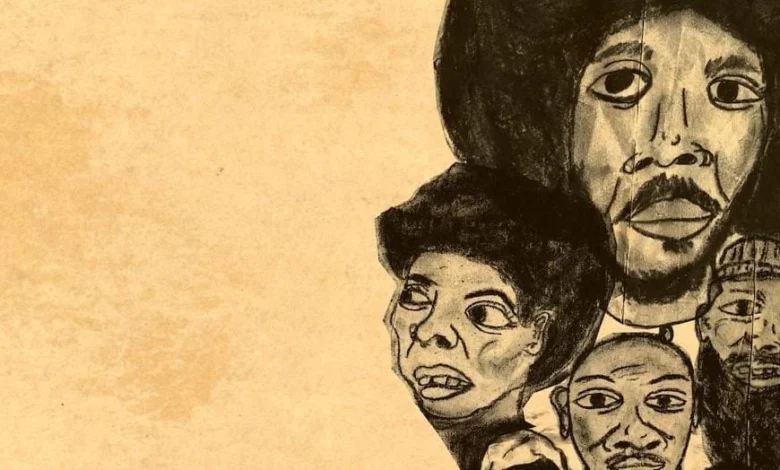
The ethos of archival preservation and cultural continuity makes the latest dispatch from Mississippi Records particularly resonant. Arriving concurrently with the publication of David Byrne’s book Sleeping Beauties—which examines the mechanics of how brilliant ideas fade from public consciousness—Mississippi Records presents a record that sounds miraculously anachronistic. Titled The Remembering, the album projects the sonic magnitude and spiritual intensity of a long-lost free jazz masterwork transported from a 1960s vision of Afrofuturism. In reality, the project was recorded in Portland by multi-instrumentalist Roman Norfleet and his accompanying ensemble, the Be Present Art Group. Norfleet, celebrated as a dynamic bandleader, vocalist, and practitioner of fiery, spontaneous reed instrumentation, anchors the project with profound energy and historical reverence.
Sonic Architecture and Spiritual Lineage of The Remembering
The Remembering operates as a modern musical totem pole, channeling the foundational deities of 1960s fire music with a commanding, preternatural authority. The title track, which opens the record, evokes the celestial grandeur of Pharoah Sanders’ iconic compositions, utilizing waves of overblown saxophone and resonant, bowed double bass to achieve a state of spiritual transcendence.
The composition Headed on to Freedom incorporates the whimsical, psychedelic vocal chants reminiscent of a Sun Ra miniature. However, percussionist Marcus Rudolph anchors the arrangement in contemporary territory, driving the rhythm forward with the galloping, buoyant momentum characteristic of a classic Steve Reid groove. Vocalist Aria Elizabeth introduces a grounding, gospel-infused mantra on the track Let It Go, enveloping the listener in a soothing vocal texture underscored by trembling percussion and evocative, Mingus-style background vocalizations. Elizabeth’s delivery—“Don’t let the shadows take you / Don’t let the sadness take you / Let it come, let it go and let it flow”—serves as an emotional anchor for the entire project.
Elizabeth continues her vocal leadership on the prayer-like composition God is Change (Seeds of the Earth). Here, bassist Andre Riaha and organist Rudolfo Lopez combine their talents, utilizing the warm tones of a Rhodes organ and double bass to evoke a luminous, star-filled firmament. The album concludes with Power to the People!, a composition possessing the kinetic intensity of Max Roach’s Freedom Now Suite, filtered through a contemporary sociopolitical lens. The track begins as a cacophonous exorcism, with the sonic manifestations of generations of disenfranchised Americans wailing through Norfleet’s horn, before resolving into a maximalist funk groove driven by electric guitarist Nicholas Quillier and Norfleet’s soaring, lightning-fast leads.
Contextualizing the Independent Label Model in Modern Music
The operational philosophy of Mississippi Records offers vital insights into the economics and ethics of independent music distribution in the 21st century. While major music conglomerates frequently streamline their operations through automated acquisitions and algorithmic curation, independent labels like Mississippi Records rely on interpersonal relationships, rigorous historical research, and community-embedded storefronts. By functioning simultaneously as a retail space, a community hub, and an archival agency, the label mitigates the ephemeral nature of modern digital consumption.
Musicologists and industry analysts frequently point to labels like Mississippi Records as vital corrective forces within the broader music industry. Historically, independent and outsider artists—particularly Black practitioners of avant-garde and spiritual jazz—have faced systemic marginalization, economic exploitation, and a lack of institutional archiving. Isaacson’s methodology of working directly with families to secure rights and transfer materials to permanent archives establishes a sustainable blueprint for ethical curation. This approach ensures that contemporary releases, such as Norfleet’s The Remembering, do not exist in a historical vacuum, but rather maintain an active, conversational relationship with the past.
The Evolution of Portland’s Contemporary Jazz and Avant-Garde Scene
The emergence of Roman Norfleet and the Be Present Art Group underscores the vibrant health of Portland’s underground and avant-garde music communities. Historically overshadowed by larger cultural hubs like New York, Chicago, or Los Angeles, the Pacific Northwest has cultivated a distinct, self-sustaining ecosystem for improvised and spiritual music. Artists operating within this regional sphere often benefit from collaborative cross-pollination between visual artists, poets, and musicians, mirroring the interdisciplinary ethos of historical jazz collectives.
Norfleet’s integration of free jazz, spiritual mantra, and funk grooves reflects a broader contemporary resurgence in hybridized Black American music. Over the past decade, labels and artists globally have sought to reconnect with the radical sonic vocabulary of the late 1960s and early 1970s—an era defined by figures such as Alice Coltrane, Sun Ra, and Archie Shepp. However, rather than resorting to pastiche, ensembles like the Be Present Art Group utilize this vocabulary to address contemporary socio-political realities. The juxtaposition of archival reverence with modern urgency allows the ensemble to honor their forebears while firmly establishing their own distinct artistic identity.
Broader Industry Implications and Cultural Legacy
The release of The Remembering on November 13, 2027, through Mississippi Records carries broader implications for how contemporary improvised music is produced, marketed, and preserved. In an era dominated by short-attention-span streaming metrics and algorithm-driven playlists, an expansive, spiritually demanding album packaged by a principled independent label challenges prevailing industry norms.
Furthermore, the alignment of this release with cultural commentary on forgotten ideas—as explored in contemporary literature by figures like David Byrne—highlights a growing cultural appetite for intentionality and depth. When listeners engage with a work that bridges the generational divide between mid-century spiritual jazz and 21st-century communal improvisation, they participate in a continuous cultural lineage.
The Be Present Art Group demonstrates that the foundational impulses of free jazz—liberation, spiritual exploration, and collective catharsis—remain urgently relevant. Through the curatorial vision of Mississippi Records and the virtuosic execution of Roman Norfleet and his ensemble, The Remembering secures its place not merely as a regional release, but as a significant milestone in the ongoing evolution of modern improvised music.