Exploring the Avant-Garde Boundaries: A Comprehensive Deep Dive Into the Latest Eclectic Mixtape Release

The contemporary musical landscape is often rigidly categorized by genre, marketing demographics, and algorithmic streaming boundaries. However, certain curators consistently reject these artificial borders to construct sonic journeys that span a century of recorded audio. The latest installment in the ongoing mixtape series achieves precisely this, bridging the gap between 1920s American folk traditions and cutting-edge, maximalist experimentalism. Featuring a dizzying array of artists, rare archival reissues, and independent record labels, this edition offers a masterclass in cross-genre programming.
From the austere, spine-tingling harmonies of early twentieth-century Sacred Harp singing to vibrant, disco-adjacent funk grooves and sprawling ambient electronic tapestries, the playlist demonstrates how disparate musical eras and movements share a common avant-garde thread. By juxtaposing historical field recordings with contemporary left-field compositions, the release invites listeners to reevaluate the evolution of sound art, underground folk, and modern improvisation.
Archival Roots and Historical Lineages: From Sacred Harp to Modern Interpretations
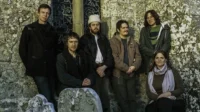
The mixtape opens with a fascinating historical exploration, setting a temporal anchor deep in the early twentieth century. Listeners are introduced to The Denson Quartet via a track drawn from the acclaimed 2016 archival release I’m on My Journey Home: Sacred Harp Singing, 1928-1934, issued by the London-based specialist label Death Is Not The End.
Typically, Sacred Harp or shape-note singing is associated with large, formidable vocal choruses of thirty to forty participants, producing a dense, overwhelming, wall-of-sound aesthetic rooted in communal worship and historical folk traditions. However, the 1920s Denson Quartet recording offers a startlingly intimate counter-narrative. Operating with the tight, synchronized precision of a barbershop quartet, the recording introduces an unexpected rhythmic swing to the solemn spiritual material.
This archival artifact serves as an intellectual and sonic springboard for contemporary folk interpreter Sam Amidon, whose cover of the same traditional song features prominently on his recent album, Salt River. In an interview detailing the creative genesis of the track, Amidon revealed how a chance listening session while walking to a cinema screening of the film Ferrari sparked the arrangement:
"The first part of that song, I must have heard it at a shape note thing, but I didn’t really know it that well. I was going to see the film ‘Ferrari’, and I was walking, listening to these old shape note field recordings on my headphones, and I heard this recording from the Twenties of this old quartet singing this Sacred Harp song… This recording by the quartet was almost like a barbershop-quartet way of singing Sacred Harp, and it had a kind of swing that interested me."
Upon returning home, Amidon quickly translated that rediscovered swing into a guitar arrangement. The resulting track was recorded collaboratively with a trio. With drummer Philippe Melanson plugging in a compact drum pad shortly after sessions began, the performance was captured almost entirely on the first take, preserving a raw, live immediacy that honors the historical source material while injecting fresh contemporary vitality.
Spiritual Jazz and Contemporary Avant-Garde Explorations
Moving from historical folk interpretations into the realms of spiritual jazz and contemporary avant-garde composition, the mixtape showcases two distinct tracks from Roman Norfleet and Be Present Art Group. Taken from their recent album The Remembering—released via the venerable independent outlet Mississippi Records—the music channels a deep, meditative intensity.
Critiquing the album for its profound emotional resonance, reviewer Alex Neilson highlighted the track Let It Go, noting its ability to soothe psychological turbulence through vocal expression:
"Aria Elizabeth’s gospelised mantra guides us through Let It Go, dousing us in vocal incense: ‘Don’t let the shadows take you/ Don’t let the sadness take you/ Let it come, let it go and let it flow’ amid trembling percussion and Mingus-esque background hollering. It’s a sentiment which opens the heart valves to let the sunshine in, which is no small thing at this time of year and this time of life."
This fusion of spiritual healing, free jazz instrumentation, and vocal incantation underscores the mixtape’s overarching theme: music as a vehicle for emotional resilience and historical continuity.
Landmark Reissues and Archival Preservation
In addition to contemporary studio recordings, the mixtape places heavy emphasis on vital archival rescue operations and long-overdue vinyl reissues. Among these is Alvin Curran’s monumental Maritime Rites, a composition originally broadcast over public radio waves in 1985 and now finally receiving its first-ever vinyl pressing courtesy of Blume Editions. Curran’s environmental soundscapes, which integrate natural acoustic phenomena with avant-garde composition, have seen renewed critical examination through recent serialized music columns and specialized listening posts.
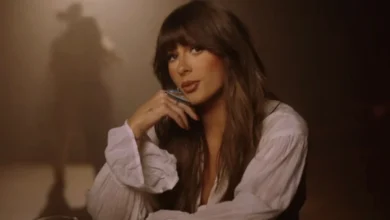
Similarly, the collection highlights the ongoing preservation of regional European folk traditions with Rose Connolly (recording under the moniker Róis), who recently signed with prominent independent label Domino. Her remastered and reissued album MO LÁAN has been updated to include the striking new track PORT NA H-EALA, bridging traditional Gaelic vocal idioms with contemporary alternative production standards.
The temporal scope of the mixtape broadens further with selections from TELLUS: The Audio Cassette Magazine, Vol. 1, a comprehensive 46-track anthology released via Earth Libraries. Founded in downtown New York in 1983, TELLUS was a radically ambitious periodical that reimagined the humble audio cassette as a portable exhibition space. By commissioning and publishing boundary-pushing works by musicians, composers, visual artists, poets, and choreographers, the original publication fostered a fertile cross-pollination of no wave, industrial music, spoken word, Fluxus performance, electroacoustic composition, and conceptual art. The inclusion of works by experimental sound artist Remko Scha and spoken-word artist Patrick McGrath on the mixtape ensures that these historically significant vanguard expressions remain accessible to modern audiences.
Contemporary Underground and Micro-Label Dispatches
Beyond archival recovery, the mixtape provides a platform for the vibrant ecosystem of independent micro-labels and contemporary underground creators who operate on the fringes of commercial music distribution.
- hemlock (Carolina Chauffe): Representing the swamp-raised, "phone-fi" alt-folk aesthetic, multi-disciplinary artist Carolina Chauffe contributes tracks from her latest release, Make the time, Bite the tongue. Anchored between Louisiana and Chicago, Chauffe’s work captures the transient, highway-bound reality of modern independent troubadours.
- Aksak Maboul: The veteran experimental pop collective bridges past and present with selections from their 2023 release Une aventure de VV (Songspiel) alongside their single Sogno in tre parti, a precursor to their forthcoming full-length album Fifteen Ways of Looking at It, scheduled for a February 2027 release on Crammed Discs.
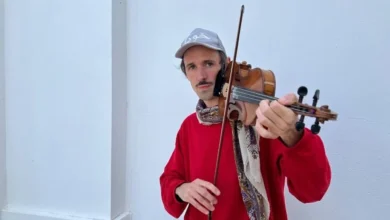
- Polypores (Stephen James Buckley): Making his introduction to the wider independent audience, UK-based sound artist Stephen James Buckley offers selections from his album Qwest, released via Jo Johnson’s independent imprint Silver Threads. Crafted using bamboo flute and the expressive ASM Hydrasynth, Buckley’s music synthesizes Japanese new age, Fourth World ambient philosophies, Terry Riley minimalism, and video game sound design into an unbridled, optimistic sonic landscape.
- Sam Shalabi: Representing the outer edges of improvised acoustic music, Shalabi’s contributions are drawn from Tone Poems, Vol 1, issued by Negative Capabilities, a micro-label dedicated to outsider guitar traditions and left-field sonic experimentation.
- Old Pup: Rounding out the contemporary folk spectrum, Old Pup contributes material from LION SPRING BIRD, released via New York’s Island House Recordings. Departing from previous stylistic approaches, the album delivers experimental folk soundscapes via floating pedal steel, altered found sounds, and drifting strings.
Analytical Overview: The Implications of Cross-Genre Curation
The deliberate curation of such a diverse sonic spectrum—ranging from 1920s vernacular field recordings to forward-thinking digital ambient and avant-garde jazz—highlights a broader shift in contemporary music consumption and critique. In an era dominated by hyper-segmented streaming algorithms designed to reinforce narrow listening habits, mixtape culture acts as an essential counterweight.
By placing historical artifacts alongside underground cassette releases and major indie label offerings, curators demonstrate that genre boundaries are porous. The underlying methodologies of the avant-garde—whether manifested in the syncopated vocal phrasing of a 1920s Sacred Harp quartet, the environmental compositions of Alvin Curran, or the modular synthesizer explorations of Polypores—reveal a continuous human drive to push the communicative limits of sound.
As these independent labels, archival projects, and contemporary artists continue to map uncharted sonic territory, releases of this nature ensure that musical history is not viewed as a series of isolated epochs, but as a living, breathing continuum. Listeners seeking to experience this comprehensive audio journey can stream the complete mixtape directly via Mixcloud, engaging with a sequence designed to challenge, comfort, and expand the modern auditory palette.
Related posts: