Celebrating the Architect: DJ Kool Herc’s Enduring Legacy and the Jamaican Roots of Hip-Hop’s Global Phenomenon

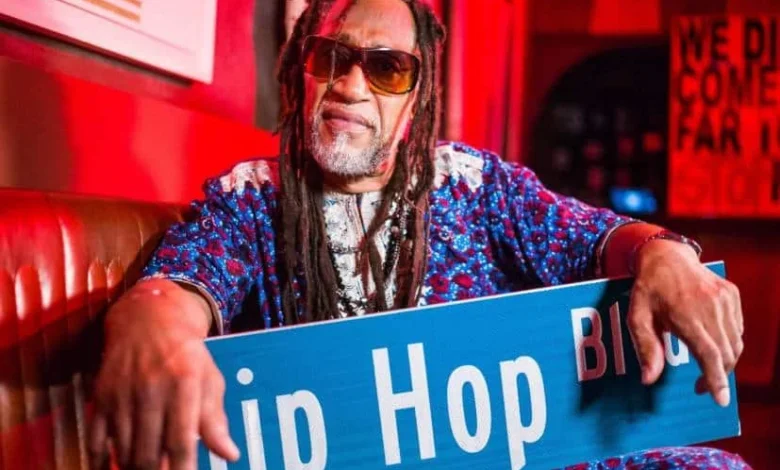
On this day in 1955, Clive Campbell, universally recognized as DJ Kool Herc, was born in Kingston, Jamaica, a pivotal event that would, in time, ripple across continents and fundamentally alter the landscape of global popular culture. His journey from the vibrant Caribbean island to the urban crucible of the Bronx, New York, at the tender age of 12, laid the groundwork for a cultural revolution whose magnitude continues to expand. It was in the gritty, yet fertile, environment of the South Bronx that Campbell would shed his birth name for the iconic moniker "Kool Herc," a testament to his imposing 6’4" stature and a nickname derived from "Hercules," adopted during his active involvement with the prominent graffiti crew, the Ex-Vandals. This seemingly simple adoption of a street name marked the early stages of a transformation that would culminate in him being widely hailed as the Father of Hip-Hop.
The Bronx in the 1970s: A Crucible of Creativity
To fully appreciate the genesis of hip-hop, it is imperative to understand the socio-economic backdrop of the Bronx in the early 1970s. This period was characterized by significant urban decay, economic hardship, and systemic neglect. The borough was grappling with widespread poverty, escalating crime rates, and a devastating wave of arson that destroyed thousands of buildings, displacing countless families. Amidst this desolation, however, a resilient and vibrant youth culture was struggling to find its voice and carve out spaces for self-expression. Traditional recreational facilities were scarce, and young people often turned to street culture – graffiti, elaborate handshakes, and informal gatherings – to forge identity and community.
Music, particularly funk and soul, served as a crucial escape and a unifying force. Block parties and community gatherings were essential outlets, offering temporary respite from the harsh realities of daily life. It was within this specific context of deprivation and spirited resistance that DJ Kool Herc, with his Jamaican heritage and nascent understanding of sound system culture, would introduce an innovation that would forever change music. The sound system culture, deeply ingrained in Jamaican society, involved mobile setups with powerful speakers, lively DJs, and MCs, often hosting outdoor dances that became community focal points. Herc, consciously or unconsciously, brought this foundational concept to the Bronx, adapting it to the prevailing musical tastes and urban environment.
The Birthplace of a Movement: 1520 Sedgwick Avenue
The legendary parties hosted by Herc and his sister, Cindy Campbell, in the recreation room of their apartment building at 1520 Sedgwick Avenue, situated at the corner of Sedgwick and Cedar in the South Bronx, are enshrined in hip-hop lore as the definitive birthplace of the genre. These back-to-school and community events, initially conceived as fundraisers, transcended their humble origins to become cultural laboratories. It was during these gatherings that Herc unveiled his groundbreaking DJ technique, a method that would fundamentally alter how music was perceived and consumed.
Utilizing two turntables – a setup not uncommon for DJs of the era to ensure continuous music playback – Herc innovatively isolated and extended the "break" portion of funk and soul records. These breaks, typically instrumental interludes where the rhythmic intensity was at its peak and the vocals or melodic lines were minimal, were the parts that most energetically engaged dancers. Herc, keenly observing the crowd’s reaction, realized the power of these rhythmic explosions. By using two identical records on separate turntables, he could seamlessly switch between them, looping and extending these brief, high-energy segments. This technique, which he famously dubbed the "Merry-Go-Round," allowed dancers to immerse themselves in an extended groove, pushing the boundaries of traditional dance and giving rise to an entirely new style of movement. This innovation was not merely technical; it was a profound act of cultural curation, taking existing musical elements and recontextualizing them to ignite a new form of communal expression.
Defining the Culture: B-Boys, B-Girls, and the "Breaking" Ethos
The extended breakbeats fostered a dynamic new form of dance, characterized by intricate footwork, acrobatic power moves, and synchronized group routines. Herc aptly named these enthusiastic dancers "B-Boys" and "B-Girls," an abbreviation for "break boys" and "break girls." The term "breaking," in Herc’s lexicon, was more than just a dance style; it was street slang synonymous with acting out energetically, stirring up excitement, or literally "breaking loose." This definition perfectly encapsulated the raw, unbridled energy emanating from the dance floors he ignited. These early B-Boys and B-Girls were pioneers, developing a lexicon of moves that would become the foundation of breakdancing, one of hip-hop’s core elements. Their athleticism and creativity transformed the recreational room at 1520 Sedgwick into a vibrant arena of physical expression and competitive artistry.
The Pillars of Hip-Hop: Beyond the Decks
DJ Kool Herc’s influence extended far beyond the immediate innovation of the breakbeat. His pioneering work served as the catalyst for the development and consolidation of the four fundamental pillars of hip-hop culture: DJing, MCing, breakdancing, and graffiti art. The extended breakbeats created an unprecedented opportunity for vocalists to improvise over the rhythmic loops. Initially, Herc himself would engage in simple call-and-response chants to hype the crowd, a practice known as "toasting," a direct lineage from Jamaican sound system culture. However, as the breaks grew longer, it paved the way for dedicated "Masters of Ceremonies" (MCs) to develop more elaborate rhyming patterns and lyrical narratives, evolving into rap music.
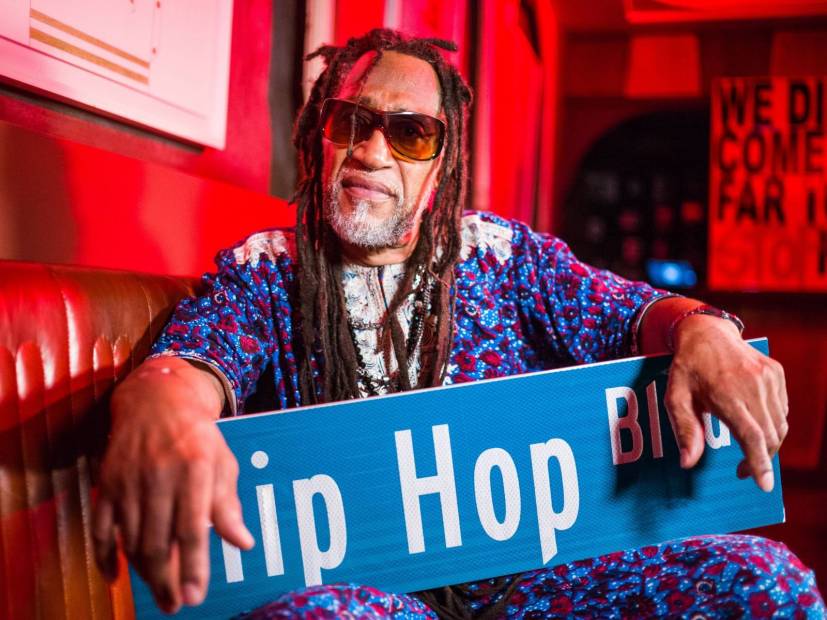
The visual art form of graffiti, already prevalent in the Bronx as a means of territorial marking and artistic expression, found new thematic resonance within the burgeoning hip-hop scene, often decorating the urban canvas with vibrant tags and elaborate pieces that mirrored the energy of the music. And, as established, breakdancing emerged directly from the energy of Herc’s breakbeats. The synergy between these elements fostered a holistic cultural movement that offered a comprehensive outlet for youth creativity and identity in an otherwise challenging environment.
Herc’s revolutionary approach quickly captivated and inspired a generation of aspiring artists and innovators in the Bronx. Other legendary pioneers like Afrika Bambaataa, who would go on to found the Zulu Nation and champion the positive aspects of hip-Hop, and Grandmaster Flash, renowned for his technical mastery of the turntables and groundbreaking mixing techniques, were directly influenced by Herc’s blueprint. The Sugarhill Gang, whose 1979 hit "Rapper’s Delight" brought hip-hop to a mainstream global audience, built upon the foundation laid by Herc and his contemporaries, demonstrating the commercial viability and widespread appeal of the emerging sound. This lineage underscores Herc’s undeniable role in laying the essential groundwork, earning him his rightful and enduring place in history as the Father of Hip-Hop.
Global Recognition and Enduring Legacy
Today, the monumental contributions of DJ Kool Herc are celebrated worldwide, a testament to his vision and innovation. Hip-hop has transcended its origins as an underground youth movement in the Bronx to become a multi-billion-dollar global industry and a dominant cultural force. Its influence permeates every facet of popular culture, from music and fashion to language, art, and socio-political discourse. According to recent industry reports, the global hip-hop music market alone is valued in the tens of billions of dollars, with projections for continued growth, reflecting its immense commercial power and audience reach.
The academic and institutional recognition of Herc’s legacy has also grown significantly. In 2007, the New York State Assembly officially recognized 1520 Sedgwick Avenue as the "Birthplace of Hip-Hop," a landmark designation that acknowledges its historical significance. Herc has been inducted into various halls of fame and received numerous accolades for his pioneering work. His iconic turntables and sound equipment have even been acquired by the Smithsonian’s National Museum of American History, cementing his place not just in music history, but in American cultural history. These institutional endorsements underscore the profound and lasting impact of his early experiments.
Jamaica’s Undeniable Claim: Reclaiming the Roots
While hip-hop flourished and evolved in the Bronx, its foundational DNA undeniably traces back to Jamaica. DJ Kool Herc’s migration was not merely a change of address; it was a cultural transfer. The Jamaican sound system tradition, with its emphasis on powerful bass, live deejaying, crowd interaction (toasting), and the repurposing of instrumental tracks, provided the conceptual framework upon which Herc built his innovations. This deep-seated connection often leads to discussions about Jamaica "reclaiming" its rightful place in hip-hop’s narrative.
While Herc’s innovations were distinctly American in their execution and immediate context, the conceptual blueprint was undeniably Caribbean. Jamaica has a strong claim to being the ancestral home of the culture, not just through Herc, but through the very mechanics of sound system culture that predated and influenced hip-hop. There is a growing movement within Jamaica and among cultural historians to more explicitly highlight and celebrate this direct lineage, ensuring that the island nation receives due credit for its foundational influence on a global phenomenon. Recognizing this connection is not about diminishing the Bronx’s role but rather enriching the historical tapestry of hip-hop, acknowledging its complex, transnational origins.
Analyzing the Broader Implications
The implications of DJ Kool Herc’s work are vast and multifaceted. Beyond its musical impact, hip-hop provided a voice for marginalized communities, offering a platform for social commentary, storytelling, and protest. It became a powerful tool for cultural identity formation, particularly for African American and Latino youth in inner-city environments. The entrepreneurial spirit inherent in hip-hop, from independent record labels to fashion brands and media empires, has created pathways for economic empowerment and wealth creation within communities that often lacked such opportunities.
Furthermore, hip-hop has profoundly influenced global linguistics, fashion trends, dance styles, and even political movements. Its adaptability and universality have allowed it to be adopted and localized by diverse cultures worldwide, reflecting unique local experiences while maintaining its core tenets. This global diffusion, arguably, started with Herc’s initial spark in the Bronx, demonstrating the power of cultural innovation born from necessity and creativity.
In conclusion, DJ Kool Herc’s birthday is far more than a personal commemoration; it is an annual opportunity to reflect on the genesis of a cultural force that has reshaped the world. Without his vision, his audacious experimentation with turntables, and his intuitive understanding of how to move a crowd, hip-hop as we know it might never have existed. He didn’t just play records; he deconstructed music, reimagined its purpose, and in doing so, constructed an entirely new universe of artistic expression. The Source, alongside countless admirers and institutions worldwide, continues to salute this architect of culture, whose Jamaican roots and Bronx innovations collectively forged one of the most significant artistic movements of the modern era. His legacy is not just etched in history; it continues to resonate, inspire, and evolve, a testament to the enduring power of a true pioneer.