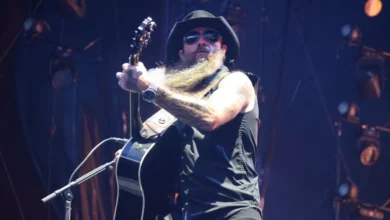
John R. Miller Explores the Fracture of the Social Contract in New Album The Great Unknowing

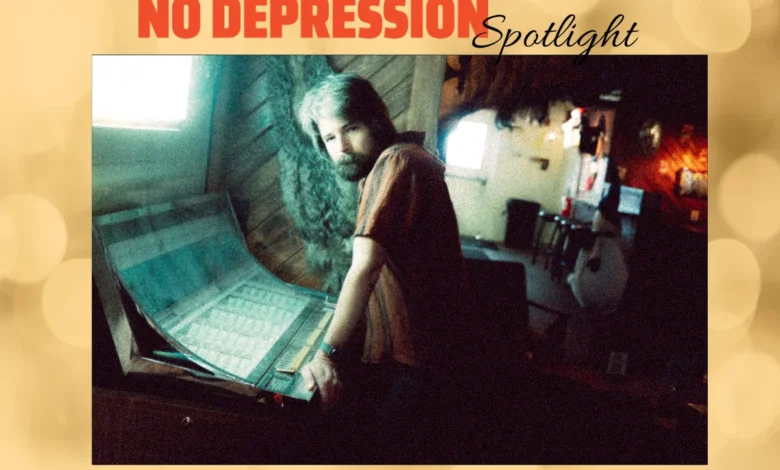
The contemporary musical landscape has long served as a mirror to societal shifts, but few artists have captured the specific, listless unease of the mid-2020s with the precision found in John R. Miller’s latest release. On July 1, 2026, Miller released his fifth full-length studio album, The Great Unknowing, via Rounder Records, marking a significant milestone in a career defined by literary songwriting and a refusal to shy away from the darker corners of the American experience. Designated as the Spotlight Artist for July 2026 by the roots-music authority No Depression, Miller’s new work arrives at a moment when the social fabric of the West appears increasingly frayed, offering a collection of songs that function less as entertainment and more as a "liturgy for humanity" amidst crumbling infrastructures and rising class consciousness.
The Architectural Themes of The Great Unknowing
The album’s title is derived from its third track, "Tollbooth," a song that encapsulates the weary, transit-oriented purgatory of modern life. Miller’s lyrics paint a vivid picture of the mundane indignities faced by the working class: "Turnpike plaza’s got me down again / Cold fluorescents, toilets overflowing / Under the big silver sky / No exit sign / I set forth on the great unknowing." While Miller has noted that the line was intended to be somewhat tongue-in-cheek, the surrounding musical context—a torpid, yearning arrangement—transforms the phrase into a broader metaphor for a generation navigating a world without a clear map or a reliable social safety net.
The song serves as a microcosm for the album’s overarching critique of the "unravelling of the social construct." Miller’s writing suggests that the "great unknowing" is not merely a personal state of confusion, but a systemic condition. In "Tollbooth," he laments the relentless financial pressures that follow an individual from their prime into their decline: "For every crusted nickel I’ve been dimed / I could’ve made it back while I was in my prime / And if you can’t pay / They bill you anyway." This sentiment resonates with current economic data indicating a widening gap between productivity and wages, a theme Miller explores with a mix of resignation and quiet fury.
Chronology of a Songwriter’s Evolution
To understand the weight of The Great Unknowing, it is essential to trace Miller’s trajectory within the American roots music scene. A native of the Eastern Panhandle of West Virginia, Miller spent much of the early 21st century honing his craft in the trenches of the independent folk and bluegrass circuits.
- The Formative Years (2010–2017): Miller gained initial recognition as a founding member of the band The Fox Hunt and later with the Stingray’s. During this period, his writing was characterized by a raw, punk-influenced approach to traditional sounds, reflecting the struggles of rural Appalachian life.
- The Breakthrough with Depreciated (2021): Miller’s debut on Rounder Records, Depreciated, brought his songwriting to a national audience. The album was widely praised for its "lived-in" quality and Miller’s ability to find beauty in the mundane and the broken. It established him as a premier voice in the "New Appalachia" movement.
- The Shift Toward Social Critique (2023–2025): Following the release of Lucky Child in 2023, Miller’s writing began to pivot from introspective character studies toward broader societal observations. The tours following this period saw Miller engaging more directly with themes of economic disparity and the erosion of community.
- The Release of The Great Unknowing (2026): The fifth album represents the culmination of this evolution. It retains the melodic sensibilities of his previous work but infuses them with a more pointed, structural critique of late-stage capitalism and the moral implications of progress.
Socio-Economic Context and Supporting Data
Miller’s focus on class consciousness is not an aesthetic choice but a reflection of a documented shift in public sentiment. According to recent sociological studies and economic indicators from the first half of the 2020s, awareness of class distinctions in the United States and the broader West has reached a multi-decade high.
In his commentary on the album, Miller observes: "At least in this country, but everywhere in the West, we’ve completely reset what normalcy means. People are more class conscious than they were five years ago, 10 years ago especially, it’s because it’s had to be shoved in their faces for them to actually see it."
This observation is supported by data from the Bureau of Labor Statistics and independent think tanks, which show that while "progress" is often measured by stock market indices and technological advancements, the "moral squalor" Miller refers to—manifested in homelessness, the lack of affordable healthcare, and the decay of public infrastructure—has become impossible to ignore. In the mid-2020s, the "cost of living crisis" transitioned from a temporary economic hurdle into a permanent feature of the social landscape for many, a reality that The Great Unknowing addresses directly.
Artistic Analysis: Upbeat Melodies and Dark Truths
One of the most striking features of The Great Unknowing is the juxtaposition between its sonic brightness and its lyrical depth. Several tracks feature upbeat tempos, driving rhythms, and lush instrumentation that might suggest a standard Americana record. However, beneath the surface lies a "simmering disgust" with the neglect of human needs in the pursuit of greed.
Music critics have noted that this contrast is a deliberate tool. By wrapping difficult truths in accessible melodies, Miller ensures that his message reaches beyond a niche audience of political activists and into the "Broadway bar crowd"—even if, as the album suggests, it is not "light listening" for those seeking pure escapism. This technique aligns Miller with a tradition of protest music that uses the "sugar-coated pill" approach, where the catchiness of the tune provides the vehicle for a potent social message.
Miller explains his creative process during this period as an attempt to find a foothold in reality: "It feels like we’ve lost our grip on what is true and what’s real. So I spent a lot of my time trying to ground myself in what is real and true."
Industry and Peer Reactions
The release of The Great Unknowing has garnered significant attention from peers and industry veterans. Rounder Records, a label with a history of supporting artists who challenge the status quo (ranging from Alison Krauss to Sierra Ferrell), has positioned the album as a cornerstone of their 2026 release schedule.
While official statements from the label emphasize Miller’s "unmatched lyrical prowess" and "authentic voice," the reaction from the songwriting community has focused on the album’s courage. Fellow artists have lauded Miller for moving beyond the "alt-country" tropes of heartbreak and whiskey to tackle the more complex, and often less commercially viable, themes of systemic failure.
No Depression, in its Spotlight feature, characterizes the album as essential for the current era, noting that Miller has successfully transitioned from a regional favorite to a national "truth-teller." The publication argues that The Great Unknowing serves as a necessary corrective to the superficiality often found in mainstream country and folk music.
Broader Impact and Implications
The significance of The Great Unknowing extends beyond the confines of the music industry. As an artifact of the year 2026, the album captures a specific cultural moment where the optimism of the early 21st century has been replaced by a cautious, often cynical, realism.
The album’s focus on the "reset of normalcy" suggests that the post-pandemic world has not returned to its previous state, but has instead entered a period of permanent instability. Miller’s work implies that the "great unknowing" is the new status quo—a world where traditional institutions are no longer trusted and individuals must find their own ways to "ground themselves."
Furthermore, the album highlights the role of the artist as a social documentarian. By chronicling the "toilets overflowing" and the "cold fluorescents" of a turnpike plaza, Miller validates the lived experiences of millions who feel overlooked by the grand narratives of progress. In doing so, The Great Unknowing may encourage other artists to engage more directly with the socio-economic realities of their time, potentially leading to a resurgence of socially conscious songwriting in the roots and Americana genres.
As John R. Miller embarks on his 2026 tour in support of the album, the reception of The Great Unknowing suggests that there is a profound hunger for music that acknowledges the difficulty of the present moment without offering easy or false solutions. The album stands as a testament to the power of song to articulate the unspoken anxieties of a society in flux, marking Miller as one of the most vital voices in contemporary American music.