A to JazZ Festival Celebrates 15 Years of Cultural Evolution and Global Jazz Excellence in Sofia

The Bulgarian capital of Sofia recently hosted the 15th anniversary of the A to JazZ Festival, transforming the verdant expanse of South Park 2 into a sprawling epicenter of international music and cultural exchange. Set against the backdrop of the Vitosha Mountains, which provide a rare alpine skyline for a European capital, the festival once again lived up to its ambitious moniker by presenting a program that spanned the generic alphabet from traditional jazz to contemporary world music. Since its inception, the festival has maintained a commitment to free admission for its main stage performances, a strategy that has successfully democratized high-art music and cultivated a diverse audience ranging from seasoned aficionados to casual park-goers. This year’s milestone edition, held from July 2 to July 5, 2026, drew tens of thousands of spectators, creating an "ocean of picnic blankets" that underscored the event’s status as one of the most significant open-air jazz gatherings in Southeast Europe.
A Strategic Vision for Cultural Accessibility
Under the leadership of founder and festival director Peter Dimitrov, A to JazZ has evolved from a local initiative into a major fixture on the European festival circuit. The event’s 15-year trajectory reflects a broader trend in the European cultural sector: the use of public spaces to foster community engagement through high-quality arts programming. By removing the financial barrier of entry, the festival has managed to bridge the gap between elite jazz circles and the general public. This accessibility has not only increased the visibility of the genre in Bulgaria but has also turned Sofia into a summer destination for international jazz tourists.
The logistics of the 2026 edition were bolstered by favorable summer weather, which facilitated the massive turnout. The festival’s infrastructure, centered around a main stage that begins its daily programming at 6 p.m., is designed to maximize the natural beauty of South Park 2. The park’s layout allowed for a multi-layered experience, where the intensity of the "front-of-stage" crowd contrasted with the relaxed atmosphere of the picnic areas and the more exclusive VIP enclosures. This tiered engagement model ensures that the festival remains sustainable through corporate sponsorships and premium ticket sales while keeping the core experience free for the masses.
The World Music Prelude: Thursday’s Global Showcase
While the core jazz programming traditionally gains momentum over the weekend, the festival officially commenced on Thursday with a dedicated focus on world music. This introductory day serves as a bridge between various folk traditions and the improvisational spirit of jazz. A standout performance was delivered by Uma Ranganathan, an Indian vocalist based in Norway, who presented a Carnatic trialogue. Carnatic music, a system of music commonly associated with southern India, shares a profound structural affinity with jazz due to its heavy reliance on complex rhythmic cycles and melodic improvisation. Ranganathan’s performance was described as "deeply evocative," bridging the gap between Eastern classical traditions and Western contemporary sensibilities.
Following Ranganathan, the Nubras Ensemble took the stage, offering a cross-cultural fusion that linked the musical heritage of southern Italy with that of Bulgaria. The ensemble’s performance was heightened by the presence of Diyana Vasileva, a prominent member of the world-renowned "Mystery of the Bulgarian Voices" choir. By integrating the haunting polyphonic traditions of Bulgaria with Mediterranean rhythms, the Nubras Ensemble exemplified the festival’s mission to explore the "A to Z" of global soundscapes.
Industry Dialogue and the Legacy of Ronnie Scott’s
Parallel to the musical performances, the A to JazZ music conference, established in 2018, provided a platform for industry professionals to discuss the evolving landscape of the global music market. Promoters, venue programmers, and festival directors gathered to address the challenges of international touring in an era marked by rising nationalism and bureaucratic hurdles.
A central figure at this year’s conference was Paul Pace, a respected programmer for London’s legendary Ronnie Scott’s Jazz Club. Pace provided a historical perspective on international cooperation, recounting how Pete King, co-founder of Ronnie Scott’s, negotiated a seminal agreement with the American Federation of Musicians in the mid-20th century. This agreement was instrumental in allowing American jazz icons to perform in the United Kingdom, effectively turning Ronnie Scott’s into a bridgehead for US jazz in Europe. Pace’s presentation served as a reminder of the importance of institutional diplomacy in maintaining the "internationalism" of the jazz genre.
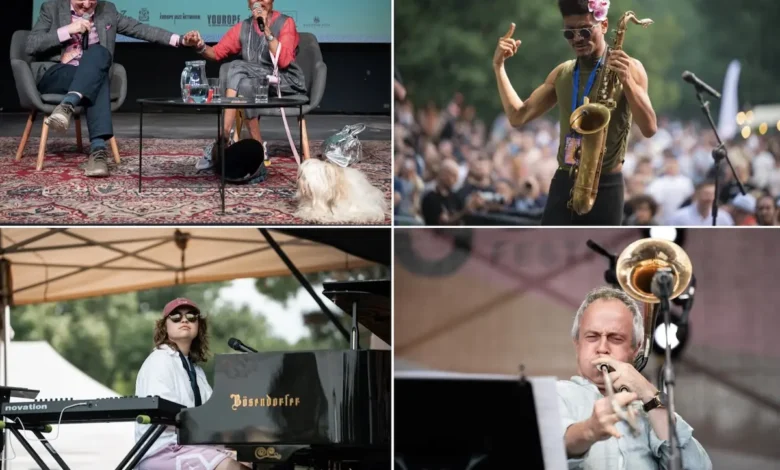
The conference took an emotional turn when Pace was joined on stage by the legendary vocalist Dee Dee Bridgewater. Accompanied by her dog, Daisy—whom she credited with assisting her through a period of medical depression—Bridgewater offered a candid reflection on her 56-year career. She discussed the atmospheric conditions of the early jazz clubs, including the then-pervasive cigarette smoke, and transitioned into more serious social critiques. Bridgewater spoke extensively about the systemic sexism she encountered within the industry, which led to the formation of her all-female "We Exist!" project. The project is designed as a direct challenge to the patriarchal structures that have historically dominated the jazz world.
Headlining Highlights: Bridgewater and the Miles Electric Band
Saturday evening’s program was anchored by Dee Dee Bridgewater, whose performance was as much a political statement as it was a musical triumph. Bridgewater utilized her platform to address contemporary social issues, specifically the political climate in the United States. Before performing Nina Simone’s "Mississippi Goddam," she provided historical context on the Civil Rights Movement, drawing parallels to modern societal divisions. Her dedication of Bob Dylan’s "Gotta Serve Somebody" to what she termed the "orange king" left no ambiguity regarding her political stance.
The set concluded with a moving, unaccompanied rendition of "Amazing Grace," a choice that resonated deeply with the audience given the concert’s proximity to the Fourth of July. Observers noted that Bridgewater’s energy remained high throughout the performance, appearing reluctant to leave the stage despite the constraints of an 11 p.m. curfew and an early travel schedule the following morning.
Another significant highlight of the festival was the performance by the Miles Electric Band (M.E.B.) on Friday evening. Led by Vince Wilburn Jr., the nephew of Miles Davis, the 10-piece ensemble was formed to celebrate Davis’s experimental "electric period." As the global jazz community marks the centennial of Miles Davis this year, M.E.B.’s set was particularly timely. The group revisited a repertoire that spanned from the groundbreaking "Bitches Brew" (1969) to the 1985 jazz-pop fusion of Michael Jackson’s "Human Nature." The performance was a testament to the enduring influence of Davis’s work and its ability to be reinterpreted by modern virtuosos.
Emerging Talent and the Next Generation
A to JazZ has consistently provided a platform for younger artists to showcase their work alongside established legends. Polish pianist Hania Derej emerged as one of the weekend’s most talked-about new performers. Derej, who appeared in a trio format before expanding to a quartet, demonstrated a sophisticated command of both acoustic and electric textures. Her use of wordless vocals over the Bӧsendorfer piano, combined with atmospheric keyboard layers, signaled a forward-thinking approach to jazz composition.
The festival also featured Tomoki Sanders, the son of the late avant-garde saxophonist Pharoah Sanders. While his performance began with significant promise, critics noted that it struggled to maintain momentum in its second half, highlighting the unique pressures faced by the progeny of jazz legends when navigating their own musical identities.
The Bulgarian Jazz Contingent
The festival’s commitment to domestic talent was evident in the programming of several Bulgarian-led projects. Trombonist Gueorgui Kornazov, who has established a significant reputation in France and across Europe, presented his "Autumn Impressions" project. The quintet featured an unconventional lineup, including an accordion, tuba, and trumpet, creating a rich, brass-heavy soundscape that was both modern and rooted in European traditions.
Double bassist Victoria Kirilova also made a significant impression with her quartet. Performing pieces from her album "Roots & Skies," Kirilova demonstrated a lyrical and expressive style that has already garnered attention from international publications like Jazz Journal. Her performance, alongside clarinetist Oscar Antoli and pianist Dimitar Gorchakov, was cited as a highlight for those seeking a more introspective and nuanced jazz experience.
One of the more intellectually stimulating sets came from drummer Emil Tassev. A physicist by training, Tassev drew inspiration for his album "Tesseract" from four-dimensional geometry. His quartet’s performance explored mathematical metaphors through music, resulting in a complex, shifting soundscape that challenged the audience’s perceptions of rhythm and structure.
After-Hours and Community Impact
As the main stage performances concluded each night at 11 p.m. due to local noise ordinances, the festival’s energy migrated to Toplocentrala. This indoor venue, located at the entrance of the park, hosted late-night jam sessions where the boundaries between performers and spectators blurred. These sessions featured a mix of local musicians and international guest stars, including Veleka Tsankova, a jazz vocalist and member of the festival’s organizing team.
The economic and social impact of the A to JazZ Festival on Sofia is substantial. By drawing thousands of visitors to the city’s parks, the event stimulates local businesses and enhances the city’s reputation as a cultural hub. Furthermore, the festival serves as a critical incubator for the Bulgarian jazz scene, providing local artists with the opportunity to perform on the same stage as global icons.
Conclusion: The Future of Jazz in Eastern Europe
The 15th anniversary of A to JazZ serves as a powerful rebuttal to the notion that jazz is a declining art form. The massive crowds in South Park 2, coupled with the diversity of the programming, suggest that the genre remains vibrant and relevant. As Dee Dee Bridgewater famously remarked, "Look at me—I’m not dead," a sentiment that could easily be applied to the festival itself.
Peter Dimitrov and his team have successfully created a model for cultural sustainability that balances artistic excellence with public accessibility. As the festival looks toward its next decade, it remains a vital conduit for musical innovation and a symbol of Sofia’s growing influence in the international arts community. The 2026 edition not only celebrated the past 15 years of achievement but also set a high bar for the future of jazz festivals worldwide.