Kanye West Faces Copyright Infringement Lawsuit from Paparazzi Agency Over Uncleared Audio Sample in French Montana Collaboration

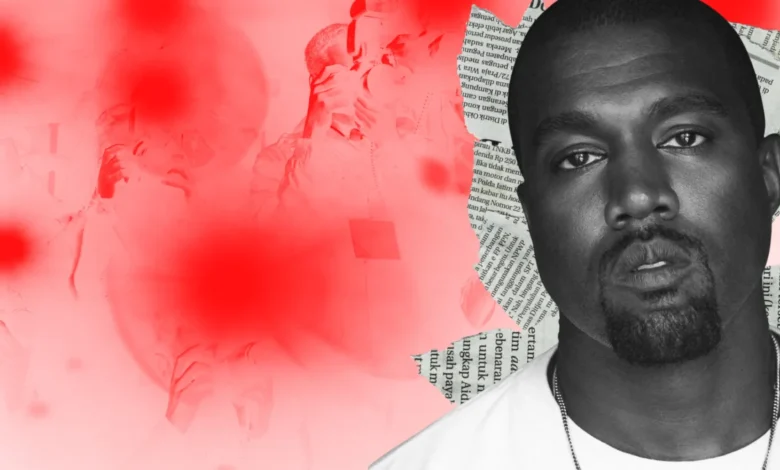
Kanye West, the multi-platinum recording artist and fashion mogul, is once again embroiled in legal contention, this time facing a copyright infringement lawsuit from celebrity photo agency Bauer-Griffin. The litigation centers on an uncleared audio sample featured prominently in "Where They At," a 2024 collaboration between West and French Montana, released as part of Montana’s "Mac & Cheese 5" mixtape. Unlike previous sampling disputes typically involving music publishers or estates, this particular suit presents a unique facet: the plaintiff is a paparazzi agency asserting intellectual property rights over a recording of West himself during a volatile public encounter. The contentious audio clip, sourced from a 2013 video owned by Bauer-Griffin, captures West admonishing a paparazzo with the explicit demand, "don’t take a fucking another photo, man!" This alleged unauthorized use forms the crux of Bauer-Griffin’s claim that their copyright in the original audiovisual work was "flagrantly and deliberately" infringed upon by West, French Montana (Karim Kharbouch), and their distributor, Gamma.
The Genesis of the Dispute: A Decade-Old Confrontation
The audio sample at the heart of the lawsuit originates from a well-documented incident in May 2013. West, known for his often-contentious relationship with the paparazzi, was reportedly arriving at Los Angeles International Airport (LAX) when he confronted a photographer. The specific phrase, "don’t take a fucking another photo, man!", was captured in a video that subsequently went viral across news and entertainment platforms. This particular "volatile confrontation," as described in Bauer-Griffin’s lawsuit, was far from an isolated event. West has a long and highly publicized history of skirmishes with paparazzi, frequently expressing frustration over perceived violations of his privacy and his desire to be left alone by the media. These encounters have ranged from verbal altercations to physical confrontations, underscoring a persistent tension between his public persona and his private life. For agencies like Bauer-Griffin, these moments, though often controversial, constitute valuable intellectual property, documenting the lives of public figures. The 2013 incident was widely covered, becoming a notable entry in the ongoing narrative of celebrity-paparazzi dynamics, and its audio component has now been repurposed in a commercial music track, triggering the current legal action.
The Complex Landscape of Paparazzi Copyright
Central to this lawsuit is the often-misunderstood aspect of copyright law as it pertains to images and videos taken by paparazzi. Despite the subject being a public figure and the images often revolving around their likeness, the copyright in any photograph or video generally vests with the person who created the work – the photographer or videographer, or the agency they work for. This fundamental principle means that while celebrities are the subjects of these works, they do not own the rights to distribute, reproduce, or otherwise use the content without explicit permission or a license from the copyright holder.
This legal framework creates an interesting dichotomy. A celebrity who wishes to prevent the widespread distribution of an unflattering image cannot typically rely on copyright law to do so, as they are not the copyright owner. Instead, they might explore avenues such as privacy law, personality rights, or defamation, depending on the jurisdiction and specific circumstances. Conversely, if a celebrity wishes to use an image or video in which they appear – perhaps for their own social media, merchandise, or even in a song – they are legally obligated to obtain a license from the relevant photographer or agency. This requirement holds true even when the commercial value of the image or video is inextricably linked to the celebrity’s fame and public recognition. Numerous high-profile pop stars, including Dua Lipa, Gigi Hadid, and Jennifer Lopez, have faced lawsuits in recent years for posting paparazzi photos of themselves to their social media accounts without securing the necessary permissions, illustrating the strict enforcement of these intellectual property rights. This established precedent directly informs Bauer-Griffin’s position in the current dispute with West and Montana.
Sampling in Music: A History of Innovation and Litigation
The practice of sampling – incorporating a portion of one sound recording into a new one – has been a cornerstone of hip-hop and electronic music for decades, evolving from an innovative creative tool to a significant legal minefield. While sampling allows artists to reinterpret, reimagine, and pay homage to existing works, it also frequently brushes against the boundaries of copyright law. The legal principle is generally clear: any unauthorized use of copyrighted material, regardless of its length or perceived insignificance, constitutes infringement unless it falls under specific defenses like "fair use" or "de minimis" (too trivial to warrant legal action).
Landmark cases, such as Bridgeport Music, Inc. v. Dimension Films (2005), which famously declared "get a license or do not sample," have solidified the stringent requirements for sample clearance. The music industry has since developed complex systems for licensing samples, often involving negotiations with both the owner of the master recording (typically a record label) and the owner of the underlying musical composition (often a publisher). Failure to clear samples can result in substantial financial penalties, including statutory damages, actual damages, and even injunctions preventing the distribution of the infringing work. While most sampling disputes involve musical elements, the present case highlights that spoken word, audio clips, and "found sound" recordings are equally protected under copyright, provided they meet the criteria for original authorship and fixation. The unique aspect here is the source of the sample – a raw, unscripted moment captured by a news agency – which adds another layer to the already intricate legal landscape of music sampling.
A Chronology of the Copyright Claim
The timeline leading to the current lawsuit underscores the deliberate nature of Bauer-Griffin’s legal strategy and the specifics of the alleged infringement:
- May 2013: The original incident occurs at LAX, where Kanye West confronts a paparazzo. Bauer-Griffin records the "volatile confrontation" on video, capturing the now-infamous audio clip. The video is widely distributed and receives extensive media attention.
- Late 2013 – Early 2024: For over a decade, the video and its audio clip remain part of Bauer-Griffin’s copyrighted catalog, available for licensing. There is no public record of West, French Montana, or their associates seeking a license for the audio.
- January 2024: Bauer-Griffin formally certifies the copyright registration for its 2013 video with the US Copyright Office. Although the video was published over ten years prior, this formal registration is a critical prerequisite for filing a copyright infringement lawsuit in the United States. This timing strongly suggests the agency was preparing for litigation.
- February 2024: French Montana releases his "Mac & Cheese 5" mixtape, which includes the track "Where They At," featuring Kanye West. The track prominently opens with the uncleared audio sample from Bauer-Griffin’s 2013 video. The song is distributed through Gamma, West’s distribution company.
- March 2024 (Approximate): Bauer-Griffin files its copyright infringement lawsuit against Kanye West, French Montana (Karim Kharbouch), and Gamma, alleging the "flagrant and deliberate" unauthorized use of its copyrighted audio.
This precise chronology illustrates that the alleged infringement occurred after Bauer-Griffin had taken the crucial step of registering its copyright, albeit belatedly.
Legal Arguments and the Challenge of "Fair Use"
Bauer-Griffin’s lawsuit asserts that West, Kharbouch, and Gamma "purposefully copied the audio sample and used it prominently as the infringing record’s intro" "without permission or license, or credit to the video’s author or rightsholder." The agency is seeking actual damages, calculated based on the profits made by the defendants from the alleged infringement.
The defendants, West, Montana, and Gamma, may attempt to mount a defense, with "fair use" being a common, though often challenging, argument in sampling cases. Fair use is a legal doctrine that permits limited use of copyrighted material without acquiring permission from the rights holder, for purposes such as criticism, comment, news reporting, teaching, scholarship, or research. Courts typically evaluate four factors:
- The purpose and character of the use: Is it commercial or non-profit? Is it transformative (i.e., does it add new expression, meaning, or message)?
- The nature of the copyrighted work: Is it factual or creative? Published or unpublished?
- The amount and substantiality of the portion used: How much of the original work was taken, and was it the "heart" of the work?
- The effect of the use upon the potential market for or value of the copyrighted work: Does the new work harm the market for the original?
In this context, arguing fair use for a commercial music track that uses a distinctive and recognizable audio clip from a news report could be difficult. While West’s track might comment on his relationship with the paparazzi, the commercial nature of the use and the prominence of the sample typically weigh against a finding of fair use, especially if it diminishes the market for Bauer-Griffin’s licensing of the original clip. Legal experts often note that merely repurposing a snippet, even for artistic expression, does not automatically qualify as transformative enough to overcome the commercial aspect of the new work. Furthermore, the explicit and somewhat aggressive nature of West’s recorded statement makes it a unique and valuable piece of content for news agencies, further strengthening Bauer-Griffin’s claim regarding its market value.
The Impact of Late Copyright Registration
An interesting detail in this case is that Bauer-Griffin’s copyright in the 2013 video was only certified by the US Copyright Office in January 2024, despite the video having been published over a decade earlier. This timing is crucial for the scope of potential damages. Under US copyright law, while copyright protection generally exists from the moment a work is created and fixed in a tangible medium, formal registration with the US Copyright Office is a prerequisite for filing an infringement lawsuit. More significantly, timely registration (before the infringement occurs or within three months of publication) allows a copyright holder to seek statutory damages and attorney’s fees if infringement is proven.
Because Bauer-Griffin registered its copyright after the alleged infringement occurred (the 2024 release of "Where They At"), the agency will be precluded from seeking statutory damages – which are predetermined amounts set by law, often allowing for higher awards without proving specific financial losses – or reimbursement for its attorney’s costs. Instead, Bauer-Griffin will be limited to claiming "actual damages." Actual damages refer to the real monetary losses suffered by the copyright owner due to the infringement, which typically means demonstrating the profits West, Kharbouch, and Gamma made directly from the use of the infringing sample, or the fair market value of a license for the sample that should have been paid. This distinction shifts the burden onto Bauer-Griffin to meticulously prove the financial gain derived by the defendants from the specific sample, a process that can be complex and expensive. However, even without statutory damages, a successful claim for actual damages, particularly if the song generates significant revenue, could still result in a substantial financial payout.
Broader Implications for Industry and Intellectual Property
This lawsuit carries significant implications for various stakeholders within the music, media, and intellectual property landscapes.
For artists and music producers, the case serves as a stark reminder of the paramount importance of comprehensive sample clearance. Even seemingly innocuous or short audio clips, especially those derived from real-world recordings with clear rights holders, are not exempt from copyright law. The financial and reputational risks associated with uncleared samples far outweigh the perceived convenience of bypassing licensing procedures. This case may encourage greater diligence in seeking permissions for all types of sonic elements, pushing artists and their teams to be more conservative in their use of "found sound" or to explore more robust fair use arguments before release.
For paparazzi agencies and news outlets, this lawsuit reinforces the value of their intellectual property beyond traditional photo and video licensing. It highlights that the audio components of their recordings, particularly those capturing newsworthy or celebrity-centric moments, possess distinct commercial value that can be infringed upon by other creative industries. A favorable ruling for Bauer-Griffin could set a precedent or at least bolster the confidence of other media entities in asserting their rights over audio and visual content that is subsequently appropriated.
For intellectual property law, this case adds to the evolving jurisprudence surrounding sampling, fair use, and the intersection of celebrity culture with media rights. It probes the boundaries of what constitutes "transformative use" when a raw, newsworthy audio clip becomes an artistic element in a commercial song. The outcome could provide further clarity on how courts weigh the artistic intent of a musical work against the original commercial and journalistic value of the source material.
Ultimately, the dispute between Kanye West and Bauer-Griffin encapsulates the perennial tension between creative freedom and intellectual property rights, set against the backdrop of an ever-present celebrity culture. It underscores that in the digital age, where content can be easily appropriated and repurposed, the fundamental principles of copyright remain robust, challenging artists and creators to navigate a complex legal landscape while pursuing their artistic vision. The resolution of this case will undoubtedly be closely watched by legal experts, artists, and media professionals alike, potentially shaping future practices in both music production and content licensing.