John R. Miller Releases The Great Unknowing Amidst Rising Class Consciousness and Societal Reflection

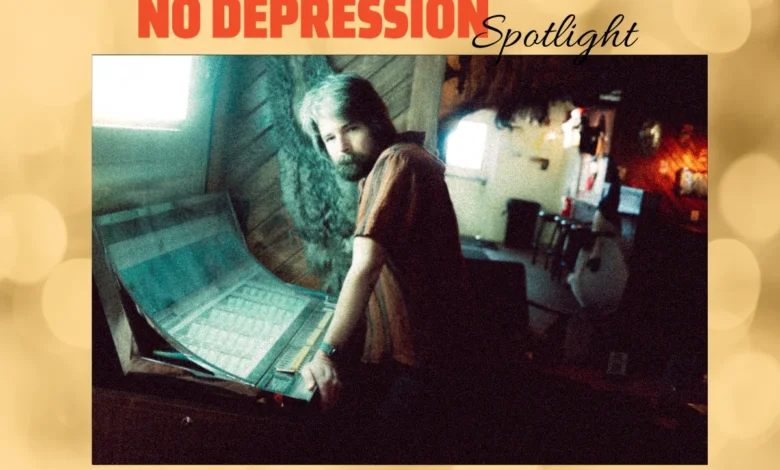
John R. Miller, a prominent voice in the contemporary Americana and folk landscape, officially released his fifth studio album, The Great Unknowing, on July 3, 2026, through the venerable Rounder Records. The release coincides with Miller being named the Spotlight Artist for July 2026 by No Depression, the long-standing authority on roots music. This latest body of work arrives at a pivotal moment in the cultural and economic timeline, offering a pensive and often jarringly honest assessment of the modern Western condition. As the music industry navigates a period of significant digital and social transition, Miller’s latest LP serves as both a musical milestone and a socio-political document, capturing a sense of listless unease that has come to define the mid-2020s.
The Genesis and Themes of The Great Unknowing
The album’s title is derived from its third track, "Tollbooth," a song that encapsulates the record’s overarching atmosphere of "torpid yearning" and existential drift. The lyrics paint a bleak but vivid picture of the American landscape: "Turnpike plaza’s got me down again / Cold fluorescents, toilets overflowing / Under the big silver sky / No exit sign / I set forth on the great unknowing." While Miller has indicated that some of these lines were intended to be tongue-in-cheek, the underlying sentiment resonates with a broader public feeling of being trapped within systems that are increasingly difficult to navigate or escape.
The Great Unknowing is characterized by a "startling clarity" that emerges from what Miller describes as a "distinctly pensive, unsettled vantage." The album does not shy away from the harsh realities of the current era, instead choosing to confront the "moral squalor" of a society that prioritizes greed and industrial progress over the well-being of its citizens. This thematic core is particularly evident in the song’s critique of the social construct, with Miller singing of being "dimed" for every nickel and the inevitability of debt: "And if you can’t pay / They bill you anyway."
A Chronology of Artistic Evolution
John R. Miller’s journey to The Great Unknowing represents over a decade of evolution within the independent music scene. Originally hailing from the Eastern Panhandle of West Virginia, Miller spent years performing in various bands, most notably the prison-swing ensemble The Fox Hunt and the indie-folk outfit Miller & The Other Sinners. His solo career took a significant leap forward with the release of Depreciated in 2021, which garnered critical acclaim for its intricate fingerpicking and literary songwriting.
The timeline leading up to the 2026 release of The Great Unknowing shows a deliberate shift toward more expansive arrangements and a sharper focus on class dynamics.
- 2021-2023: Miller solidified his reputation as a "songwriter’s songwriter," touring extensively across the United States and Europe. His work during this period began to reflect the mounting tensions of the post-pandemic economy.
- 2024: Miller signed with Rounder Records, a move that provided him with a larger platform and the resources to explore more complex production styles while maintaining his signature grit.
- 2025: Recording for the fifth album began in earnest. During this time, Miller frequently spoke in interviews about the "resetting of normalcy" and the need for art to ground itself in truth.
- July 2026: The official launch of The Great Unknowing, accompanied by a nationwide tour and a month-long residency as No Depression’s Spotlight Artist.
Socio-Economic Context and Supporting Data
The "listless unease" Miller describes is supported by contemporary socio-economic data reflecting the state of the West in 2026. Economists have noted a significant uptick in "class consciousness" across various demographics, a trend Miller explicitly addresses in his commentary on the album.
According to data from the Global Inequality Lab and various domestic economic think tanks, the wealth gap in Western nations has reached its highest point in nearly a century. In the United States, the rising cost of basic necessities—housing, healthcare, and transportation—has led to a situation where a substantial portion of the population feels "billed anyway," regardless of their productivity or effort. The "moral squalor" Miller references in his lyrics aligns with recent reports on the "precariat" class, where job insecurity and the erosion of social safety nets have led to a pervasive sense of instability.
Furthermore, a 2025 study on cultural trends indicated that listeners are increasingly moving away from "escapist" pop music in favor of "truth-seeking" genres like Americana and neo-folk. This shift explains why Miller’s work, which he describes as an attempt to "ground myself in what is real and true," is finding a larger and more receptive audience. His music serves as a counter-narrative to the "Broadway bar crowd" aesthetic, which often prioritizes commercial appeal and superficial celebration over substantive critique.
Industry and Artist Perspectives
In discussing the motivation behind the new LP, Miller has been vocal about the necessity of acknowledging the current state of society. "At least in this country, but everywhere in the West, we’ve completely reset what normalcy means," Miller stated during a recent press junket. He argued that the visibility of class struggles has become unavoidable, having been "shoved in their fucking faces for them to actually see it."
This sentiment is echoed by industry analysts and fellow musicians. Critics have noted that The Great Unknowing functions as "essential liturgy for humanity," a term that suggests the music provides a communal space for mourning and reflection. Rounder Records, in their promotional materials, highlighted Miller’s ability to find beauty in the "crusted nickels" and "cold fluorescents" of everyday life, framing him as a poet of the mundane and the marginalized.
While official responses from major commercial entities remain neutral, the independent music community has rallied around the album. Independent radio programmers have reported high request volumes for "Tollbooth," citing its relatability in an era of rising transit costs and infrastructure decay. The album’s ability to remain "upbeat" in its musicality while delivering "utter disgust" in its lyrics is being hailed as a masterclass in sonic contrast.
Analysis of Broader Implications
The release of The Great Unknowing signifies a broader movement within the arts to reclaim the role of the "truth-teller." For decades, the Americana genre has balanced between nostalgia for a rural past and a critique of the present. Miller’s fifth album leans heavily into the latter, suggesting that the "great unknowing" is not just a personal state of mind, but a collective experience.
From a journalistic perspective, the album’s success suggests several key trends:
- The Resurgence of Protest Music: Unlike the overt protest songs of the 1960s, Miller’s approach is more observational and internal. It reflects a modern form of dissent that focuses on the psychological toll of late-stage capitalism.
- Authenticity as a Commodity: In an age of AI-generated content and hyper-processed media, Miller’s emphasis on "what is real and true" serves as a significant selling point. His "pensive, unsettled vantage" is viewed as an authentic response to a world that feels increasingly artificial.
- The Death of the "Normal": Miller’s assertion that we have "lost our grip on what is true" reflects a wider philosophical crisis. His album acts as a grounding mechanism, suggesting that while the world may be crumbling, the act of witnessing and naming that decay is a form of resistance.
Conclusion and Future Outlook
As July 2026 progresses, John R. Miller is set to remain a central figure in the musical conversation. With scheduled performances at major folk festivals and a series of deep-dive features in No Depression, the themes of The Great Unknowing are expected to permeate the cultural zeitgeist throughout the summer.
The album stands as a testament to the power of the long-form LP to capture the complexities of a specific historical moment. By blending "torpid yearning" with "resolute history," Miller has created a work that is likely to be remembered not just for its melodies, but for its courage in facing the "big silver sky" without the comfort of an exit sign. As the world continues to navigate its "listless unease," Miller’s liturgy offers a rare moment of clarity in the midst of the great unknowing.
Related posts: