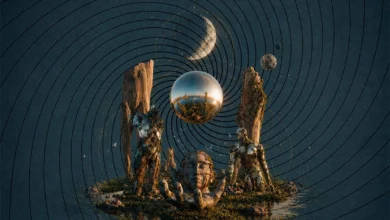
Iván Smoka, a prominent figure in contemporary electronic music, has unveiled "Echoes of Black Cats," a meticulously curated collection of archival material. This significant release, arriving through his co-founded Last Cat On Earth label, offers a rare glimpse into the formative years of his collaborative partnership with Christian C., his bandmate from the acclaimed project Gatos Negros. Recorded between 2010 and 2012, these two tracks remained unreleased for over a decade, representing a crucial historical document of the duo’s early creative synergy and serving as a foundational prelude to the distinctive sound that would eventually define the Gatos Negros discography. The decision to finally bring these recordings to light underscores a commitment to preserving and sharing the evolutionary journey of influential electronic artists, providing invaluable context to their established careers.
The Genesis of Gatos Negros and the Archival Revelation
The "Echoes of Black Cats" EP is more than just a musical release; it is an archaeological excavation into the origins of a significant musical collaboration. Iván Smoka and Christian C. embarked on their joint musical venture, Gatos Negros, a project that has since garnered a reputation for its distinct, often experimental, approach to electronic music. The tracks presented in "Echoes of Black Cats" date back to the nascent stages of this partnership, specifically between 2010 and 2012. This period was critical for the artists, allowing them to explore shared sonic territories and forge a creative identity that would later mature into the recognizable Gatos Negros sound.
During these early years, Smoka and C. were engaged in a process of intense experimentation, driven by a desire to push boundaries and craft a sound that was uniquely their own. The recordings from this era, now available to the public, are characterized by a "raw, dark, and atmospheric aesthetic." This description suggests an embrace of textures that evoke introspection and perhaps a certain intensity, predating the more refined or diversified soundscapes that Gatos Negros might have developed in later years. It points towards an artistic philosophy rooted in primal electronic expression, utilizing elements that contribute to a mood rather than strictly adhering to conventional genre structures. The unreleased nature of these tracks until now adds an air of mystique, transforming them from mere recordings into historical artifacts that illuminate the foundational experiments of two creative minds.
The decision to release these specific tracks now speaks to their perceived historical and artistic value. Often, artists revisit older material to provide context for their current work, offer insights into their creative process, or simply share pieces that, for various reasons, did not fit into previous release schedules. For Smoka and C., "Echoes of Black Cats" functions as a sonic prologue, allowing listeners to trace the lineage of Gatos Negros’ sound from its embryonic state. It highlights the duo’s early collaborative identity, showcasing the initial sparks of inspiration and the shared vision that laid the groundwork for their subsequent musical endeavors.
The Last Cat On Earth Imprint: A Platform for Independent Vision
"Echoes of Black Cats" finds its home on Last Cat On Earth, an independent record label co-run by Iván Smoka himself, alongside Thaddeus X. The establishment of an artist-run label like Last Cat On Earth is a common and increasingly vital phenomenon within the independent electronic music landscape. Such imprints serve not only as a direct conduit for artists to release their own material with complete creative control but also as platforms to champion other emerging or overlooked talents whose artistic vision aligns with the label’s ethos.
Last Cat On Earth, by hosting a release as significant as "Echoes of Black Cats," signals its commitment to diverse and meaningful electronic music, potentially focusing on soundscapes that are experimental, profound, and artistically driven. The choice to release archival material underscores the label’s dedication to the narrative of electronic music, recognizing the importance of an artist’s full journey, not just their most recent output. Co-running the label with Thaddeus X suggests a shared vision for curation and artistic direction, pooling resources and expertise to navigate the competitive and ever-evolving music industry.
Independent labels play a crucial role in the broader music ecosystem. They often serve as incubators for niche genres, experimental sounds, and artists who might not fit into the commercial molds of larger labels. They foster communities, provide platforms for artistic expression free from corporate pressures, and frequently become tastemakers, influencing trends and introducing listeners to groundbreaking sounds. Last Cat On Earth, by bringing forth "Echoes of Black Cats," positions itself as a label that values artistic integrity, historical context, and the raw, unadulterated creative spirit of its artists. This release solidifies the label’s reputation not just as a distributor of new music, but as a custodian of artistic legacies.
The Journey to Release: A Meticulous Remixing and Remastering Process
Bringing recordings from 2010-2012 to a contemporary audience required a significant undertaking: a thorough remixing and remastering process. This critical stage was carried out at Pobla Studio, a facility recognized for its expertise in audio production and post-production. The necessity for such a process stems from several factors, primarily the evolution of audio production standards and playback technologies over the past decade.
In the early 2010s, recording techniques, digital audio workstations (DAWs), and the available processing tools, while advanced for their time, have since undergone significant advancements. Modern listeners, accustomed to high-fidelity streaming and robust sound systems, expect a certain level of clarity, dynamic range, and sonic impact. Raw archival recordings, even those meticulously produced at the time, might sound dated or lack the punch of contemporary tracks when played on modern systems.
The remixing phase involved revisiting the individual elements (stems) of the original recordings. This allowed Smoka and Christian C., or their designated engineers at Pobla Studio, to make adjustments to levels, panning, effects, and overall balance. The goal was to "align the production with modern standards" without sacrificing the original artistic intent. This is a delicate balance: enhancing clarity and presence while preserving the "raw, dark, and atmospheric" character that defined the original sessions. It’s an act of sonic preservation and modernization, ensuring that the tracks can stand proudly alongside contemporary releases while retaining their authentic historical flavor.
Following the remixing, the remastering process took center stage. Remastering involves optimizing the mixed tracks for various playback environments, adjusting overall loudness, equalization, and dynamic range. This ensures that the audio translates well across different speakers, headphones, and streaming platforms. At Pobla Studio, the engineers would have worked to maximize the sonic impact and fidelity of "Echoes of Black Cats," addressing issues such as perceived muddiness, lack of clarity, or insufficient loudness that might have been present in the original masters or even the raw mixes. The meticulous attention to detail in this stage underscores the artists’ respect for their early work and their desire to present it in the best possible light, bridging the gap between its original creation and its current presentation. This commitment to quality ensures that the historical integrity of the recordings is maintained while providing a listening experience that resonates with today’s audiophiles.
Contextualizing Archival Releases in Electronic Music
The release of "Echoes of Black Cats" is part of a broader trend within the electronic music industry: the unearthing and re-presentation of archival material. This phenomenon is particularly prevalent among established artists and labels who recognize the enduring value of their back catalogs and unreleased works. For fans, these releases offer a deeper understanding of an artist’s trajectory, revealing influences, experiments, and creative paths that might have otherwise remained hidden.
The motivations behind releasing archival material are multifaceted. Firstly, it allows artists to re-engage with their past, offering a retrospective look at their creative evolution. It can provide a sense of closure for unreleased projects or shine a light on periods of significant artistic growth. Secondly, for listeners, such releases offer invaluable insights into the genesis of a particular sound or genre. They can hear the raw, unpolished beginnings of artists whose later work became highly influential, tracing the lineage of their musical ideas. This is especially true for a project like Gatos Negros, where the "Echoes of Black Cats" explicitly serves as a "prelude" to their established discography.
Furthermore, in an era dominated by instant gratification and continuous new releases, archival projects offer a different kind of value. They invite a more contemplative listening experience, encouraging appreciation for the historical context and the artistic journey. They also serve as a testament to the longevity and timelessness of certain musical ideas, demonstrating that good music, regardless of when it was created, can still resonate years later. The technological advancements in audio restoration, as demonstrated by the work at Pobla Studio, also make it increasingly feasible to present older recordings in a quality that meets modern expectations, making these archival projects more appealing and accessible to contemporary audiences. This trend highlights a growing appreciation for the complete narrative of an artist’s career, viewing each release, whether new or old, as a chapter in an ongoing story.

Thematic and Sonic Explorations: A Deep Dive into the Aesthetic
The characterization of "Echoes of Black Cats" as possessing a "raw, dark, and atmospheric aesthetic" provides a clear sonic roadmap for listeners. This combination of descriptors suggests a departure from overtly melodic or beat-driven electronic music, leaning instead towards textural depth, mood creation, and perhaps a certain introspective or even unsettling quality.
"Raw" implies an unpolished, perhaps gritty sound, eschewing excessive pristine production in favor of a more immediate, visceral impact. This could manifest in crunchy drum machines, distorted synths, or unprocessed field recordings. It suggests a focus on the fundamental elements of electronic sound design, prior to the layering and refinement that might come with a more mature or commercially oriented production style. This rawness often imbues tracks with a sense of authenticity and urgency.
"Dark" indicates a predominant tonal quality, likely utilizing minor keys, deep basslines, and sounds that evoke solemnity, mystery, or intensity. In electronic music, "dark" often aligns with genres such as dark techno, industrial ambient, or certain forms of minimal electronica that prioritize mood over overt catchiness. It suggests a sonic palette that might be devoid of bright, uplifting melodies, opting instead for a more somber or brooding atmosphere.
"Atmospheric" points to the expansive and immersive qualities of the music. This can be achieved through the use of reverb, delay, sustained pads, and ambient textures that create a sense of space and depth. Atmospheric tracks often invite listeners to immerse themselves in the sound world, allowing the music to wash over them rather than focusing on discrete elements. Combined with "dark," this creates a vast, perhaps foreboding, soundscape that can be both captivating and thought-provoking.
Collectively, this aesthetic suggests that "Echoes of Black Cats" likely explores themes of introspection, tension, and sonic exploration, laying the groundwork for the more developed conceptual frameworks that Gatos Negros would later adopt. It offers insight into the foundational sonic vocabulary that Smoka and C. were developing, showcasing their early attempts to craft a unique identity through texture, mood, and raw electronic power. This prelude allows fans to understand the roots of Gatos Negros’ later sonic excursions, providing a crucial missing link in their discography.
Inferred Statements and Perspectives from Related Parties
While no direct quotes are provided in the original article, it is possible to infer the likely sentiments and perspectives of the key figures involved in the release of "Echoes of Black Cats." These inferred statements are based on the nature of the release, the artists’ roles, and the broader context of independent music.
Iván Smoka (Artist, Co-founder Last Cat On Earth): Smoka would likely express a profound sense of satisfaction and perhaps nostalgia in finally releasing these tracks. He might state, "Bringing ‘Echoes of Black Cats’ to light has been a deeply meaningful process. These tracks represent a very pure, formative period for Christian and me, capturing the raw energy and experimental spirit that sparked Gatos Negros. It’s not just music; it’s a historical document of our early creative journey, and I’m thrilled that after all these years, listeners can finally experience these foundational sounds." He would also likely emphasize the label’s commitment to artistic integrity and the preservation of electronic music history.
Christian C. (Gatos Negros Bandmate): Christian C. would probably echo Smoka’s sentiments, focusing on the collaborative aspect and the re-discovery of their shared origins. He might comment, "Revisiting these sessions from 2010-2012 has been a powerful reminder of how Gatos Negros began. The ‘Echoes of Black Cats’ truly captures the uninhibited exploration we engaged in during those early years. It’s fascinating to hear how our initial ideas and shared vision evolved, and I believe these tracks offer crucial insight into the DNA of our project. We’re incredibly proud to share this glimpse into our past."
Thaddeus X (Co-founder Last Cat On Earth): As the co-runner of the label, Thaddeus X would likely emphasize the label’s mission and the significance of this particular release within its catalog. He might state, "Last Cat On Earth is dedicated to releasing music that pushes boundaries and tells a compelling story. ‘Echoes of Black Cats’ perfectly embodies this ethos. It’s a testament to Iván and Christian’s enduring artistic vision, and its historical value makes it an indispensable addition to our catalog. The meticulous remixing and remastering ensure that these pivotal early works are presented with the clarity and impact they deserve, making them accessible to a new generation of listeners while honoring their origins."
These inferred statements reflect a common thread: a blend of artistic pride, historical appreciation, and a commitment to delivering high-quality, meaningful electronic music to a dedicated audience.
Broader Implications and Legacy
The release of "Echoes of Black Cats" carries several broader implications for Iván Smoka, Gatos Negros, Last Cat On Earth, and the electronic music community at large. Firstly, for Smoka and Christian C., it solidifies their artistic legacy by providing a comprehensive narrative of their development. It allows fans to connect the dots between their early experimentations and their more polished, well-known works, thereby deepening the appreciation for their entire discography. It positions "Echoes of Black Cats" not just as a standalone release, but as an essential chapter in the Gatos Negros saga.
Secondly, for Last Cat On Earth, this release enhances its reputation as a discerning label committed to artistic depth and historical value. By championing such an important archival project, the label demonstrates its dedication to quality and its role in preserving significant moments in electronic music. This could attract more artists seeking a platform that respects their artistic journey and legacy.
Thirdly, for the electronic music community, "Echoes of Black Cats" contributes to the ongoing discourse around archival releases. It highlights the importance of unreleased material in understanding the evolution of genres and artists. It also serves as a reminder that some of the most profound creative moments occur during periods of uninhibited experimentation, often away from the pressures of commercial release. This can inspire other artists to revisit their own vaults and consider sharing their formative works.
Moreover, the "raw, dark, and atmospheric" aesthetic of the EP might resonate with a new generation of listeners who are increasingly exploring deeper, more experimental forms of electronic music. It could introduce them to the foundational soundscapes that paved the way for contemporary styles, bridging generational gaps in electronic music appreciation. The meticulous remastering ensures that these historical tracks are sonically competitive, making them relevant and enjoyable for today’s audiophiles. In essence, "Echoes of Black Cats" is more than just a collection of old tracks; it is a vital piece of the electronic music puzzle, enriching our understanding of a significant artistic collaboration and reinforcing the enduring power of sound.
The EP is available now for streaming and download, providing immediate access to this historical document. Its release encourages listeners to delve into the foundational sound of Gatos Negros and appreciate the intricate journey of its creators, Iván Smoka and Christian C., as they forged a distinct path in the vibrant world of electronic music.