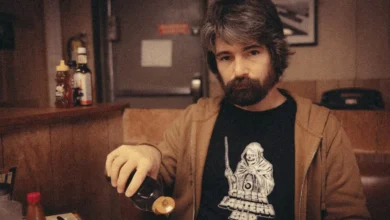
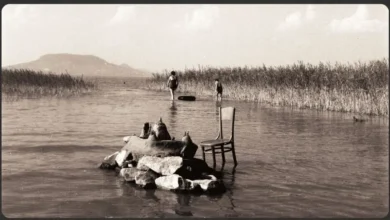
Creekbed Carter Hogan Explores Historical Upheaval and Modern Crisis in New Album Peasants Revolt.


The release of Peasants Revolt by Creekbed Carter Hogan marks a significant milestone in the contemporary Americana and folk landscape, offering a dense, multi-layered exploration of human struggle across centuries. Published under the Gar Hole Records label, the album serves as both a historical retrospective and a poignant commentary on the anxieties of the twenty-first century. Hogan, an Austin-based artist known for blending traditional folk forms with trans activism and queer perspectives, has crafted a work that bridges the gap between the medieval uprisings of the 14th century and the looming environmental and social crises of the present day. The record does not merely reflect on the past; it utilizes historical parallels to examine the "full weight of history" as it converges with modern existence, suggesting a world navigating the edge of an imminent, yet strangely familiar, apocalypse.
Conceptual Framework and Historical Synthesis
At the core of Peasants Revolt is a sophisticated weaving of disparate historical threads. Hogan draws inspiration from a wide chronological spectrum, ranging from the English Peasants’ Revolt of 1381 to the Haitian Revolution of the late 18th and early 19th centuries. By placing these events alongside contemporary trans activism and the modern climate crisis, the album posits that the struggle for autonomy, dignity, and survival is a recursive element of the human condition. This thematic breadth suggests a "flickering, cut-up dream movie" of history, where the ghosts of past revolutionaries inform the resistance movements of today.
The choice of title, Peasants Revolt, directly references the uprising led by figures like Wat Tyler and John Ball, who challenged the rigid feudal structures of medieval England. Hogan’s interpretation of this history is not academic but visceral, seeking to find the emotional resonance between a medieval laborer’s plight and the modern activist’s fight against systemic oppression. This synthesis is further enriched by references to the Haitian Revolution, the only successful slave revolt in history that led to the founding of a state. By incorporating these narratives, Hogan expands the scope of Americana music, moving beyond the traditional North American landscape to include a broader, more inclusive revolutionary history.
Production and Collaborative Architecture
The sonic landscape of Peasants Revolt was shaped significantly by the collaboration between Hogan and co-producer Britton Beisenherz. Recorded with a twelve-strong ensemble of musicians, the album moves away from the minimalist "man and a guitar" trope of traditional folk, opting instead for a rich, orchestral, and at times theatrical arrangement. Beisenherz, who also contributed piano and organ, introduced elements that critics have described as a blend of "bar-room" grit and "Brechtian musical theatre." This theatricality serves the album’s surrealist themes, providing a dramatic backdrop for Hogan’s lyrical storytelling.
The ensemble includes a diverse array of instrumentalists who contribute to the album’s shifting moods. Nora Predey provides the foundational low end on bass and baritone guitar, while also contributing backing vocals that add a haunting layer to the arrangements. Sarah Schultz’s percussion ranges from delicate rhythmic accompaniment to "joyously crashing" crescendos, particularly on the title track. Zack Wiggs’s pedal steel guitar anchors the record in the Americana tradition, offering sweeping, atmospheric textures that contrast with the more jagged, avant-garde elements of the production. This collaborative approach ensures that the music can pivot instantly from widescreen, cinematic folk to claustrophobic, introspective moments.
Chronology of Development and Release
The development of Peasants Revolt followed Hogan’s previous efforts in the Austin folk scene, where they established a reputation for "trans-Americana"—a subgenre that centers trans identities within the traditionally conservative framework of country and folk music. The recording process involved capturing the energy of a live ensemble while allowing for the intricate overdubbing of surrealist sonic motifs.
Released in the summer of 2024 (with some promotional materials looking forward to the long-term impact of the work), the album arrived at a time of heightened political and environmental tension. The timeline of its release coincided with record-breaking global temperatures and a legislative landscape increasingly focused on the rights of transgender individuals in the United States. These real-world factors provided a somber context for the album’s themes, making songs like "Burn" and "Games of Pretend" feel particularly urgent to listeners and critics alike.
Track-by-Track Analytical Breakdown
The album opens with "The Last Supper," which functions as a surrealist advertising jingle, setting the stage for the recurring motif of the hot dog as a symbol of American consumerism. This is followed by "Cutbank of Cleves," a track that has been likened to the work of Gillian Welch but infused with a surrealist edge. The song utilizes quick-fingered guitar motifs and "crunchy" chords to create a sense of movement and unease.
One of the album’s most critically acclaimed tracks, "Burn," serves as a direct confrontation with global heating. While the melody leans toward the folk-pop sensibilities of early Big Thief, the lyrics describe a "manufactured inferno" engulfing the American landscape. The song skillfully transitions from a global perspective to a deeply personal one, ending with the image of the narrator and their partner in a car, highlighting the intimacy that persists even in the face of ecological collapse.
The title track, "Peasants Revolt," is a masterclass in tension and release. It begins with taut banjo and high strings, mirroring the fraught nature of Hogan’s vocals. As the song progresses, it builds into an "emancipated finale" characterized by flighty flute and crashing drums, symbolizing the liberation sought by the historical figures referenced throughout the album. Similarly, "Mirrors" explores duality, starting as a delicate folk piece before twisting into a disorienting, repetitive section that reflects the fractured nature of identity and history.
"Bluebonnets" adopts a classic country-folk tempo, reminiscent of the Laurel Canyon sound of the 1970s. However, the sweeping pedal steel belies a lyrical content focused on "endings and deaths," creating a juxtaposition between the beauty of the landscape and the reality of mortality. "Games of Pretend" rounds out the thematic core of the album, acting as a "paean to authenticity" in a society the artist views as fundamentally damaged.
Semiotic Analysis: The Hot Dog as American Icon
Perhaps the most unique aspect of Peasants Revolt is Hogan’s use of the hot dog as a central symbol. In tracks like "Hot Dog! Apocalypse" and "After the Wurst of It," the humble food item is elevated to a surrealist emblem of America’s past and present. Hogan uses the hot dog to represent a multitude of concepts: mass consumerism, sexual identity, and the "processed" nature of modern life.
The setting of "Hot Dog! Apocalypse" in a hot dog museum—likely inspired by O’Betty’s Red Hot in Athens, Ohio—serves as a metaphor for the way American culture preserves and fetishizes its own kitsch even as it faces existential threats. By committing to this "bit" throughout the album, Hogan demonstrates a willingness to use humor and absurdity to tackle heavy subjects, a hallmark of the "Brechtian" influence noted by listeners.
Broader Impact and Industry Implications
The release of Peasants Revolt contributes to a growing movement within the music industry to reclaim and redefine Americana. For decades, the genre was often seen as a monolith of traditionalism. However, artists like Hogan, along with peers in the Gar Hole Records stable, are demonstrating that the tools of folk and country—storytelling, acoustic instrumentation, and historical reflection—are perfectly suited for exploring contemporary queer and trans experiences.
Industry analysts suggest that Hogan’s work is part of a broader "folk revival" that prioritizes political consciousness and social justice. By linking 14th-century uprisings to 21st-century activism, Hogan provides a framework for understanding current social movements not as anomalies, but as part of a long-standing tradition of resistance. The album’s success on platforms like Bandcamp indicates a strong appetite for music that is both intellectually challenging and emotionally resonant.
Conclusion: Authenticity in Desperate Times
Peasants Revolt concludes with "After the Wurst of It," a wispy, collage-like track that leaves the listener with a sense of quiet reflection. The album does not offer easy solutions to the crises it describes; instead, it advocates for the creation of beauty and the embrace of authenticity as meaningful acts of defiance. Hogan’s perspective is one of "wise" resignation—acknowledging that while it may be "too late" to avert certain global catastrophes, the act of witnessing and recording the human experience remains vital.
As a detailed "American pastoral," the album stands as a powerful testament to Hogan’s skill as a songwriter and historian. By documenting the "full weight of history," Creekbed Carter Hogan has produced a work that is likely to remain relevant as both a musical achievement and a social document. In a world characterized by uncertainty, Peasants Revolt offers a reminder that the struggle for a better world is an old story, one that is still being written with every "joyously crashing" drum beat and every "fraught" vocal performance. Through this record, Hogan asserts that even as the world "limps towards its final moments," there is profound value in the pursuit of truth and the preservation of the human spirit.