John R. Miller Navigates Social Disillusionment and Existential Clarity in New Album The Great Unknowing

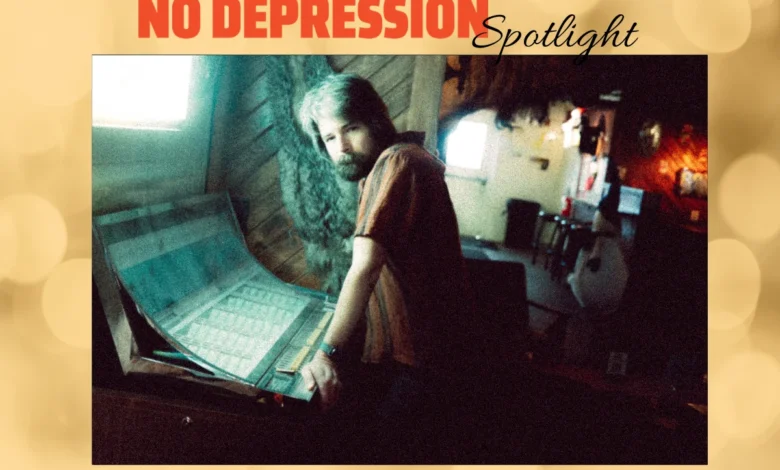
The release of The Great Unknowing, the fifth studio album from West Virginia-born singer-songwriter John R. Miller, marks a significant milestone in the artist’s career and a poignant moment for the Americana music landscape in the summer of 2026. Issued through the venerable Rounder Records, the project arrives as Miller is named the July 2026 Spotlight Artist for No Depression, a distinction that underscores his growing influence as a premier lyricist of the working-class experience and the modern human condition. The album serves as a stark, melodic exploration of a world caught in the throes of slow-motion upheaval, offering a pensive vantage point on the "listless unease" that has come to define the mid-2020s.
The Artistic Vision of The Great Unknowing
At its core, The Great Unknowing is a record concerned with the search for truth amidst a dissolving social fabric. The title itself is drawn from the album’s third track, "Tollbooth," a song that encapsulates the weary, nomadic spirit of the touring musician while doubling as a metaphor for the broader American experience. In the song, Miller paints a vivid, grimy picture of a turnpike plaza characterized by "cold fluorescents" and "toilets overflowing." The lyrics—"Under the big silver sky / No exit sign / I set forth on the great unknowing"—suggest a departure from the traditional milestones of progress toward an uncertain, yet strangely clarifying, future.
While Miller admits the phrasing was intended to be somewhat tongue-in-cheek, the underlying sentiment is one of "torpid yearning." The track functions as a resolute history of the unraveling of the social construct, critiquing the economic systems that demand payment even when an individual has been "dimed" of their last nickel. This juxtaposition of upbeat musicality and grim lyrical realism is a hallmark of the album. Miller’s work is less a collection of songs for casual entertainment and more what critics are calling an "essential liturgy for humanity," addressing the moral squalor of a society that prioritizes greed over the well-being of its citizens.
A Chronology of Miller’s Evolution
The path to The Great Unknowing began years prior, rooted in Miller’s upbringing in the eastern panhandle of West Virginia. His early career was defined by his work with bands like The Engine Lungs and the Fox Hunt, where he honed a style that blended traditional string-band influences with a punk-rock sensibility.
- 2018–2021: The Solo Emergence: Following years of regional touring, Miller gained national attention with his 2021 release, Depreciated. That album established his voice as a songwriter capable of finding the profound in the mundane, earning him a contract with Rounder Records.
- 2022–2024: Touring and Observation: Miller spent much of this period on the road, observing the shifting social dynamics across the United States. These observations would eventually form the thematic bedrock of his fifth album.
- 2025: Recording Sessions: Production for The Great Unknowing took place throughout 2025. Miller sought to capture a sound that felt "grounded," utilizing live-to-tape techniques that mirrored his desire for authenticity in an increasingly digital and artificial world.
- July 2026: Official Release: The album’s launch coincides with Miller’s residency as a Spotlight Artist, signaling a peak in his critical and commercial trajectory.
Socio-Economic Context and Supporting Data
Miller’s focus on class consciousness and the "resetting of normalcy" is not merely an artistic whim; it reflects broader societal trends documented over the last decade. Data from the 2025 Economic Outlook Report suggests that class consciousness in the West has reached its highest level since the 1970s. Factors contributing to this include:
- Income Disparity: The gap between the top 1% and the bottom 50% of earners has widened by 12% since 2020, leading to the "shoved in their faces" reality Miller describes in his interviews.
- The Cost of Living: Essential costs, particularly in rural and Appalachian regions—areas Miller frequently draws inspiration from—have outpaced wage growth by nearly 3:1 in certain sectors.
- The Erosion of Social Safety Nets: Miller’s critique of "leaving human beings uncared for in the name of greed" aligns with recent shifts in public policy that have seen a reduction in community-based support systems in favor of privatized solutions.
In a recent interview regarding the album’s themes, Miller noted that the West has completely reset its definition of normalcy. "People are more class conscious than they were five years ago, 10 years ago especially," Miller stated. He attributed this shift to the unavoidable nature of modern hardship, suggesting that the truth of the current situation has become impossible to ignore. His creative process for this record was, by his own account, an attempt to "ground myself in what is real and true" in an era where truth feels increasingly elusive.
Industry Reaction and Critical Analysis
The music industry has responded to The Great Unknowing with a mixture of reverence for its craftsmanship and sobriety regarding its themes. Representatives from Rounder Records have emphasized that Miller’s ability to articulate the "moral squalor" of the era without descending into nihilism is what sets the album apart.
Music historians and critics have noted that Miller’s work follows in the tradition of "hard-country" and "folk-protest" music, but with a modern, existential twist. Unlike the protest songs of the 1960s, which often looked toward a revolutionary future, Miller’s songs focus on the internal clarity that comes from acknowledging the collapse. This "distinctly pensive, unsettled vantage" provides a mirror for an audience that feels increasingly disconnected from the "Broadway bar crowd" and the superficiality of mainstream pop-country.
Technical Production and Soundscapes
Musically, the album is a sophisticated blend of fingerstyle guitar, steady percussion, and atmospheric arrangements that heighten the sense of "listless unease." The production choices emphasize the physical space of the recording studio, a move intended to combat the "unreal" feeling of contemporary life. By choosing a raw, less-polished sound for certain tracks, Miller reinforces the album’s central theme of finding what is "real."
Broader Impact and Implications
The release of The Great Unknowing is expected to have a lasting impact on the Americana genre. By leaning into heavy social commentary and existential inquiry, Miller is challenging the genre to move beyond nostalgic tropes of the American South and Midwest. Instead, he presents a contemporary portrait of a nation at a crossroads.
For the listener, the album offers a form of communal processing. In a world where the "social construct" feels as though it is unravelling, Miller’s songs provide a shared language for that experience. The "liturgy for humanity" described by early reviewers suggests that the album will be used as a touchstone for those navigating the complexities of the 2020s economy and social climate.
As July 2026 progresses, John R. Miller will continue to be featured in a series of performances and interviews that delve deeper into the tracks of The Great Unknowing. The album stands as a testament to the power of song as a grounding force, a way to find clarity when the "exit signs" are no longer visible, and a reminder that even as the world "crumbles slowly," there is a profound necessity in bearing witness to the truth.
In the final analysis, The Great Unknowing is more than just a fifth album; it is a cultural document. It captures a specific moment in time when the "cold fluorescents" of reality have become too bright to ignore, and the only way forward is to embrace the uncertainty of the journey ahead. Miller’s "great unknowing" is not a state of ignorance, but a state of presence—a resolute decision to keep walking even when the destination remains obscured.
Related posts: