The Venmo Sign Phenomenon: How One Ole Miss Fan Turned a Poster Board into a Five-Figure Windfall

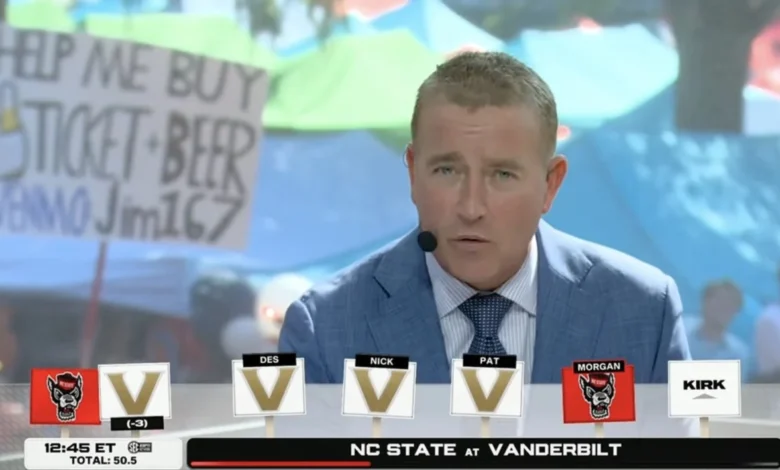
The intersection of digital finance and college football fandom reached a new, highly visible zenith this past weekend in Oxford, Mississippi. While the primary focus of the collegiate sports landscape was directed toward the high-stakes matchup between the University of Mississippi and Louisiana State University—a game marked by the return of former Rebels coach Lane Kiffin to Vaught-Hemingway Stadium—a singular, enterprising fan managed to dominate the peripheral narrative. By displaying a handwritten sign featuring a personal Venmo handle during an ESPN College GameDay broadcast, an unnamed student successfully crowdsourced more than $18,000 from spectators, rival fans, and television production staff, effectively turning a few hours of airtime into a significant financial windfall.
The Backdrop: A High-Stakes Homecoming
The atmosphere in Oxford leading up to the Saturday kickoff was described by analysts as a "powder keg." The return of Lane Kiffin, who vacated his position as the Ole Miss head coach for a role in Baton Rouge the previous November, provided the central tension for the event. With both teams ranked within the top 10 of the Associated Press poll, the stakes were elevated beyond simple conference pride. The scheduling of ESPN’s College GameDay in the Grove further amplified the visibility of the student body, providing a national platform for thousands of signs ranging from tactical analysis to personal taunts directed at the visiting coaching staff.
The game itself mirrored the intensity of the atmosphere. The Rebels surged to an early 24-7 lead by halftime, a performance that appeared to quell potential crowd restlessness. However, the momentum shifted in the second half as the LSU Tigers mounted a formidable comeback, tying the score in the fourth quarter. The game’s conclusion was defined by the poise of Ole Miss quarterback Trinidad Chambliss, who orchestrated a late-game scoring drive. A critical touchdown followed by a successful two-point conversion, coupled with a resilient defensive stand, secured a 32-24 victory for the Rebels, effectively silencing the opposition and punctuating a tumultuous homecoming for the former head coach.
The Mechanics of the Viral Sign
Amidst the sea of signs targeting the coaching staff, one student opted for a more direct appeal. The sign, which remained visible to national television cameras for a significant portion of the morning broadcast, requested donations for "tickets and beer." The simplicity of the strategy—leveraging a massive, captive audience to bypass traditional crowdfunding platforms—proved remarkably effective.
By the conclusion of the broadcast, the student’s Venmo account reflected a balance exceeding $18,000. Data extracted from the transaction history revealed a diverse donor pool. Contributions originated from fans across the collegiate spectrum, including supporters from Texas A&M, Ohio State, and the University of Georgia. Notably, the donor pool included members of the ESPN production crew, suggesting a level of behind-the-scenes participation that underscores the lighthearted nature of the spectacle. Messages attached to these transactions ranged from sympathetic "cheers" to playful, trash-talking banter, highlighting the collaborative and often irreverent nature of modern digital fan engagement.
Precedents and the Carson King Legacy
The phenomenon of the "Venmo sign" at College GameDay is not entirely unprecedented, though it has evolved significantly since its most famous iteration. In 2019, an Iowa State University student named Carson King held a sign during a GameDay broadcast in Ames, Iowa, requesting funds for his Busch Light supply. That incident serves as the primary case study for the evolution of this trend.
King’s request, which initially aimed for a modest amount to cover beverage costs, quickly went viral. Unlike the recent event in Oxford, King’s situation prompted a shift in narrative. After receiving an outpouring of support, King announced that he would retain only a small fraction of the funds for his personal expenses and donate the remainder to the University of Iowa Stead Family Children’s Hospital. The initiative gained corporate sponsorship from Busch Light, which matched the donations, ultimately leading to a total contribution exceeding $3 million for the children’s hospital.
The success of the Carson King fundraiser established a high bar for public accountability. While the Ole Miss student’s efforts resulted in a personal financial gain rather than a charitable one, the mechanism remains identical, demonstrating the power of real-time, peer-to-peer financial transactions on a global stage.
Institutional Responses and Policy Shifts
The prevalence of these signs has not gone unnoticed by the entities hosting these broadcasts. Over the past several years, ESPN and university officials have implemented stricter regulations regarding signage at College GameDay. These measures include vetting signs for inappropriate content and restricting the display of personal financial information, such as Venmo, CashApp, or PayPal handles.
The success of the Ole Miss student suggests that enforcement remains inconsistent. The difficulty of monitoring thousands of signs in a crowded, high-energy environment often results in certain items slipping through security checks. Media analysts note that while networks prefer to maintain a professional broadcast aesthetic, the organic, unpredictable nature of these signs is often what generates the "viral" moments that networks rely on for social media engagement.
However, the legal and institutional implications of allowing such signs are significant. Universities are increasingly concerned about the potential for solicitation on campus grounds and the liability associated with digital financial transactions occurring under the banner of their broadcast events. It is widely anticipated that future iterations of College GameDay will see even more rigorous enforcement to prevent the broadcast from becoming a platform for mass, unregulated financial solicitations.
Economic and Sociological Implications
The trend of monetizing proximity to a major sports event via digital payment platforms represents a broader shift in how individuals perceive the value of their "attention." By positioning themselves in the background of a national broadcast, fans are effectively commodifying their presence. The $18,000 figure is not merely a sum of money; it is a metric of the reach of the College GameDay brand and the willingness of a digital-native generation to engage in micro-philanthropy or, in this case, micro-sponsorship.
From a sociological perspective, the "Venmo sign" represents a breakdown of the traditional barrier between the spectator and the event. Fans are no longer content to merely watch the game; they are actively inserting themselves into the production. This behavior reflects a desire for agency in an era where digital tools allow individuals to bypass institutional gatekeepers.
The Future of Fan-Driven Fundraising
As the 2024 college football season progresses, the likelihood of seeing more Venmo-based solicitations remains high, despite the best efforts of broadcast security. The success in Oxford serves as a catalyst for other students looking to capitalize on their visibility. However, the long-term sustainability of this trend is questionable.
If these solicitations continue to grow in volume, it is likely that networks will move toward a total ban on personal financial handles, citing the need to protect the integrity of the broadcast and prevent potential scams. Furthermore, the IRS has recently updated reporting requirements for digital payment platforms, meaning that individuals receiving significant sums of money through these services may face new tax obligations. As the "fun" of the gesture becomes increasingly professionalized and scrutinized, the ease with which a student can walk away with $18,000 may diminish.
For now, the Ole Miss event stands as a notable chapter in the history of college sports culture—a testament to the unpredictable nature of live television and the remarkable speed with which a simple piece of poster board can capture the collective interest of a nation. Whether this serves as a cautionary tale for organizers or an inspiration for future fans remains to be seen. What is clear, however, is that the dynamic between the stadium crowd and the television audience has been permanently altered by the ubiquity of instant digital payment.