My Chemical Romance reaches settlement with Dallas Cowboys Cheerleaders over trademark infringement lawsuit

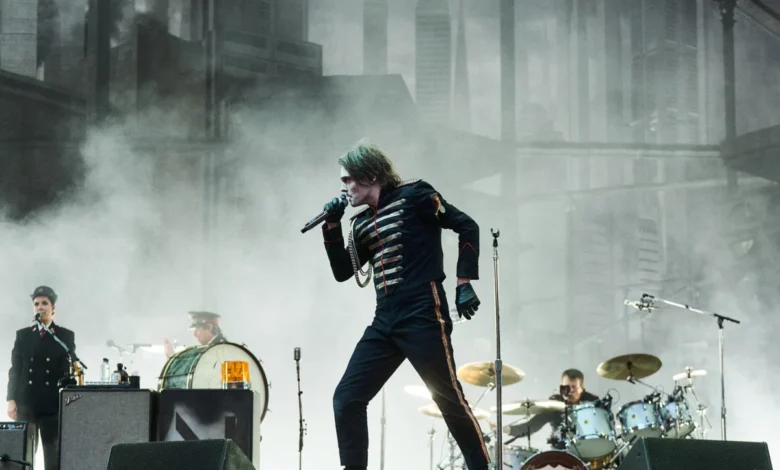
My Chemical Romance has officially agreed to cease the use of backup dancer uniforms that closely mirror the iconic aesthetic of the Dallas Cowboys Cheerleaders (DCC), effectively settling a high-stakes trademark infringement lawsuit that threatened to disrupt the band’s high-profile 20th-anniversary residency. The resolution, reported Tuesday, October 27, 2026, marks the conclusion of a rapid legal standoff between the legendary emo rockers and Pro Silver Star, the parent company representing the NFL’s most recognizable cheerleading squad.
The Origin of the Conflict
The legal controversy erupted following the first two shows of My Chemical Romance’s five-night residency at the Hollywood Bowl. The concerts, designed to celebrate the two-decade anniversary of their seminal 2006 album The Black Parade, featured a complex, theatrical stage production. Central to the performance was a segment set in a dystopian future, wherein backup dancers were dressed in blue-and-white uniforms that bore a striking resemblance to the signature style long associated with the Dallas Cowboys Cheerleaders.
Pro Silver Star, the entity that manages the intellectual property and brand identity of the Dallas Cowboys Cheerleaders, initiated legal action in Texas state court shortly after the debut of the tour. The core of the complaint alleged that the band’s use of the specific color palette, star motifs, and overall design of the uniforms constituted a clear violation of their federal trademark rights. The cheerleaders’ legal team argued that the costumes were not merely an homage but a direct misappropriation of a highly protected brand identity.
Chronology of the Legal Battle
The speed at which this dispute moved from the stage to the courtroom is notable in the context of modern live music litigation:
- July 8, 2026: My Chemical Romance launches the first leg of their The Black Parade 20th-anniversary residency at the Hollywood Bowl, featuring the controversial stage costumes.
- Late October 2026: Pro Silver Star files a lawsuit in Texas state court, seeking an emergency restraining order to prevent the band from utilizing the uniforms for the remaining three shows of the residency.
- October 27, 2026: Reports emerge confirming that the parties have reached an out-of-court settlement. The agreement allows the band to continue the choreography and the theatrical narrative of the performance, provided the costumes are modified to remove the infringing elements.
- October 30, 2026: The final performances of the residency are scheduled to proceed, now with modified stage attire.
Legal Perspectives and First Amendment Considerations
Before the settlement was reached, the case sparked significant debate among intellectual property lawyers. Many experts initially suggested that My Chemical Romance could mount a robust defense rooted in the First Amendment. In the context of artistic expression, courts have historically provided broad latitude to musicians and performers to utilize imagery for parody, satire, or transformative artistic purposes.
However, the reality of tour logistics often dictates legal strategy. Engaging in a prolonged intellectual property battle—particularly one involving an emergency injunction—can be financially ruinous and operationally disruptive for a touring production. By opting to settle, My Chemical Romance avoids the uncertainty of a court-ordered injunction that could have forced them to scrap the entire theatrical segment of their show mid-tour. The settlement represents a pragmatic "middle ground," where the band retains the artistic vision of their choreography while conceding on the specific visual branding that triggered the suit.
The Stance of Pro Silver Star
The legal representation for the Dallas Cowboys Cheerleaders, led by the high-profile celebrity litigator Alex Spiro, maintained a focused narrative throughout the proceedings. In statements filed with the court, Silver Star emphasized that their objective was not to censor the band’s creative output, but rather to protect a distinct commercial trademark that has been carefully curated for decades.
"Silver Star is not litigious, and it takes no issue with MCR’s music, its artistic ambitions, or any message defendants seek to convey," Spiro noted in court documents. The filing underscored that the company remained indifferent to the band’s setlist, political themes, or the inclusion of "gun-toting performers" in their dystopian tableau. The grievance was singular: the unauthorized appropriation of the specific DCC uniform aesthetic. By providing the band with an opening to keep the performance intact through costume changes, Silver Star effectively signaled that their primary goal was brand protection rather than moral or ideological opposition to the band’s performance art.
Broader Implications for Live Music Production
This case serves as a cautionary tale for major touring acts regarding the intersection of performance art and intellectual property. As stage shows become increasingly cinematic and narratively complex, they often incorporate cultural symbols that may be protected by trademark law.
Historically, the music industry has operated with a degree of "fair use" flexibility, but the DCC litigation demonstrates that trademark owners are becoming increasingly aggressive in monitoring how their visual branding is utilized in commercial performances. When an act uses a costume or set design that is inextricably linked to a third-party organization, they invite legal scrutiny that can be difficult to overcome, regardless of artistic intent.
Furthermore, the involvement of a firm like Pro Silver Star—which views its cheerleading uniform as a proprietary asset comparable to a logo or a mascot—suggests a shift in how professional sports entities manage their brand visibility. For future productions, artists and stage designers may need to perform more rigorous "trademark clearance" for costumes and set pieces to avoid similar mid-tour legal entanglements.
The Future of the Tour
With the legal hurdle cleared, My Chemical Romance is expected to complete their remaining residency dates without further disruption. Fans attending the final Los Angeles shows will witness the same dystopian vision the band intended, albeit with a visual adjustment to the dancers’ uniforms.
The resolution underscores a recurring theme in the music industry: the immense pressure to balance high-concept, transgressive art with the rigid realities of corporate legal ownership. While My Chemical Romance has made a concession to the Dallas Cowboys Cheerleaders, they have successfully preserved the core of their anniversary celebration, ensuring that the legacy of The Black Parade remains the focus of the final shows rather than a protracted courtroom drama.
As of late October 2026, representatives for both the band and the cheerleading organization have declined further comment on the specifics of the settlement agreement, leaving the final details of the financial or licensing arrangements—if any—undisclosed. However, the precedent remains clear: in the modern entertainment landscape, the lines between artistic homage and trademark infringement are being drawn with increasing precision, and even the biggest acts in rock music are not exempt from the reach of intellectual property law.