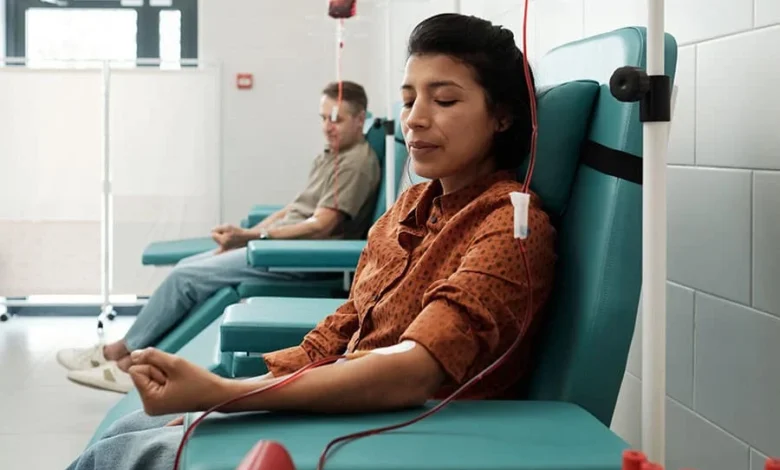
A concerning trend is emerging within the global medical community, where an increasing number of patients are specifically requesting blood from unvaccinated donors and, in some cases, refusing standard blood transfusions due to unfounded fears surrounding COVID-19 vaccines. This growing phenomenon is prompting widespread warnings from healthcare professionals and blood banking organizations, who emphasize the robust safety protocols of the established blood supply and highlight the potential dangers of deviating from these standards. While patient autonomy is a cornerstone of medical ethics, these requests present significant logistical, ethical, and safety challenges, forcing the healthcare system to grapple with the pervasive influence of vaccine skepticism and misinformation.
The demand for "unvaccinated" blood is largely driven by anxieties that vaccinated individuals’ blood might contain residual components of mRNA vaccines, particularly the "spike protein," which some online communities erroneously claim could lead to adverse health effects such as "turbo cancers" or deadly blood clots in recipients. These claims, however, are vehemently disputed by major medical institutions worldwide, which consistently affirm the safety and integrity of the vaccinated blood supply. The scientific consensus is clear: there is no evidence that blood from vaccinated donors poses any risk to recipients, nor are vaccine components transferred through transfusions.
The Escalation of Directed Donations
A recent study published in the peer-reviewed journal Transfusion brought this trend into sharp focus. Researchers at Vanderbilt University Medical Center in Tennessee documented instances where patients actively sought blood exclusively from donors who had not received an mRNA COVID-19 vaccine. The study highlighted thirteen specific cases where patients received "directed donations"—blood given by family members or friends specifically for their use—as a means to circumvent the general blood supply. While directed donations are an established practice in certain specific medical scenarios, such as for rare blood types or to minimize exposure to multiple donors, their use as a workaround for vaccine status introduces a new layer of complexity and risk.
Medical experts are quick to point out that this practice of relying on directed donations, especially from first-time donors who are often family members, can be counterproductive to patient safety. The standard blood supply undergoes an incredibly rigorous screening process that includes comprehensive testing for a wide array of potentially harmful pathogens, such as HIV, Hepatitis B and C, West Nile virus, Zika virus, and syphilis. Regular, volunteer blood donors are a highly screened population, often donating repeatedly, which allows for longitudinal monitoring of their health status. In contrast, directed donors, particularly those motivated by vaccine skepticism, may be giving blood for the first time. Their donations, statistically, are more likely to contain "potentially harmful pathogens" compared to the meticulously vetted and regularly monitored pool of conventional donors. This elevates the risk of transfusion-transmitted infections, a risk that the standard blood banking system has worked for decades to mitigate.
Understanding Blood Safety and Vaccine Science
To understand why the medical community views requests for "unvaccinated" blood as unnecessary and potentially dangerous, it is crucial to grasp the science behind both blood transfusions and mRNA vaccines. Blood banks, regulated by agencies like the U.S. Food and Drug Administration (FDA), adhere to stringent guidelines. Every unit of donated blood undergoes multiple layers of testing to ensure its safety and compatibility. This multi-layered screening system has made the blood supply in developed nations exceptionally safe, with the risk of transfusion-transmitted infections being incredibly low—often less than one in a million for major viruses.
Regarding mRNA vaccines, their mechanism of action is well-understood. These vaccines do not contain a live virus; instead, they deliver a piece of genetic material (mRNA) that instructs the body’s cells to produce a harmless fragment of the SARS-CoV-2 spike protein. This protein then triggers an immune response, preparing the body to fight off future infections. The mRNA itself is fragile and quickly degrades after delivering its instructions, typically within hours or a few days. The spike protein produced is also transient and is cleared by the immune system. Crucially, neither the mRNA nor the spike protein generated by the vaccine persists in the bloodstream in a manner that would be transmissible through blood donation, nor do they integrate into human DNA. Extensive research and real-world data have consistently demonstrated that receiving blood from a vaccinated donor poses no additional risk to the recipient, regardless of their own vaccination status.
The "Spike Protein" Hysteria and the Misinformation Landscape
The surge in requests for "unvaccinated" blood is inextricably linked to the widespread dissemination of misinformation and conspiracy theories surrounding COVID-19 vaccines. Online communities, social media platforms, and certain alternative news outlets have been instrumental in propagating fears about "spike proteins," falsely claiming they are toxic or can cause severe, long-term damage, including the aforementioned "turbo cancers" or blood clots. These narratives often cherry-pick scientific terms out of context or distort legitimate research to create alarm.
Dr. Marc Siegel, a senior medical analyst, has described this trend as a manifestation of an "ongoing fear culture." He acknowledges the right of individuals to make personal health choices but stresses the practical and safety implications of such demands. "While I respect the choice of individuals to group together for specific blood types," Dr. Siegel noted, "doing so is expensive and will limit options during critical medical emergencies." The insistence on "unvaccinated" blood, therefore, is not just a personal preference but a demand that, if widely adopted, would severely strain blood banks and compromise patient care by introducing unnecessary delays and risks.

Operational Challenges and Medical Feasibility
One of the biggest hurdles for patients seeking "pure" or "unvaccinated" blood is the fundamental lack of medical infrastructure and scientific basis to support such a request. Diane Calmus, Vice President of Government Affairs for America’s Blood Centers, succinctly highlighted a critical flaw in this demand: "There is currently no medical test that can distinguish between vaccinated and unvaccinated blood." This fact alone renders the request for "unvaccinated" blood logistically impossible to fulfill within the current, scientifically validated blood banking system.
Blood banks do not screen donors based on their vaccination status for COVID-19, just as they do not screen for influenza vaccination status. The criteria for donation focus solely on factors that could impact the safety and efficacy of the blood product for the recipient, such as infectious disease markers, certain medications, or recent travel to areas with endemic diseases. Implementing a system to identify and segregate "unvaccinated" blood would require entirely new, unproven testing protocols, massive logistical overhauls, and significant financial investment—all for a distinction that has no scientific or medical relevance to blood safety. Such a system would divert resources from essential blood screening and processing, potentially jeopardizing the overall integrity and availability of the blood supply.
Ethical, Legal, and Policy Dilemmas
The debate between patient autonomy and established medical safety protocols is intensifying as a result of these demands. While patients generally have the right to refuse medical treatment, their right to demand specific, scientifically unfounded treatments or products is not absolute, especially when it poses risks to their own health or creates an undue burden on the healthcare system. The concept of "medical segregation," as some have termed this push for differentiated blood supplies, raises profound ethical questions. Should healthcare systems cater to scientifically unsupported beliefs, even if doing so introduces risks and inefficiencies?
The pressure to accommodate these requests is even leading to legislative discussions in some jurisdictions. Oklahoma, for instance, has been cited as one of the states exploring the possibility of creating dedicated blood banks for those who specifically wish to receive blood from unvaccinated donors. If such initiatives were to move forward, they would face immense challenges, including:
- Scientific Validity: Establishing and maintaining such a blood bank would be based on a non-scientific premise.
- Logistical Complexity: Creating a separate, parallel system would be incredibly complex, expensive, and inefficient, potentially leading to shortages for both categories of blood.
- Ethical Concerns: It could create a two-tiered system of care, potentially stigmatizing vaccinated donors and recipients, and undermining public trust in the unified, evidence-based medical system.
- Legal Challenges: Such a system could face legal challenges regarding discrimination or medical malpractice if it leads to adverse outcomes.
Broader Implications for Public Health and Trust
The trend of requesting "unvaccinated" blood is more than just a logistical headache; it represents a broader erosion of trust in established medical science, public health institutions, and healthcare providers. It underscores the profound impact of misinformation campaigns, which can lead individuals to make medical decisions that are contrary to their best interests and based on false premises.
The implications for public health are significant:
- Delayed Care: In emergencies, where every second counts, delays caused by searching for specific "unvaccinated" blood could be fatal. The immediate availability of universally safe blood is paramount.
- Increased Morbidity and Mortality: Patients refusing standard, readily available blood in favor of a non-existent or riskier alternative could suffer worse outcomes or even death.
- Strain on Resources: Accommodating such requests would divert precious resources—staff, equipment, funding—away from essential services and research.
- Reinforcement of Misinformation: Any attempt to legitimize the distinction between vaccinated and unvaccinated blood, even for logistical reasons, could inadvertently reinforce the false belief that vaccinated blood is somehow tainted or dangerous.
The medical community, including organizations like the American Red Cross and the AABB (Association for the Advancement of Blood & Biotherapies), has consistently reiterated that all donated blood, regardless of the donor’s COVID-19 vaccination status, is safe for transfusion. Their messaging emphasizes that receiving a COVID-19 vaccine does not affect a person’s eligibility to donate blood, provided they are feeling well and meet all other standard donation criteria. The focus remains on maintaining a robust, safe, and universally accessible blood supply for all patients who need it, based on rigorous scientific evidence and established safety protocols.
In conclusion, while patient autonomy is a respected principle, it must operate within the bounds of scientific reality and medical safety. The demand for "unvaccinated" blood is a testament to the enduring power of misinformation in the post-pandemic era. Healthcare systems face the daunting task of educating the public, countering false narratives, and upholding the integrity of evidence-based medicine, ensuring that critical medical decisions are guided by science, not by unfounded fears. The safety of the global blood supply, built on decades of scientific advancement and stringent protocols, must remain uncompromised for the well-being of all patients.