Aix-en-Provence Festival Review Mozarts Magic Flute and Strausss Die Frau ohne Schatten Lead a Season of Transformation

The 2024 iteration of the Aix-en-Provence Festival has officially commenced, marking a significant chapter in the history of one of Europe’s most prestigious cultural gatherings. This year’s programming is anchored by two monumental productions that explore the thematic journey from darkness toward enlightenment, bridging the gap between the Classical era of Wolfgang Amadeus Mozart and the lush, late-Romantic complexity of Richard Strauss. The festival, held annually in the historic city of Aix-en-Provence, continues to serve as a global stage for operatic innovation, drawing thousands of international spectators and the world’s leading musical talent.
The season opened with a dual focus on Mozart’s "Die Zauberflöte" (The Magic Flute) and Strauss’s "Die Frau ohne Schatten" (The Woman without a Shadow). While separated by over a century of musical evolution, both works utilize the framework of the fairy tale to examine profound human experiences—sacrifice, maturation, and the quest for moral clarity. The contrast between the two productions was heightened by their respective venues: the open-air Théâtre de l’Archevêché and the state-of-the-art Grand Théâtre de Provence.
Mozart’s Magic Flute: A Vision of Innocence Amidst Ruin
At the Théâtre de l’Archevêché, the performance of "Die Zauberflöte" offered a striking visual departure from traditional interpretations. Staged under the stars in the courtyard of the former Archbishop’s Palace, the production reimagined the protagonist, Tamino, not as a dashing prince in his prime, but as a young blond boy navigating the literal and metaphorical ruins of civilization. This directorial choice emphasizes the "coming-of-age" aspect of the libretto, framing the trials of the flute and the bells as milestones in a child’s development rather than mere obstacles for a hero.
The scenography relied heavily on the juxtaposition of the ancient stone walls of the venue with modern theatrical technology. The "ruins" mentioned by critics suggest a post-apocalyptic or perhaps a deeply nostalgic setting, where the remnants of the Enlightenment struggle to persist. Musically, the production sought a balance between the transparency of Mozart’s score and the emotional weight of a world in decay. The inclusion of a child-protagonist added a layer of vulnerability to the quest, making the eventual triumph of Sarastro’s brotherhood feel less like a foregone conclusion and more like a hard-won sanctuary.
Strausss Die Frau ohne Schatten: The Psychology of Shadow
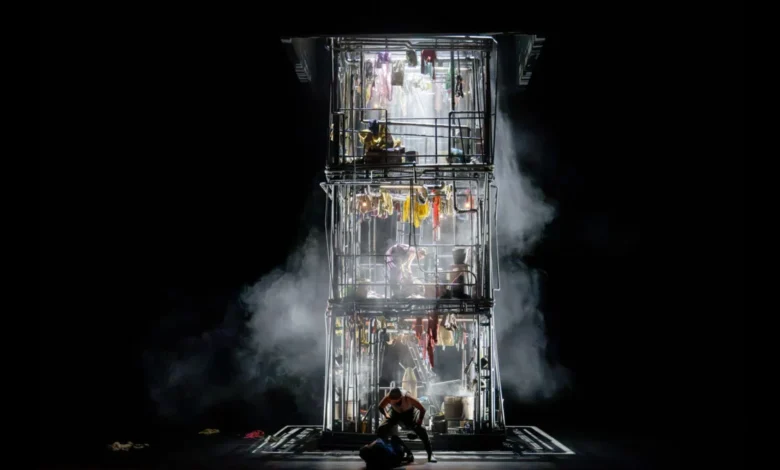
In stark contrast to the starlit Mozartian ruins, the production of Richard Strauss’s "Die Frau ohne Schatten" at the Grand Théâtre de Provence began in a state of near-total sensory deprivation. The opera, notorious for its immense orchestral requirements and complex symbolic narrative, opened with the character of the Amme (the Nurse) rocking in a chair. Observers noted the visual parallels to the works of Samuel Beckett, combined with the haunting archetypes of the Brothers Grimm.

This production, directed with a focus on the psychological interiority of its characters, utilized the darkness of the indoor theater to mirror the spiritual void at the heart of the story. The "Woman without a Shadow" represents a being unable to bear children and, by extension, unable to fully participate in the human experience. The struggle between the celestial realm of the Emperor and Empress and the gritty, terrestrial world of Barak the Dyer was rendered with stark, modern aesthetics. The Nurse, often portrayed as a purely villainous figure, was here presented with a maternal yet grotesque complexity, grounding the high-fantasy elements of Hofmannsthal’s libretto in a visceral reality.
Chronology and Historical Context of the Festival
The Aix-en-Provence Festival was founded in 1948, initially as a way to revitalize French culture in the aftermath of World War II. Its first production was "Così fan tutte," performed in the same Archevêché courtyard that hosted this year’s "Magic Flute." Over the decades, the festival has evolved from a Mozart-centric boutique event into a massive international operation that commissions new works and hosts radical reinterpretations of the standard repertoire.
The 2024 season fits into a broader timeline of the festival’s expansion:
- 1948: Founding of the festival by Gabriel Dussurget.
- 2007: Opening of the Grand Théâtre de Provence, allowing for larger-scale works like those of Wagner and Strauss.
- 2018: Pierre Audi takes over as Artistic Director, emphasizing a blend of multidisciplinary arts and diverse directorial voices.
- 2024: The current season highlights a "Darkness to Light" theme, featuring six major opera productions and dozens of concerts.
The inclusion of "Die Frau ohne Schatten" is particularly significant, as the work is rarely staged due to its difficulty. It requires five world-class dramatic soloists and an orchestra of over 100 musicians, making it a "litmus test" for the technical and financial capabilities of any opera house.
Supporting Data and Economic Impact
The Aix-en-Provence Festival is not only a cultural landmark but also a significant economic driver for the Provence-Alpes-Côte d’Azur region. According to financial reports from previous seasons, the festival operates on an annual budget of approximately €25 million to €30 million. Roughly 40% of this budget is typically covered by ticket sales and private philanthropy, while the remainder is subsidized by the French Ministry of Culture and local regional authorities.
Statistical highlights of the festival’s impact include:

- Attendance: An average of 75,000 to 85,000 spectators per season.
- Tourism: Approximately 30% of attendees travel from outside of France, contributing significantly to the local hospitality sector.
- Employment: The festival generates over 500 seasonal jobs, including technical crews, administrative staff, and hospitality workers.
- Media Reach: Performances are frequently broadcast via Arte and France Musique, reaching millions of viewers worldwide and cementing the festival’s "brand" as a leader in high-art innovation.
Official Responses and Artistic Implications
Artistic Director Pierre Audi has emphasized that the 2024 program was designed to reflect the anxieties and hopes of the contemporary era. In statements regarding the season’s launch, the festival administration noted that the juxtaposition of Mozart and Strauss was intentional, aimed at showing how different centuries have grappled with the concept of "humanity."
Critics have responded favorably to the high production values, though some have noted the "starkness" of the Strauss production as a challenging experience for the audience. The decision to cast Tamino as a child in "The Magic Flute" has sparked a debate among traditionalists and modernists, a hallmark of the Aix-en-Provence experience. Proponents of the vision argue that it strips away the Masonic tropes that can feel dated, focusing instead on a universal story of growth.
From a musical standpoint, the festival continues to employ top-tier ensembles. This year features the Orchestre de Paris and the Balthasar Neumann Ensemble, ensuring that the period-appropriate sounds for Mozart and the massive, late-Romantic textures for Strauss are delivered with archival precision and modern vitality.
Broader Impact on the Global Opera Landscape
The success of the Aix-en-Provence Festival in 2024 serves as a vital indicator of the health of the performing arts in a post-pandemic world. By successfully mounting a production as resource-intensive as "Die Frau ohne Schatten," the festival demonstrates that there is still a robust appetite for "Grand Opera," provided it is presented through a modern, thoughtful lens.
Furthermore, the festival’s commitment to diversity and the inclusion of younger audiences through its "Aix en Juin" outreach programs has set a precedent for other European festivals. The "Darkness to Light" theme resonates beyond the stage, reflecting a broader cultural desire for renewal and clarity in an increasingly complex global landscape.
As the festival continues through the summer months, the dialogue between the ruins of Mozart’s world and the shadows of Strauss’s psyche will likely remain the focal point of critical discussion. By grounding these fantastical stories in human vulnerability—represented by a rocking chair in the dark or a young boy in a ruined courtyard—the Aix-en-Provence Festival reaffirms the relevance of opera as a mirror to the human soul. The 2024 season stands as a testament to the enduring power of the lyric stage to illuminate the darkest corners of experience, guiding the audience, much like Tamino and the Empress, toward a necessary and transformative light.