Memphis Grizzlies Part Ways with Guard DAngelo Russell Before Regular Season Tips Off in Roster Squeeze

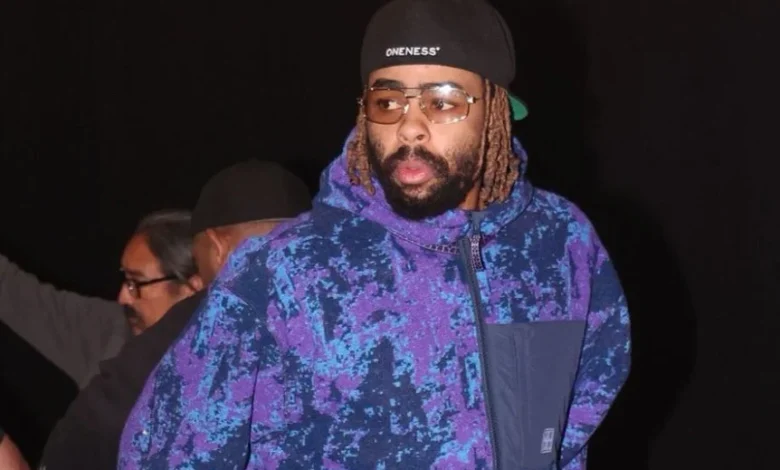
The National Basketball Association offseason is rarely short on dramatic maneuvers, but few veterans have experienced a whirlwind quite like the one navigating the career of guard DAngelo Russell. In a move that highlights the ruthless arithmetic of roster construction under the league’s modern collective bargaining agreement, the Memphis Grizzlies officially announced they have waived the 30-year-old playmaker. The decision, first reported by ESPN NBA insider Shams Charania, brings an abrupt halt to Russell’s tenure in Tennessee before he ever logged a single minute in a regular-season game for the franchise.
For the Grizzlies, the transaction was born out of sheer mathematical necessity. With training camp looming and the front office facing a severe roster crunch, the team had to make difficult personnel choices to comply with league regulations regarding maximum squad sizes and luxury tax considerations. By parting ways with Russell prior to his salary becoming fully guaranteed or forcing a more disruptive trade, the Grizzlies cleared a vital roster spot, leaving the veteran guard to navigate the waiver wire as an unrestricted free agent with ample time to secure a new home before opening night.
A Multi-Team Odyssey: Tracing Russell’s Recent Route
The past twelve months have tested the resilience and adaptability of the veteran guard, whose journey across the league map has accelerated rapidly. Russell’s short-lived stint in Memphis was the final destination of a complex itinerary that began well before the ink dried on his latest contract.
In July, Russell found himself packaged into a massive, highly publicized six-team blockbuster trade that reconfigured several rosters across the league. As part of that convoluted transaction, which notably featured superstar Anthony Davis moving to a new franchise, Russell was initially dispatched to the Washington Wizards. His stay in the nation’s capital, much like his subsequent stop in Memphis, proved to be little more than a temporary layover.
Prior to the Washington and Memphis chapters, Russell wore the uniform of the Dallas Mavericks, where he finished out the previous campaign. The Mavericks had utilized him to stabilize their backcourt rotation and inject secondary playmaking into a squad chasing postseason positioning. However, the fluid nature of roster management in today’s NBA often turns productive rotation pieces into movable salary-cap assets. Carrying an expiring contract valued at approximately $6 million for the 2026–27 season, Russell’s deal made him an attractive piece for general managers looking to balance books or facilitate multi-team deals, ultimately landing him in the hands of the Grizzlies front office.
Statistical Breakdown: Evaluating Russell’s Production and Skill Set
As Russell clears waivers and enters the open market, front offices across the league are carefully evaluating his statistical profile to determine how he can contribute in a new environment. Once heralded as a franchise centerpiece and a high-volume offensive engine during his earlier All-Star campaigns, Russell’s career trajectory has naturally evolved. At 30 years old, he is no longer expected to carry the primary scoring burden for a contending team; instead, his value is measured by his ability to anchor a second unit, orchestrate an offense, and provide steady veteran poise.
A close examination of his most recent sample size offers a clear picture of his current capabilities. During his 26-game tenure with the Dallas Mavericks last season, Russell averaged 10.2 points and 4.0 assists per contest. While those numbers represent a statistical dip from his peak scoring years, they underscore his utility as a reliable facilitator who can organize an offense when starters rest.
However, prospective suitors will also have to weigh fluctuations in his shooting efficiency. Last season, Russell shot 29.5 percent from beyond the arc—a noticeable decline from the reliable perimeter marksmanship that defined earlier stretches of his career. For a modern combo guard, outside shooting is often the baseline metric that dictates floor spacing and overall offensive viability. Teams currently running analytics models on Russell will need to determine whether his three-point dip was an anomaly tied to role adjustments or a trend that requires structural fixing by their player development staff.
Despite shooting concerns, Russell’s foundational skill set remains attractive to talent-deficient benches. He excels at operating the pick-and-roll, utilizing his basketball IQ to probe defenses, find rolling big men, or create mid-range separation when possessions break down. Over a decade of service in NBA rotations has equipped him with a deep understanding of defensive coverages, making him a low-risk, high-reward acquisition for teams seeking seasoned backcourt depth.
Market Speculation and Potential Landing Spots
In the wake of his release from Memphis, the NBA rumor mill has kicked into high gear. Analysts, pundits, and fans alike have begun speculating about where the veteran guard might land next. Among the most frequently discussed potential fits are eastern conference contenders such as the Miami Heat and the Philadelphia 76ers.
Both organizations possess well-documented needs for supplementary backcourt playmaking and veteran leadership off the bench. The Heat, known for their rigorous developmental culture and emphasis on defensive accountability, could theoretically view Russell as a complementary piece to ease the playmaking burden on their primary starters. Similarly, the 76ers continually seek versatile guards who can shoulder offensive responsibilities during non-minutes involving their primary superstars.
Whether concrete discussions between Russell’s representation and these specific front offices will materialize remains to be seen. Because he was waived rather than bought out from a newly signed multi-year deal, any interested franchise can sign him to a fresh agreement once he clears the 48-hour waiver wire period. The $6 million figure that accompanied his name in Memphis simply reflects the expiring salary slot he inherited in the multi-team trade, meaning his next contract will be negotiated independently based on current market demand.
Broader Implications for Roster Construction and the Waiver Wire
Russell’s sudden departure from Memphis serves as a microcosm of the modern NBA landscape, where the middle class of veteran players frequently finds their job security dictated by luxury tax thresholds, apron restrictions, and roster flexibility. Under the current Collective Bargaining Agreement, front offices are heavily penalized for maintaining deep, expensive benches, turning the back end of 15-man rosters into a revolving door of minimum-salary players and expiring contracts.
For the Grizzlies, cutting ties with a player before training camp allows the coaching staff to focus exclusively on the core rotation pieces who will actually feature in head coach Taylor Jenkins’ game plans. It avoids the awkward locker room dynamic of carrying a veteran who knows he is out of the long-term picture while opening a vital developmental slot for younger, cost-controlled prospects.
For Russell, the upcoming chapter of his career will test his ability to embrace a specialized role. Having transitioned swiftly from Dallas to Washington, and subsequently to Memphis within a matter of months, the veteran guard has mastered the art of professional transience. His decade-long survival in the league speaks volumes about his talent and locker room reputation. As he waits for his next phone call, the overarching question is no longer whether Russell belongs in an NBA rotation, but rather which forward-thinking franchise will harness his playmaking intellect to push their second unit over the top.