The landscape of modern jazz is currently defined by a fascinating tension between the grandiosity of symphonic traditions and the raw, spontaneous energy of small-group improvisation. This duality is captured in three significant new releases that span the spectrum of the genre: the Metropole Orkest’s celebratory 80th-anniversary album Arakatak, Gianmarco Ferri’s trio recording Sweet And Lovely, and the second volume of the Dialogue series by Albert Marqués and Rachel Therrien. These works represent not only the individual artistic growth of the performers but also the evolving role of jazz as a medium that bridges the gap between classical structure, cinematic atmosphere, and traditional swing.
The Metropole Orkest and the Evolution of the Jazz Orchestra
The Metropole Orkest, based in the Netherlands, stands as a unique institution in the global music scene. Founded in 1945 by Dolf van der Linden at the behest of Dutch public broadcasters, the ensemble has survived decades of cultural shifts by maintaining a hybrid identity. With 50 permanent musicians, the orchestra melds a full symphonic string section with a traditional big band brass and rhythm section. Its latest release, Arakatak, marks an incredible 80th anniversary for the "juggernaut" ensemble, a milestone that few jazz-adjacent organizations ever reach.
Under the direction of Miho Hazama, who took over as chief conductor in 2020, the orchestra has leaned into its reputation for versatility. Hazama, an astute composer and arranger in her own right, has steered the group through a repertoire that honors its history while embracing contemporary complexity. Arakatak is a departure from the orchestra’s recent high-profile collaborations with acts like Snarky Puppy and Jacob Collier, choosing instead to focus on the internal talent and the "luminaries" associated with the group’s inner circle.
The album features a diverse array of compositions. The title track, "Arakatak," is penned by French horn player Morris Kliphuis, showcasing the ensemble’s ability to integrate "non-traditional" jazz instruments into a driving, modern context. Other contributors include saxophonists Tineke Postma and Donny McCaslin, drummer Mark Guiliana, and pianist Shai Maestro. However, the sheer scale of the Metropole Orkest presents a paradox for modern composers. While the orchestra offers a "Cavaillé-Coll organ" level of power, critics have noted that the nuance of individual compositions can sometimes be swallowed by the "orchestral longueurs."
For instance, McCaslin’s "Luminosity" and Guiliana’s "The Most Important Question" have been characterized as "cinematic," a term that in jazz circles often serves as a double-edged sword. While the music is evocative and technically brilliant, it occasionally drifts into the realm of high-grade film music, where the "roar" of the 50-piece ensemble risks overshadowing the improvisational "spark" that defines jazz. The closing track, Louis Cole’s "Doesn’t Matter," further complicates the genre definition, echoing the English rhapsodies of Vaughan Williams or Gerald Finzi more than the swing of the mid-century. This fusion highlights the ongoing debate within the industry regarding the boundaries of jazz in a "post-genre" world.
Gianmarco Ferri and the Preservation of the Hard-Bop Tradition
In contrast to the symphonic scale of the Metropole Orkest, Italian guitarist Gianmarco Ferri offers a masterclass in the "less is more" philosophy of the jazz trio. His latest album, Sweet And Lovely, released via WoW Records, serves as a follow-up to his 2024 release On The Scene. Ferri’s work represents the "mainstream" or "hard-bop" side of the contemporary jazz spectrum, focusing on clarity, swing, and the foundational influence of Wes Montgomery.
The recording features a cross-continental collaboration, a common trend in the modern European jazz scene. While drummer Luca Santaniello returns from Ferri’s previous outing, the American presence is reinforced by the inclusion of bassist Doug Weiss, who replaces Stefano Battaglia. Weiss brings a "Ray Brown-like drive" to the proceedings, providing a firm, uncompromising rhythmic foundation that allows Ferri to explore "super-cool" melodic lines.
The repertoire on Sweet And Lovely is a mix of standards and original compositions. The trio tackles "These Foolish Things" and "I Hear A Rhapsody" with a relaxed, professional ease that emphasizes the "sweetness" promised in the title. However, the album’s energy peaks during the final four tracks, all of which are Ferri originals. In tracks like "You Missed The Turn," Ferri demonstrates his ability to pen ballads that feel timeless yet fresh, while "Butch And Butch" (an Oliver Nelson cover) showcases his capacity for high-speed, post-bop navigation. Ferri’s approach suggests that while innovation is vital, there remains a significant audience and artistic value in the "good, relaxed all-round mainstream" set.
The Art of the Duo: Marqués and Therrien’s Dialogue
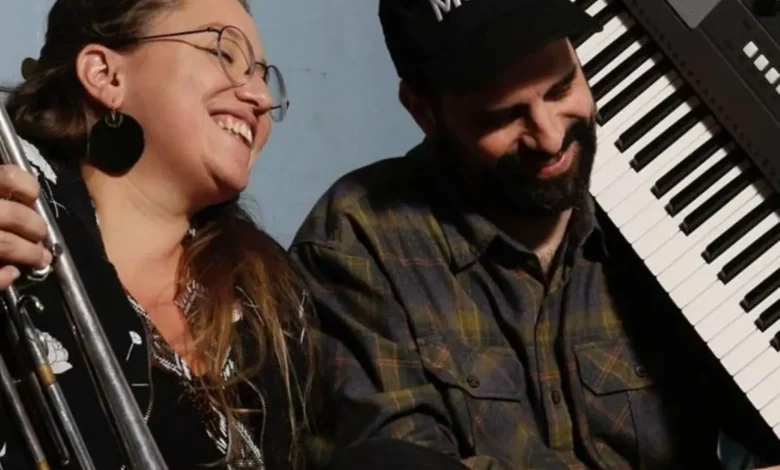
The third pillar of this contemporary jazz snapshot is the duo of Spanish pianist Albert Marqués and Canadian-American trumpeter Rachel Therrien. Their latest project, Dialogue Vol. II, released by Chronograph Records, strips the music down to its most fundamental conversational elements. The trumpet-piano duo is a challenging format with a deep historical lineage, most notably the 1928 partnership of Louis Armstrong and Earl Hines.
Marqués and Therrien lean into this history, performing 13 charts that range from "Watermelon Man" to "A Night In Tunisia." The "joyous spontaneity" of the album is its defining characteristic. Marqués, whose virtuosity has been compared to that of Oscar Peterson, fills the sonic space with a florid, percussive style that complements Therrien’s lyrical and often "Latin-tinged" brass work.
The duo’s approach to standards is "quixotic." On "I Mean You," Marqués lapses into a stride piano style, while "On Green Dolphin Street" is introduced through a "gauze" of abstraction before the melody asserts itself. One of the most striking tracks is "La Cucaracha," which Therrien begins with a "meditative gravity" before transitioning into a festive, carnival atmosphere. This ability to take well-known, even "clichéd" melodies and return them "in good nick" after a transformative journey is the hallmark of their collaboration.
Chronology of Key Events and Releases
To understand the context of these releases, it is helpful to view them within a timeline of the artists’ recent activities and the historical milestones of the institutions involved:
- 1945: The Metropole Orkest is founded in the Netherlands.
- October 2022: Albert Marqués and Rachel Therrien record Dialogue Vol. II in New York City, establishing a follow-up to their successful first volume.
- 2020: Miho Hazama is appointed Chief Conductor of the Metropole Orkest, beginning a new era of contemporary programming.
- June 2024: Critical reception of Gianmarco Ferri’s On The Scene establishes him as a rising star in the European mainstream jazz circuit.
- 2024-2025: The Metropole Orkest celebrates its 80th anniversary with the release of Arakatak and a series of live performances honoring former conductors like Vince Mendoza.
- October 25, 2025: Gianmarco Ferri records Sweet And Lovely in Civitavecchia, Italy, marking a continuation of his collaboration with American rhythm sections (per official discography notes).
Supporting Data and Technical Analysis
The production values and technical choices across these three albums highlight different priorities in modern recording.
- Orchestral Complexity: Arakatak utilizes a full 50-piece ensemble. The technical challenge of mixing a jazz rhythm section (Peter Tiehuis on guitar, Hans Vromans on piano, Martijn Vink on drums) with a symphonic string and horn section requires a "high-definition" approach. The album’s length (56:00) reflects the expansive nature of the compositions.
- Trio Intimacy: Sweet And Lovely (44:25) benefits from a "close recording" style. This technical choice ensures that the nuances of Doug Weiss’s bass and Luca Santaniello’s drumming are audible alongside Ferri’s guitar. This creates a "live in the room" feel that is essential for mainstream hard-bop.
- Duo Dynamics: Dialogue Vol. II (59:15) features 13 tracks, a high number for a duo album. The recording focuses on the "sonic ambience" of the piano and trumpet. The lack of a rhythm section places the entire burden of time-keeping and harmonic structure on Marqués, a challenge he meets with "walking bass" lines and stride techniques.
Broader Impact and Implications for the Jazz Industry
The release of these three disparate projects underscores several key trends in the jazz industry today. First, the "institutionalization" of jazz through organizations like the Metropole Orkest provides a vital platform for large-scale composition that would otherwise be financially unfeasible. However, the critique of the "cinematic" nature of such works suggests a tension between the need for "popularity" and the desire for "improvisational grit."
Second, the "globalization" of jazz is evident in all three works. The Metropole Orkest is a Dutch institution led by a Japanese conductor featuring American and European composers. Gianmarco Ferri is an Italian guitarist working with American sidemen. Rachel Therrien and Albert Marqués represent a Canadian-Spanish-American nexus. This cross-pollination ensures that jazz remains a "living" language, even as it looks back to its 20th-century roots.
Finally, the success of these albums demonstrates that there is still a robust market for "traditional" forms—whether it be the symphonic jazz of the 1940s, the hard-bop of the 1950s, or the duo dialogues of the 1920s. By recontextualizing these traditions for a 21st-century audience, these artists ensure that the "most important question" in jazz—where the music goes next—remains answered by a diverse and vibrant array of voices.