John R. Miller Explores Social Decay and Existential Resilience in Fifth Studio Album The Great Unknowing

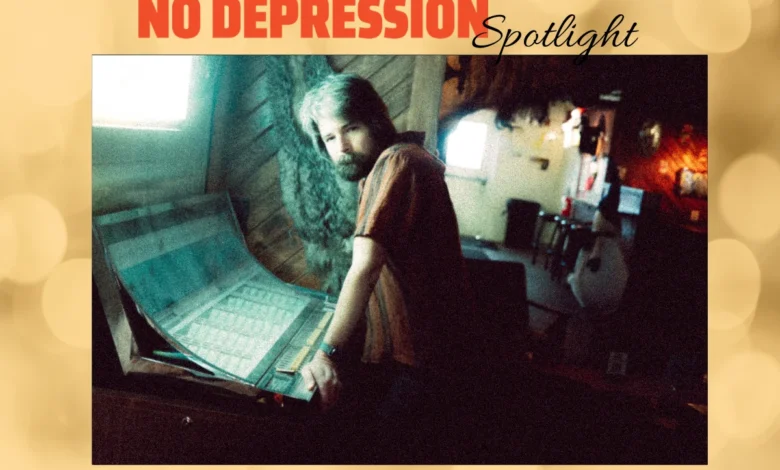
John R. Miller, the West Virginia-born singer-songwriter whose narrative-driven lyricism has become a cornerstone of the modern Americana movement, officially released his fifth studio album, The Great Unknowing, today via Rounder Records. Marking a significant evolution in both his sonic palette and thematic scope, the project has earned Miller the title of Spotlight Artist for July 2026 by the roots-music authority No Depression. The album arrives at a moment of profound cultural and economic transition, positioning Miller not merely as a musician, but as a chronicler of a society grappling with the erosion of established norms and the rise of a new, more visceral class consciousness.
The Thematic Core of The Great Unknowing
The album’s title is derived from its third track, “Tollbooth,” a song that encapsulates the pervasive sense of listlessness and "torpid yearning" that defines the current era. In “Tollbooth,” Miller paints a stark, unglamorous picture of the American landscape, using the mundane imagery of a turnpike plaza—complete with overflowing toilets and cold fluorescent lighting—as a metaphor for a broader social stagnation. The lyrics, “Under the big silver sky / No exit sign / I set forth on the great unknowing,” suggest a departure from the traditional "American Dream" toward an uncertain, perhaps unnavigable, future.
While Miller acknowledges that some of the imagery is intended to be tongue-in-cheek, the underlying sentiment is one of resolute gravity. The album functions as a short but potent history of the unraveling of the social construct. Through his songwriting, Miller addresses the "moral squalor" of a system that prioritizes greed and progress over human welfare. This is most evident in lines like, “For every crusted nickel I’ve been dimed / I could’ve made it back while I was in my prime / And if you can’t pay / They bill you anyway.” Such lyrics resonate with a listener base that has become increasingly disillusioned with the economic structures of the mid-2020s.
A Career Defined by Authentic Narratives
John R. Miller’s ascent to his current position as a leading voice in Americana has been a decade-long journey rooted in the tradition of Appalachian storytelling. Before his solo career gained national traction, Miller spent years touring with various outfits, including the indie-folk band The Engine Lube and the more punk-inflected Prison Book Club. His 2021 solo debut on Rounder Records, Depreciated, was widely praised for its grit and honesty, followed by 2023’s Heat Comes Down, which further refined his blend of country-blues and soulful folk.
The release of The Great Unknowing in July 2026 represents a culmination of these influences. Over the past five years, Miller’s work has transitioned from personal tales of travel and substance use to a broader, more outward-looking critique of the Western world. This shift reflects a larger trend in the music industry where artists are moving away from escapism in favor of "grounding" themselves in reality. Miller himself has noted that the current social climate has forced a "reset" on what normalcy means, stating that the realities of class struggle have been "shoved in people’s faces" to the point where they can no longer be ignored.
Economic Context and the Rise of Class Consciousness
The release of The Great Unknowing coincides with a period of intense economic scrutiny in the United States and across the West. According to data from the Bureau of Economic Analysis and various social research institutes in early 2026, the gap between the cost of living and stagnant wages in rural and semi-urban areas has reached a critical juncture. This "class consciousness" that Miller references is supported by recent polling data suggesting that a record number of Americans now identify as "working class" rather than "middle class," a shift that has profoundly impacted the themes explored in contemporary roots music.
Miller’s disgust with "leaving human beings uncared for in the name of greed" is not just a poetic stance but a reflection of the socio-economic data defining the 2020s. The decline of infrastructure, the corporatization of public spaces (symbolized by the "Tollbooth"), and the relentless pursuit of profit at the expense of community are all themes that Miller weaves into the fabric of his music. By doing so, he aligns himself with a tradition of protest music, though his approach is more observational and pensive than overtly polemical.
Production and Sonic Evolution
Musically, The Great Unknowing maintains the high standard of craftsmanship associated with Rounder Records. The production, while polished, allows for the raw edges of Miller’s fingerpicking style and his weary, soulful vocal delivery to remain at the forefront. The album features a mix of upbeat arrangements and somber ballads, creating a dynamic listening experience that mirrors the "listless unease" of the subject matter.
Industry analysts have noted that the "Americana" genre has seen a 15% increase in streaming shares since 2024, largely driven by a demand for "authentic" and "grounded" storytelling. Miller’s fifth album is expected to perform well within this market, appealing to both longtime fans of traditional folk and a younger demographic that values lyrical transparency. The album’s ability to find beauty and "startling clarity" within the crumbling world is what critics are calling its greatest strength.
Industry and Peer Reactions
While official reviews are still surfacing, early reactions from the music community have been overwhelmingly positive. Peers within the Nashville and Appalachian music scenes have lauded Miller for his ability to capture the zeitgeist without falling into the traps of "clickbait" songwriting or superficial political posturing.
"John has always been a writer’s writer," says an industry insider at Rounder Records. "But with The Great Unknowing, he’s tapped into something much larger than himself. He’s speaking to a collective feeling of being lost in a system that doesn’t have an exit sign. It’s essential liturgy for anyone trying to make sense of the world right now."
No Depression, in its July 2026 Spotlight, characterizes the album as a necessary corrective to the "Broadway bar crowd" style of country music that often prioritizes spectacle over substance. The publication notes that Miller’s work provides a "vantage point" that is both unsettling and enlightening, offering listeners a way to process the complexities of modern life.
Broader Implications and the Search for Truth
The significance of The Great Unknowing extends beyond its commercial performance or its place in Miller’s discography. It serves as a cultural artifact of the mid-2020s, a time when the "grip on what is true and what’s real" felt increasingly tenuous. Miller’s personal quest to ground himself in truth is a sentiment shared by millions, and his music provides a soundtrack for that search.
As the world continues to navigate the "great unknowing," Miller’s work suggests that clarity can only be found by facing the "moral squalor" head-on. By documenting the "toilets overflowing" and the "cold fluorescents," he validates the lived experience of those who feel left behind by progress. In this sense, the album is more than just a collection of songs; it is a testament to the resilience of the human spirit in the face of systemic decay.
Chronology of the Release and Upcoming Events
The rollout for The Great Unknowing is scheduled to continue throughout the summer of 2026, with several key milestones:
- July 1, 2026: Official album release on all streaming platforms and physical formats (vinyl, CD).
- July 5, 2026: Commencement of the "Great Unknowing Tour," starting in Charleston, West Virginia, and moving through the Rust Belt and the South.
- July 15, 2026: A televised performance and interview on national morning programs to discuss the album’s themes of class consciousness.
- Late July 2026: A series of "Liturgy for Humanity" pop-up performances in community centers and non-traditional venues, emphasizing the album’s focus on the common person.
In conclusion, John R. Miller’s The Great Unknowing is a landmark release that captures the specific anxieties and realizations of 2026. Through his unflinching look at the social construct and his commitment to finding truth in the mundane, Miller has solidified his role as one of the most important voices in contemporary American music. As the world "crumbles slowly," his music offers a form of grounding that is as essential as it is rare.