The Taxman Takes It All: Great White Shark Predation on Striped Bass Highlights Evolving Dynamics in Cape Cod Waters

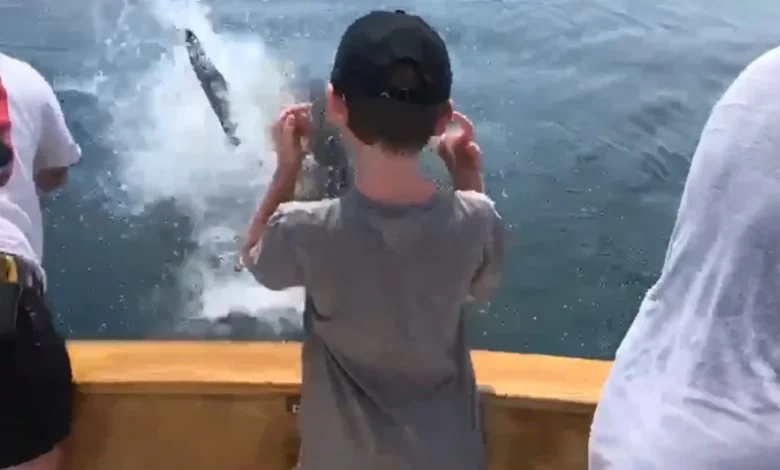
The waters off the coast of Cape Cod, Massachusetts, have long been a premier destination for recreational anglers seeking the thrill of landing a striped bass. However, as the regional marine ecosystem undergoes significant shifts, these anglers are increasingly finding themselves in competition with the ocean’s apex predators. A recent incident involving a charter boat from Columbia Sportfishing in Orleans serves as a stark illustration of this changing dynamic, where a routine catch was abruptly intercepted by a juvenile great white shark, providing a visceral reminder of the risks and realities of modern saltwater fishing in the Atlantic.
The Anatomy of an Ambush
The incident, which took place in the waters near Rock Harbor, occurred during a standard fishing excursion. As a guide from Columbia Sportfishing was handlining a hooked striped bass toward the vessel, the fish’s erratic splashing—a classic distress signal—drew the immediate attention of a nearby shark. The predatory strike was near-instantaneous. The shark, identified as a juvenile great white, lunged at the striper with such momentum that it breached the surface, its tail fin striking the hull of the boat before it receded back into the depths.
For the family on board, the event was a jarring encounter with the raw power of marine wildlife. While no injuries were reported, the speed and proximity of the encounter underscore the challenges faced by charter operators who navigate these waters. The event has since been recirculated by marine advocacy groups, such as the Massachusetts Shark Research Program, to serve as a cautionary example of the high-stakes environment now characteristic of the Outer Cape.
The Ecological Catalyst: The Recovery of the Gray Seal
To understand the frequency of these encounters, one must look at the environmental restoration efforts of the past several decades. The Marine Mammal Protection Act of 1972 proved highly effective in allowing gray seal populations—which had been hunted to near-extirpation in New England—to rebound significantly. As seal colonies have proliferated along the shores of Cape Cod, they have created a primary food source for great white sharks, which migrate to the region in large numbers during the summer and fall months.
According to data from the Atlantic White Shark Conservancy, the "aggregation" of sharks in the Cape Cod area is among the highest in the world. These predators are no longer limited to deep, offshore waters; they actively patrol the shallow, turbulent sandbars extending from Chatham to Provincetown. This proximity to the shoreline—often just yards from where beachgoers swim and surf—has forced a total recalibration of coastal safety and recreational maritime activities.
Technological Mitigation and Safety Protocols
The rise in shark activity has necessitated a proactive approach to public safety and angler behavior. In the fishing community, the term "the taxman" has become common vernacular, referring to the inevitable loss of catch to sharks. Beyond the psychological impact of losing a fish, the presence of these predators presents a safety concern for crew members handling lines near the water’s surface.
Local charter captains have increasingly adopted adaptive tactics to mitigate these risks. These include:
- Rapid Relocation: Implementing a "no-wait" policy upon the sighting of a shark, where engines are engaged to move the vessel immediately to prevent predatory conditioning.
- Acoustic Monitoring: Utilizing real-time data provided by the Atlantic White Shark Conservancy’s network of acoustic receivers.
- Technological Integration: Encouraging the use of the Sharktivity app, which provides crowdsourced and verified sightings, allowing captains to map predator movements in real-time.
Despite these measures, the biological reality remains: the vibrations generated by a struggling fish are highly detectable by the sensory systems of sharks. The lateral line of a shark is sensitive to the low-frequency vibrations caused by the panicked thrashing of a hooked striped bass, essentially functioning as an underwater dinner bell.
Comparative Regional Data
The Cape Cod experience is not isolated, but it is currently the most documented. Scientific studies conducted by the state of Massachusetts indicate that the seasonal migration of white sharks coincides precisely with the seasonal peak of recreational fishing for species like striped bass and bluefish.
While public concern often centers on human-shark interactions, the ecological impact of this predation is a subject of ongoing study. Some marine biologists suggest that the increased presence of sharks is a sign of a healthy, functioning ecosystem. However, for the recreational fishing industry, which contributes millions of dollars to the Massachusetts economy, the predation of catch is a significant operational hurdle. Research shows that in regions with high shark density, the "catch-and-release" mortality rate can increase when sharks intervene, as the stress on the fish—followed by a shark strike—often leads to total loss of the resource.
Official Responses and Public Awareness
The Massachusetts Shark Research Program has reiterated that the video footage captured in Orleans is not an anomaly, but rather a standard example of natural behavior in a predator-rich environment. In official statements following the recirculation of the footage, experts emphasized the importance of situational awareness.
"Fishermen should keep this in mind when retrieving and releasing fish," the program noted on social media, highlighting the need for anglers to stay vigilant. The state of Massachusetts has invested heavily in public infrastructure to keep the public informed, including the installation of emergency call boxes at high-risk beaches and the implementation of extensive "Stop the Bleed" training for lifeguards stationed along the Outer Cape.
Broader Implications for Maritime Recreation
The intersection of human recreation and apex predator habitats is reaching a critical threshold. As water temperatures in the Gulf of Maine continue to rise, scientists anticipate that the range of these predators may expand even further north, potentially altering the dynamics of saltwater fishing in regions that were previously considered "low risk."
The incident involving the Columbia Sportfishing charter highlights a permanent shift in the regional maritime landscape. The Cape Cod coast is no longer merely a recreational playground; it is a complex biological corridor. For the recreational angler, the takeaway is clear: the environment is shared. Success on the water now requires not just technical skill in landing a fish, but a sophisticated understanding of marine ecology and a commitment to safety protocols that account for the presence of the ocean’s most formidable residents.
As the season progresses, state authorities continue to urge the public to utilize the Sharktivity app and maintain a "heads-up" approach to coastal activities. Whether for the angler hauling in a striper or the swimmer cooling off in the surf, the message remains the same: the ecosystem is dynamic, the predators are present, and the "taxman" is always patrolling the perimeter.