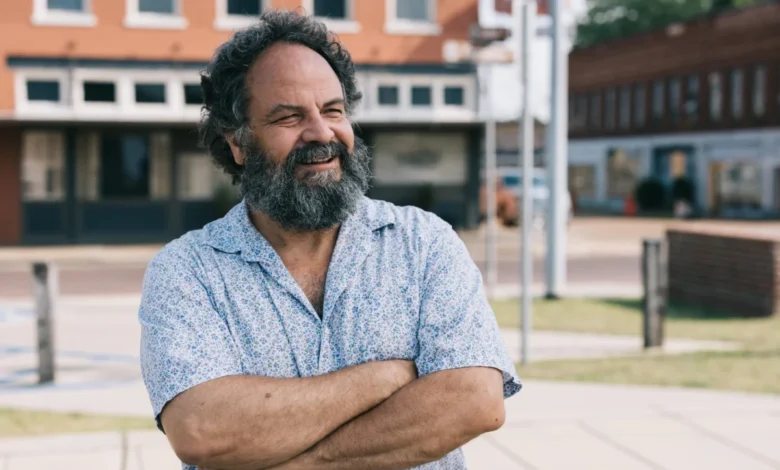
The North Mississippi Hill Country Blues represents one of the most distinct and rhythmically hypnotic subgenres in American music, yet it remains a tradition defined more by its geography and cultural lineage than by rigid musicological borders. At the center of this discourse is Scott Barretta, an instructor at the University of Mississippi and host of the long-running Mississippi Public Broadcasting program "Highway 61." As the director of the acclaimed documentary Shake ‘Em on Down, Barretta has spent decades documenting a scene that transitioned from the insular, communal juke joints of northern Mississippi to the global stage.
Geographic and Cultural Foundations
While the "Hill Country" label is often used colloquially to describe the blues originating from the rolling landscapes of Marshall, Panola, Tate, Lafayette, and Tippah counties, its boundaries are fluid. Unlike the Delta Blues, which is historically associated with the fertile, flat expanse of the Mississippi Delta, the Hill Country sound is characterized by a percussive, trance-like quality, often driven by the slide guitar and an emphasis on repetitive, hypnotic grooves.
The region serves as a nexus for legendary figures whose influence transcends the state lines. Musicians like Junior Kimbrough, R.L. Burnside, and Othar Turner utilized the geography of the Hill Country to cultivate a sound that was inherently tied to community gatherings, such as the storied three-day picnics. Fred McDowell, though originally hailing from Tennessee, settled in Como, Mississippi, and became the stylistic architect for much of what would later be codified as the Hill Country sound.
Scholars like David Evans have argued for a more expansive definition of this region, one that reaches further east into Mississippi and north into Tennessee. By this broader metric, figures such as Aberdeen’s Booker White and Columbus’s Big Joe Williams are inextricably linked to the aesthetic. However, the core of the tradition remains the local, intergenerational exchange of techniques—a practice that Barretta highlights as a "cultural and musical" identity rather than a formal, mapped territory.
A Chronology of the Hill Country Sound
The formalization of the term "Hill Country Blues" is a relatively modern phenomenon, largely gaining traction in the 1990s through the efforts of the Fat Possum record label and Robert Mugge’s seminal 1991 documentary, Deep Blues.
- 1959: Alan Lomax and Shirley Collins record Fred McDowell, introducing his slide guitar mastery to a wider audience via the Atlantic LP Roots of the Blues.
- 1960s: McDowell becomes a fixture of the folk revival, performing at the Newport Blues Festival and finding an unexpected champion in Bonnie Raitt. His influence extends to international audiences, most notably when the Rolling Stones recorded an iconic cover of his track "You Gotta Move."
- 1970s–1980s: Artists such as R.L. Burnside and Junior Kimbrough continue to perform in regional juke joints, largely ignored by the mainstream commercial music industry, which favored the more electrified blues of Chicago or the structured Delta sound.
- 1991: The release of Deep Blues brings the Hill Country aesthetic to a global audience, setting the stage for a commercial surge.
- 2000: The burning of Junior Kimbrough’s juke joint marks a symbolic end to an era of informal community gatherings.
- 2006: Kenny Brown launches the Hill Country Picnic, formalizing the tradition into an annual event that preserves the spirit of community.
The Role of the "Godfather"
Fred McDowell occupies a unique position in the blues canon. Unlike contemporaries such as Son House or Skip James, who were recorded in the 1920s and 30s before drifting into relative obscurity, McDowell was effectively "discovered" during the 1959 blues revival. His late-career success provided a bridge between the pre-war traditions and the burgeoning interest of the 1960s.
Barretta emphasizes that McDowell was not just a virtuoso, but a personable, magnetic figure whose style—percussive, slide-heavy, and rhythmically insistent—was designed for dancing. This "danceability" is a hallmark of the Hill Country, a departure from the more introspective, lyrical focus of other blues styles. By positioning McDowell as the godfather of the scene, Barretta’s work underscores how Burnside and others directly inherited and adapted the percussive patterns that defined McDowell’s legacy.
Commercialization and the Evolution of the Scene
The transition from local juke joints to global festival circuits has been a double-edged sword for the Hill Country community. In the late 20th century, artists like R.L. Burnside were playing to sparse audiences in Europe. By the late 1990s, however, through collaborations with rock-oriented artists like Jon Spencer, Burnside began performing in venues with capacities exceeding 1,000.
This commercialization has necessitated a shift in how the music is packaged and performed. While the core "scene" remains relatively small—consisting of perhaps 20 to 30 core musicians—the rise of festivals like the Hill Country Picnic and the Juke Joint Festival in Clarksdale has created a sustainable infrastructure for these artists. Clarksdale, in particular, has transformed into a blues hub, offering live music seven days a week, a stark contrast to the sporadic gig economy of the early 2000s.
Yet, this shift also brings challenges regarding authenticity and survival. Many younger Black musicians in Mississippi now adopt a wide-ranging repertoire, incorporating "Southern Soul" to maintain commercial viability in radio markets and church circuits. This flexibility is a survival strategy, though it leaves little room for the insular, traditionalist approach that once defined the Hill Country style.
Institutional Recognition: The Mississippi Blues Trail
To ensure these historical contributions are not lost to time, the Mississippi Blues Trail project has been instrumental. By installing historical markers at significant sites—from juke joints to the homes of legends—the state has provided a tangible map of a tradition that was once exclusively oral.
The project, which began with a modest grant for nine markers, has expanded significantly, thanks in part to private funding from artists like The Black Keys. Today, markers for figures like Jessie Mae Hemphill, Napoleon Strickland, and Sid Hemphill stand as silent testaments to the deep-rooted musical heritage of the northern counties. These markers do more than commemorate; they formalize the status of the Hill Country within the broader American cultural landscape.
The Next Generation: Ambassadors of the Tradition
The future of the Hill Country Blues rests on the shoulders of artists who are successfully bridging the gap between historical preservation and modern innovation. Cedric Burnside, grandson of R.L. Burnside, has emerged as a primary ambassador of the genre. His ability to oscillate between the guitar and drums, often while reuniting with his uncle Gary Burnside, demonstrates the fluid, collaborative nature of the family-based music tradition. His modern approach, characterized by a distinct, staccato guitar style, represents an evolution of the sound that respects its roots while engaging contemporary listeners.
Similarly, Sharde Thomas is revitalizing the fife and drum tradition—a pre-blues form that is among the most unique aspects of the Hill Country. By performing with two drummers and stripping back the traditional drum kit, Thomas is presenting this folklore to modern festival crowds. While these sets are often brief, they serve as vital entry points for audiences previously unexposed to the rhythmic complexities of Black fife and drum bands.
Analytical Perspective: The Sustainability of Tradition
The Hill Country Blues remains a "small scene" by design. Its lack of mass-market commercial saturation has, in many ways, protected it from becoming a caricature of itself. The reliance on a core group of performers and the focus on community-centric events like the Picnic suggest a model of sustainability that prioritizes depth over breadth.
However, the implications of this insularity are twofold. On one hand, the scene’s reliance on a limited number of families and locales preserves the specific, idiosyncratic nuances of the music. On the other hand, it creates a demographic bottleneck. As the older generation passes, the responsibility to "keep up this spirit of community" becomes increasingly heavy for the younger artists.
Ultimately, the Hill Country Blues persists because it is functional—it is music for dancing, for gathering, and for memory. Whether it is played in a roadside juke joint or at a national festival, the fundamental requirement remains the same: a steady, hypnotic groove that demands a physical response. As long as the community continues to find value in the repetition and the resonance of the Hill Country, the tradition will continue to find its way forward, evolving just enough to remain relevant without losing the raw, percussive heart that makes it one of the most vital threads in the tapestry of American music.