Ray Obiedo Slight Accent and the Contemporary Jazz Landscape: A Comparative Review of Recent Releases

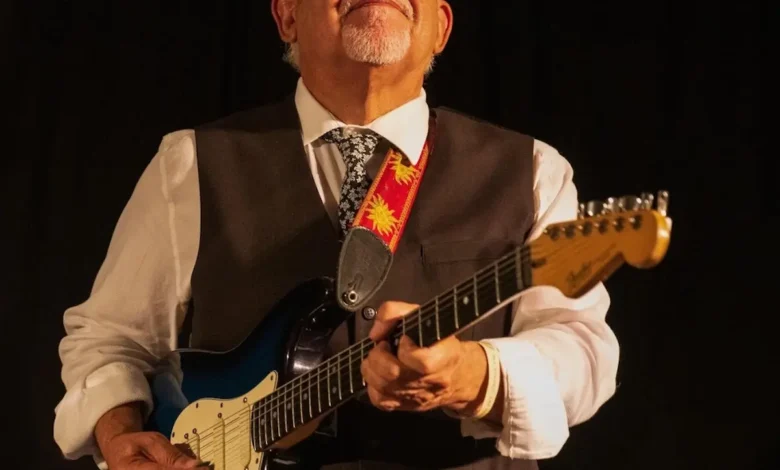
The contemporary jazz scene is currently navigating a period of stylistic diversification, ranging from the West Coast’s laid-back, organic sensibilities to the highly polished, engineered precision of the smooth jazz circuit and the niche, specialized arrangements of ensemble-driven projects. This report examines three distinct approaches to modern jazz production: the collaborative, veteran-led artistry of guitarist Ray Obiedo; the hyper-produced, rhythmically static world of Adam Hawley; and the brass-heavy, arranger-focused project of The Las Vegas Boneheads. Each of these releases serves as a case study in how modern jazz artists define their place within the industry, whether by embracing historical lineage or prioritizing technical perfection.
Ray Obiedo: The Synthesis of West Coast Heritage and Global Influence
Ray Obiedo’s latest project, Slight Accent, stands as a testament to the enduring influence of the San Francisco Bay Area jazz tradition. At 74, Obiedo has cultivated a career that spans over five decades, having contributed to approximately 50 albums as a sideman or producer. His methodology for Slight Accent highlights his role as a musical curator, drawing on a diverse pool of talent to create an environment that feels both sophisticated and inherently accessible.
The album serves as an archival bridge, most notably featuring the late harmonica legend Toots Thielemans. The inclusion of a performance of Henry Mancini’s "Slow Hot Wind" provides a poignant link to jazz history, demonstrating Obiedo’s commitment to preserving the melodic sensibilities of the mid-20th century. This historical reverence is balanced by contemporary collaborations, such as the spirited take on Bill Withers’ "Ain’t No Sunshine," featuring vocalist Chloë Jean.
Structurally, the album leans heavily on Afro-Latin rhythmic foundations, a hallmark of Obiedo’s career, which has long been shaped by the ethnic and cultural variety of the California coast. The production utilizes the arrangement skills of Norbert Stachel, whose horn charts provide the necessary "fiber" to anchor the guitarist’s silver-tongued, understated solos. The decision to feature the flugelhorn of Skylar Tang alongside the tenor saxophone of Bob Mintzer on Wayne Shorter’s "Footprints" offers a compelling example of tonal layering. By pairing the cutting, sharp edges of the saxophone with the softer, more resonant flugelhorn, Obiedo manages to re-contextualize a classic jazz standard, proving that even well-trodden ground can yield new perspectives when the personnel are selected with precision.
The Engineering Paradigm: Adam Hawley and the Smooth Jazz Aesthetic
In contrast to the organic, ensemble-heavy approach of Obiedo, the recent release Electric by Oregon-based guitarist Adam Hawley highlights a different facet of the modern music industry: the primacy of the production suite. Hawley’s album, while technically impressive, represents the aesthetic of the contemporary "smooth" jazz genre, where the focus shifts from improvisational spontaneity to the maintenance of a consistent, friction-less sonic texture.
Industry analysts have noted that the smooth jazz market often prioritizes high-fidelity engineering and unwavering rhythmic stability. In Electric, Hawley utilizes a digital-heavy approach to percussion, managed by producer Ramón Yslas. While the technical quality is beyond reproach, the album raises questions regarding the role of improvisation in modern jazz. The tracks, characterized by a relentless rock-influenced beat and a polished finish, prioritize the "loop" and the "groove" over the risk-taking traditionally associated with the genre.
This trend is not isolated to Hawley; his work as an executive producer for fellow trumpeter Evan Taylor suggests a broader movement toward "flawless" production. In the context of jazz history—a genre built on the vitality of the unexpected—the move toward pre-programmed, loop-oriented arrangements acts as a double-edged sword. While it creates a highly marketable product that resonates in specific commercial spaces, critics argue that it removes the "vitality" of the jazz experience. The implication for the future of the genre is clear: as production technology advances, the boundary between jazz-influenced pop and improvisational jazz will likely continue to blur, forcing audiences to choose between the comfort of sonic consistency and the challenge of unpredictable performance.
The Las Vegas Boneheads: Resurrecting the Arranger’s Craft
A different organizational model is presented by The Las Vegas Boneheads, whose project Stretchin’ Out highlights the importance of the arranger in large-ensemble jazz. Led by Curt Miller, the group features a nonet consisting of six trombones and a three-piece rhythm section. This configuration is a direct revival of the work of Dick "Stretch" McQuarry, who in the 1970s developed a complex library of charts specifically designed to compensate for the absence of traditional jazz instrumentation, such as trumpets and woodwinds.
The project is an exercise in both musicology and technical prowess. By treating the trombone section as a versatile entity capable of occupying registers from the contrabass to the piccolo, McQuarry’s arrangements create a soundscape that approximates a full big band. This is a deliberate attempt to preserve a specific era of jazz writing that emphasized the capabilities of a single instrument family.
The significance of this release lies in its archival value. In an era where many jazz ensembles are moving toward smaller, more agile units or relying on digital production, the Boneheads’ commitment to a large-scale, brass-exclusive ensemble is a significant cultural statement. It highlights a tradition of "bone-only" treatment that was once a staple of sophisticated jazz arranging but has since become a rarity. The technical difficulty of maintaining intonation and balance across six trombones, as seen in tracks like "Stablemates" and "This Masquerade," underscores the rigorous training and discipline required to sustain this niche, yet historically vital, style.
Comparative Analysis: Trends in Modern Jazz Production
The following table summarizes the divergent strategies currently employed by these artists in the production of their latest works:
| Artist/Group | Primary Focus | Production Philosophy | Key Instrumental Strength |
|---|---|---|---|
| Ray Obiedo | Ensemble chemistry | Organic/Collaborative | Guitar, Horn arrangements |
| Adam Hawley | Commercial polish | Engineered/Rhythmic | Guitar, Digital percussion |
| LV Boneheads | Arranger legacy | Stylized/Specialized | Trombone nonet |
The juxtaposition of these three releases illustrates the current fragmentation of the jazz market. Obiedo’s Slight Accent appeals to the listener who values the history of the Bay Area jazz scene and the nuanced, organic interplay of a diverse group of musicians. Hawley’s Electric serves the high-production-value smooth jazz market, where the emphasis is on consistency, technical "flawlessness," and accessibility. The Las Vegas Boneheads, meanwhile, cater to a segment of the jazz audience that prizes the ingenuity of the arranger and the preservation of specific, complex orchestral traditions.
Implications for the Future of the Genre
As the recording industry continues to evolve, the distinction between these approaches will likely become more pronounced. The success of the "smooth" jazz model, characterized by its reliance on production software and consistent, non-intrusive rhythmic pulses, suggests a move toward a model where jazz functions as an ambient, highly curated experience. Conversely, the persistence of ensemble-driven projects like those led by Obiedo and Miller demonstrates that there remains a strong, dedicated audience for music that centers on the human element—the interaction between improvisers and the deliberate structure of an arrangement.
Ultimately, the vitality of jazz as a whole rests on this diversity of approaches. Whether an artist chooses to embrace the "laid-back" outlook of the Golden State, the precision of digital engineering, or the complex, brass-heavy legacy of the 1970s, the current landscape of jazz remains broad enough to accommodate these disparate visions. As these albums indicate, the definition of a jazz "pro" is no longer singular; it is a composite of the producer, the performer, and the curator, all working within a genre that continues to be defined by its ability to adapt to its surroundings.